
Fish sauce has a way of stopping you mid-motion.
The bottle opens and suddenly the kitchen smells alive—salty, fermented, unmistakably oceanic. I remember the first time I stood there, spoon in hand, heart beating a little faster than it should. Wait… am I really about to use this?
Actually… yes… and that moment of hesitation is where understanding begins.
This ancient fermented liquid isn’t about shock or intensity. It’s about depth. About giving simple food a backbone—something steady beneath the surface. Long before it became a modern pantry staple, Fish sauce was a method of preservation, a quiet respect for time, patience, and restraint.
This article explores what this fermented seasoning truly is, what goes into it, how it’s made, and why it behaves so differently from salt alone.
Table Of Contents
Table of Contents

Fish sauce: Understanding the Ingredients, the Process, and the Dishes It Elevates
This traditional fish sauce is made with anchovies, salt, and time. It follows the classic fermentation method used for generations. The result is a deeply savory liquid used to build flavor in everyday cooking.
- Total Time: 6–12 months fermentation
- Yield: About 2 cups 1x
Ingredients
1. Fresh anchovies (very small fish preferred)
2. Coarse sea salt
3. A large non-reactive container (glass, ceramic, or food-safe plastic)
4. A warm place with indirect sunlight
5. Time and patience
Instructions
1. Rinse the anchovies briefly under cold water and drain well without soaking.
2. Add a layer of anchovies to the container, followed by a layer of coarse sea salt.
3. Repeat the layers, pressing gently, and finish with a thick layer of salt on top.
4. Cover the container tightly to remove air exposure.
5. Place it in a warm location with indirect sunlight.
6. Let the mixture ferment undisturbed for 6 to 12 months.
7. As liquid forms, it will collect at the bottom of the container.
8. Carefully drain the clear liquid from the bottom without disturbing solids.
9. Strain the liquid through a fine mesh or clean cloth.
10. Transfer the finished sauce into clean bottles and store refrigerated.
Notes
1. This process explains the traditional method and is not intended for quick home production.
2. Fermentation time directly affects smoothness and depth.
3. Always use clean utensils to prevent contamination.
4. For daily cooking, a high-quality store-bought version is usually recommended.
- Prep Time: 30 minutes
- Cook Time: 0 minutes
- Category: Condiment
- Method: Fermentation
- Cuisine: Southeast Asian
- Diet: Gluten Free
Nutrition
- Serving Size: 1 teaspoon
- Calories: 5
- Sugar: 0 g
- Sodium: 350 mg
- Fat: 0 g
- Saturated Fat: 0 g
- Unsaturated Fat: 0 g
- Trans Fat: 0 g
- Carbohydrates: 0 g
- Fiber: 0 g
- Protein: 1 g
- Cholesterol: 0 mg
What This Fermented Sauce Really Is
At its core, Fish sauce is a liquid created through anchovy fermentation and salt. Nothing more. No thickeners. No artificial flavorings. No disguise.
Wait… only that?
Actually… yes… and that simplicity is exactly why it works.
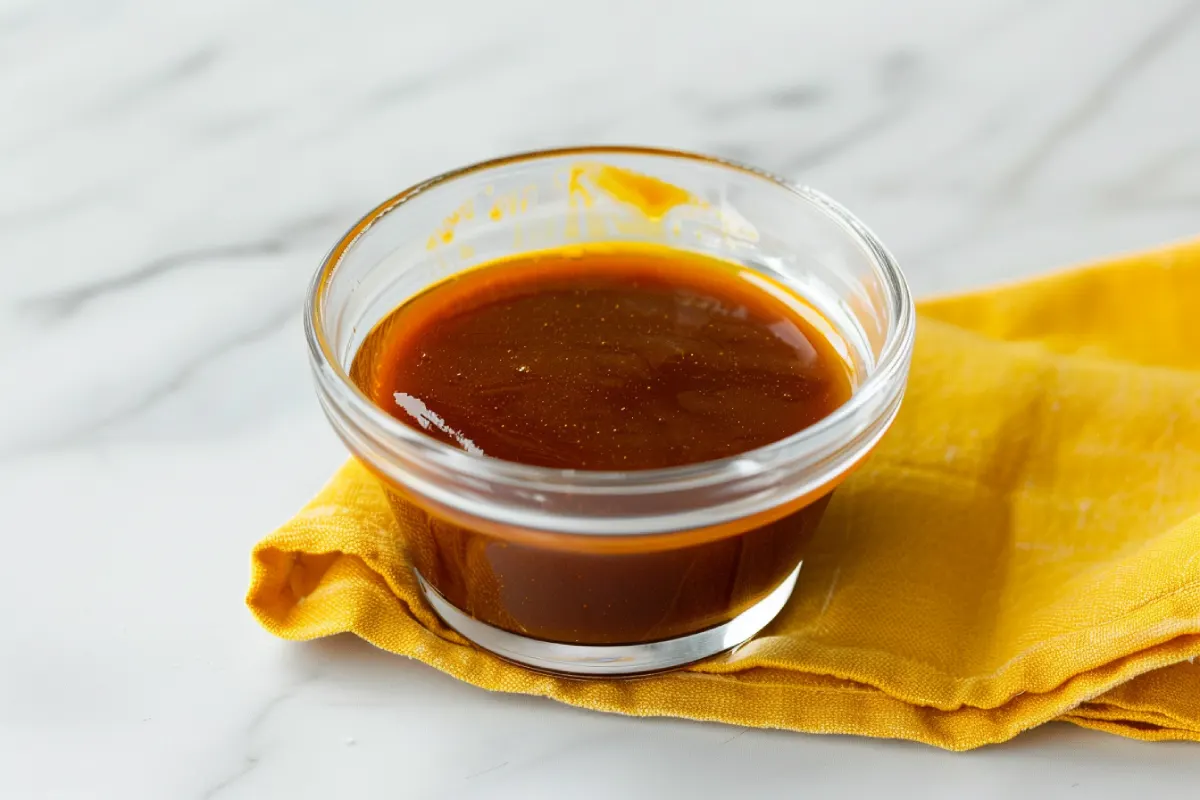
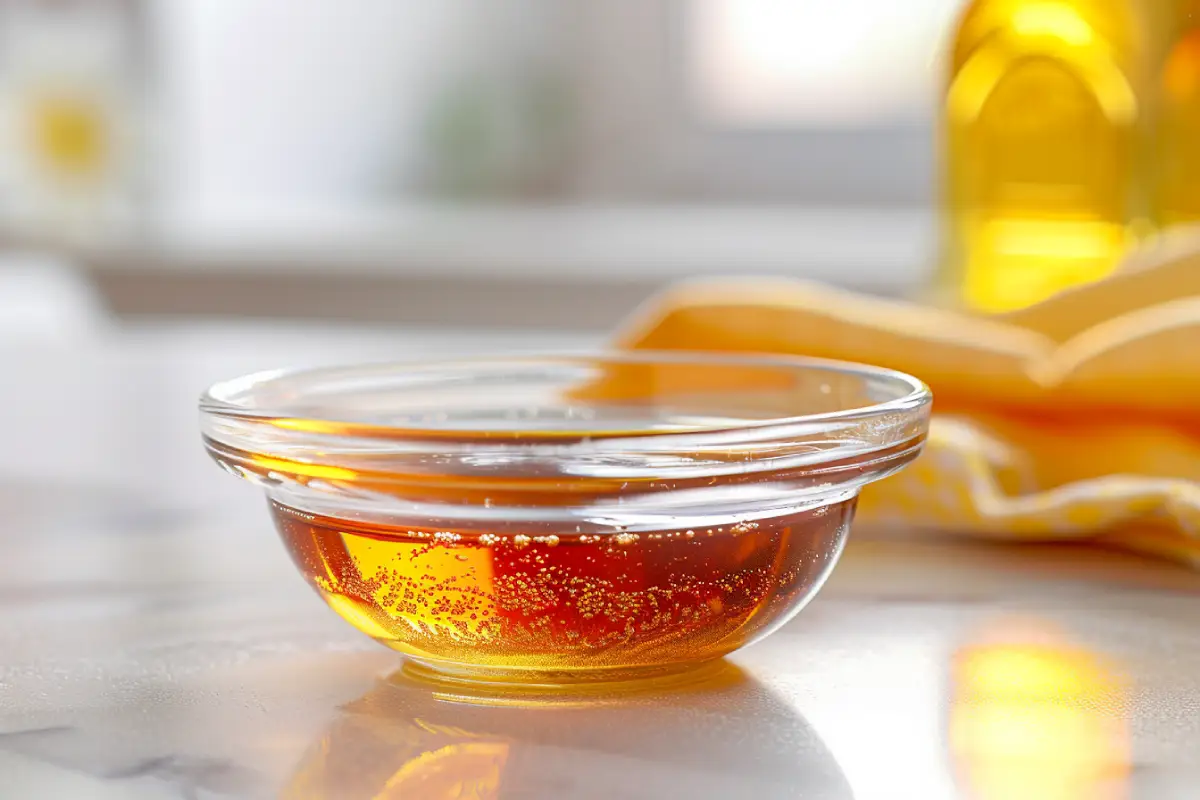
Through long aging, solid fish dissolves into liquid flavor. Proteins break down into amino acids. Sharp edges soften. What remains is a clear, amber liquid that smells assertive but tastes surprisingly rounded when used correctly.
This aged condiment doesn’t exist to be tasted alone.
It exists to complete other foods.
Ingredients Behind This Umami Base
The ingredient list is short, but every element matters. Change one variable, and the final flavor shifts.
Anchovies or Small Oily Fish
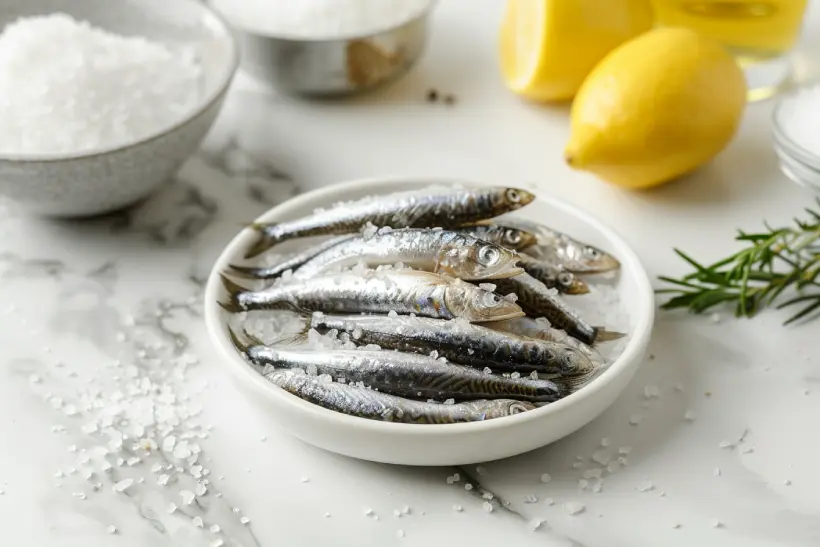
Anchovies form the foundation of Fish sauce.
They’re selected for oil content and protein structure, not size. Smaller fish break down evenly during fermentation, producing a smoother, more complex savory liquid.
They contribute:
- Natural glutamates
- Long, savory finish
- Depth without heaviness
Does it taste like anchovies?
Actually… no… when fermented correctly, the fish itself disappears into umami.
Test note: High-quality fermented anchovy sauce tastes savory, not aggressively fishy.
Salt as a Structural Element
Salt plays a far more complex role than seasoning.
In this process, salt:
- Draws moisture from the fish
- Prevents spoilage
- Regulates enzymatic activity
- Shapes final balance
Because salinity develops slowly, it tastes softer than salt added at the table.
Effect on flavor: smoother, rounder seasoning.
Time: The Unlisted Ingredient
Time isn’t printed on the label, but it defines quality.
Fermentation typically lasts:
- 6–9 months for lighter liquids
- 12–24 months for deeper, more complex results
As proteins degrade, bitterness fades and the flavor lengthens.
Does time really matter that much?
Actually… absolutely. Rushed aging produces flat, metallic sauces.
Sun and Temperature
Traditional production often relies on warm outdoor conditions.
Gentle heat:
- Encourages steady fermentation
- Prevents aggressive breakdown
- Improves clarity
Test note: Slowly fermented sauces from warm climates tend to taste cleaner and more rounded.
How This Sauce Is Traditionally Prepared
Fish sauce is not forced.
It’s allowed to become.
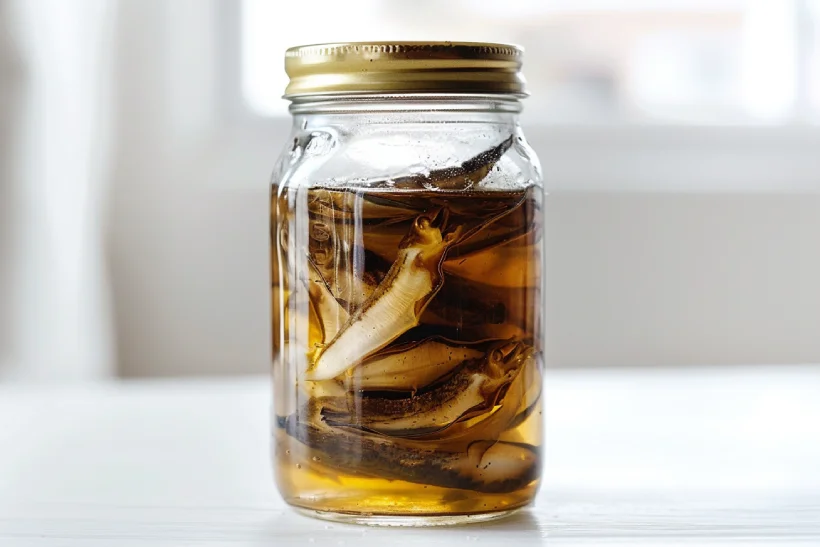
The process has remained largely unchanged for centuries.
Step 1: Layering
Fresh anchovies are layered with coarse sea salt in wooden barrels or clay vats.
- Ratios matter
- Too little salt risks spoilage
- Too much salt causes harshness
Typical ratio: about 3 parts fish to 1 part salt.
Step 2: Pressing and Sealing
The mixture is pressed to remove air pockets, then sealed.
This creates:
- An anaerobic environment
- Controlled fermentation
- Even breakdown
At this stage, the aroma is sharp and unfinished.
Step 3: Fermentation
This stage requires patience.
The mixture rests undisturbed for months. Liquids rise. Solids dissolve. Enzymes do their work.
No stirring?
Actually… no… interference disrupts balance.
Step 4: First Press Extraction
As fermentation progresses, liquid collects at the bottom.
The first extraction—often called first press—is:
- Clear
- Amber-colored
- Smooth and complex
This is the highest-quality form of Fish sauce.
Step 5: Straining and Bottling
The liquid is strained and bottled without additives.
Good producers add nothing else.
No sugar. No coloring. No preservatives.
Why Preparation Method Matters
How this fermented liquid is produced determines how it behaves in cooking.
Well-made versions:
- Integrate seamlessly
- Soften acidity
- Enhance savory notes
- Leave no harsh aftertaste
Poor-quality versions:
- Taste metallic
- Smell overly aggressive
- Over-salt dishes
Understanding production helps you know when and how to use Fish sauce effectively.
Cooking With This Fermented Seasoning: Effects on Recipes
Once you understand how Fish sauce is made, using it feels intentional rather than risky. You don’t add it randomly—you choose it for a specific outcome.
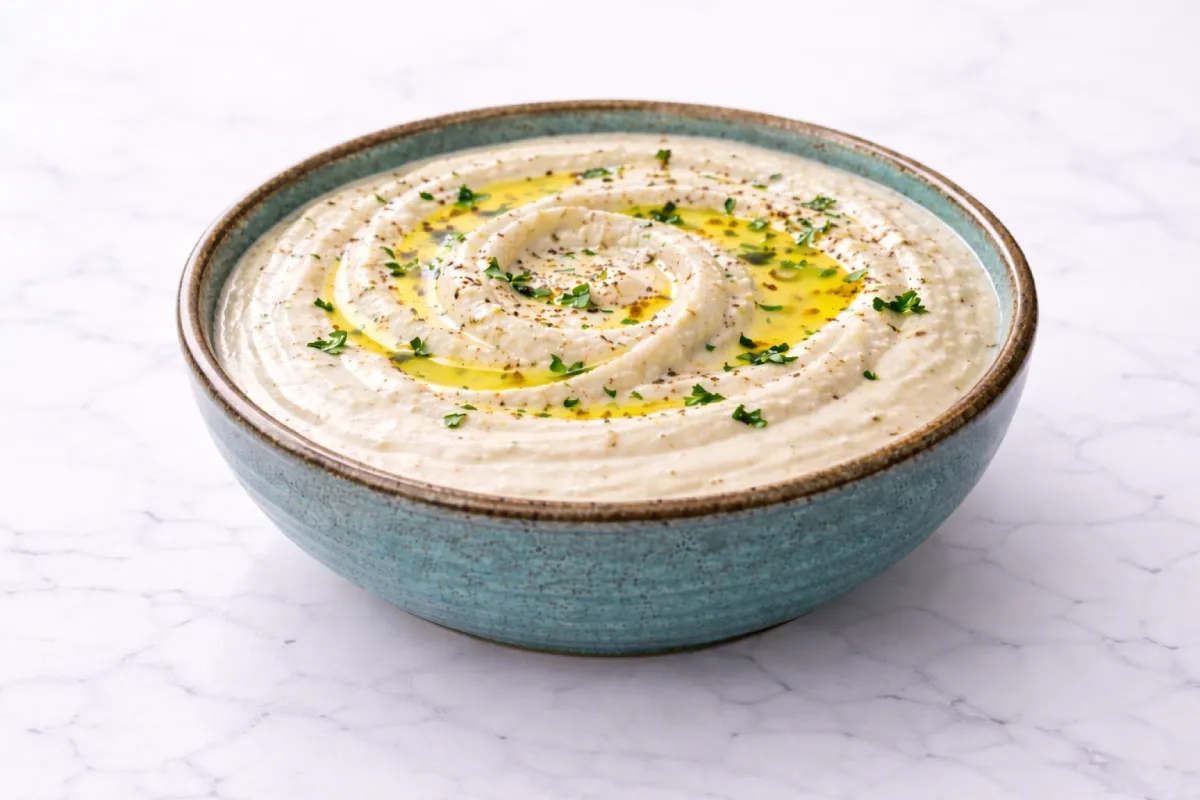
This kind of sauce also works beautifully on the side, especially with grilled seafood like calamari, where a light dip adds depth without overwhelming the dish.
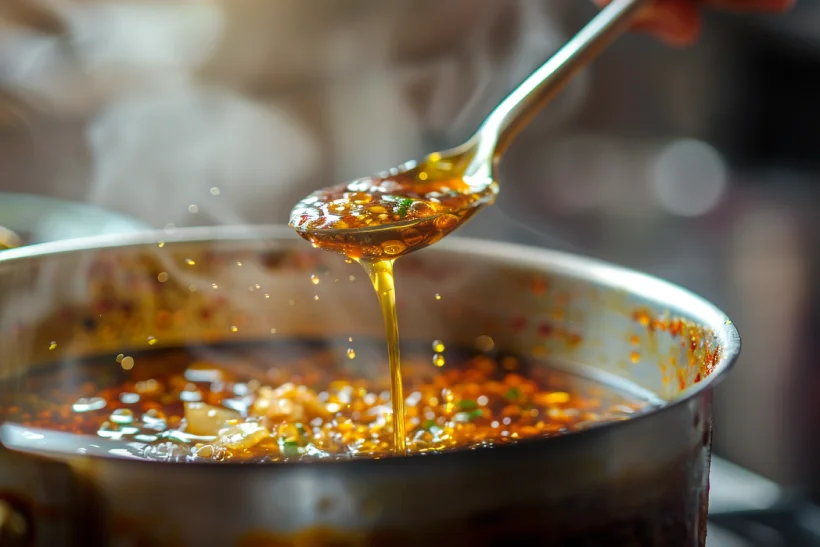
Effect?
Actually… yes… each dish responds differently.
Tomato-Based Sauces
Tomatoes often suffer from sharp acidity. Sugar masks the problem but flattens flavor.

Effect of Fish sauce:
- Softens acidity
- Makes tomatoes taste riper
- Adds savory depth
How to use:
- ½ teaspoon per quart
- Add during early simmering
Beef Chili
Chili can be spicy yet hollow.
Effect of Fish sauce:
- Deepens beef flavor
- Strengthens spice complexity
- Extends finish
How to use:
- 1 teaspoon per pound of meat
- Add while browning
Meatballs and Meatloaf
Ground meat dries easily.
Effect of Fish sauce:
- Improves moisture retention
- Seasons evenly
- Enhances browning
How to use:
- ½ teaspoon per pound, mixed with binders
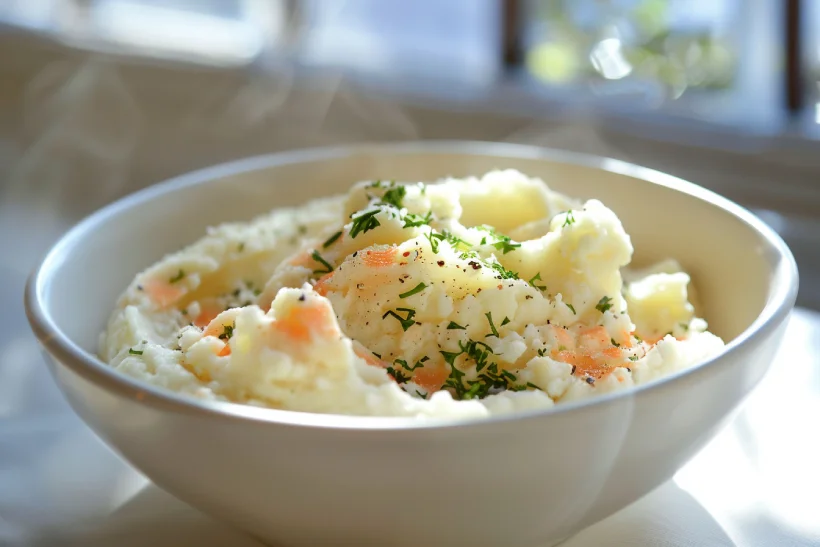
Mashed Potatoes
Butter and cream alone can still feel flat.
Effect of Fish sauce:
- Adds savory backbone
- Enhances butter
- Prevents blandness
How to use:
- ¼ teaspoon for 2 lb potatoes
- Add before dairy
Gravy
Gravy often tastes good briefly—then disappears.
Effect of Fish sauce:
- Lengthens flavor
- Enhances roasted notes
- Softens saltiness
How to use:
- ½ teaspoon per 2 cups
- Add with stock
Mac and Cheese
Cheese sauces can become heavy.
Effect of Fish sauce:
- Boosts umami
- Sharpens cheese
- Prevents greasy mouthfeel
How to use:
- ¼ teaspoon in sauce base
Vegetable Dishes
Vegetables often lack satisfaction, not seasoning.
Best pairings:
- Mushrooms
- Green beans
- Cabbage
- Broccoli
- Squash
Effect: enhanced caramelization and savory depth.
Soups and Broths
Long-simmered broths can still taste thin.
Effect of Fish sauce:
- Strengthens backbone
- Reduces need for added salt
- Adds lingering warmth
How to use:
- ¼–½ teaspoon per pot, early
Common Mistakes
- Pouring instead of measuring
- Adding too late
- Using low-quality products
Fixes: dilution, acid, or a pinch of sugar.
Can It Replace Salt?
Not completely.
Best approach:
- Use Fish sauce for depth
- Use salt for final balance
FAQ
Does fish sauce make food taste fishy?
Short answer? No.
Longer answer: it can, but only if you rush it. When this sauce is cooked gently, the fish itself fades away and what’s left is just a savory depth. If someone says “this tastes fishy,” it’s usually because too much was added, or it went in at the very end.
Can you really use fish sauce every day?
Yes — but not the way you use salt.
This isn’t a splash-and-go ingredient. It’s more of a quiet adjustment, a few drops here and there. Used that way, it often replaces part of the salt instead of adding more, which surprises a lot of people the first time.
Is fish sauce basically the same as soy sauce?
They get compared a lot, but they behave differently.
Soy sauce brings salt and color. This fermented liquid brings sharpness and umami without darkening the dish. Sometimes they work together, sometimes one is clearly the better choice. It really depends on what you’re cooking.
Are there good vegetarian alternatives?
There are, yes — though “identical” wouldn’t be fair.
Most plant-based versions rely on mushrooms or seaweed to mimic umami. They won’t taste exactly the same, but they do the same job: giving food a savory backbone that plain salt can’t quite achieve.
When is it better not to use it?
When a dish needs to stay clean and quiet.
Very light desserts, subtle cream-based preparations, or anything where neutrality is the point can lose clarity. In those cases, simple seasoning does a better job. Not every recipe needs depth — some just need restraint.
What People Said About Cooking With This Sauce
Marianne L. — Portland, Oregon
“Grace, I wasn’t sure about this at all. I almost skipped it. But I added a tiny bit to my tomato sauce last night and… yeah. It didn’t taste like anything specific, just better. My husband asked what I changed and I honestly didn’t know how to explain it.”
David R. — Austin, Texas
“I’ve been cooking for years and somehow never used it outside of Asian recipes. Tried it in chili like you mentioned. Didn’t tell anyone. The pot was empty faster than usual. That’s all I’ll say.”
Elena M. — Brooklyn, New York
“I was nervous, not gonna lie. The smell threw me off. But once it cooked down, it disappeared. I used it in mashed potatoes and I swear they tasted more… complete? Not sure if that makes sense, but yeah. I’m convinced.”
Tom H. — Madison, Wisconsin
“Quick note because I had to tell you. I added a few drops to gravy after it tasted flat. Didn’t change the color, didn’t make it salty, just fixed it. I’ve stopped overthinking it now.”
Rachel K. — San Diego, California
“I keep the bottle in the fridge now. I don’t use it all the time, but when something feels off, it’s the first thing I reach for. It’s weird because no one ever notices it, they just eat more.”
Lucas P. — Burlington, Vermont
“This is probably not a proper review, but it made my vegetable dishes feel less sad. Especially mushrooms. That’s it. That’s the message.”
Why This Sauce Works Everywhere
Fish sauce isn’t something you fall in love with instantly.
At least, I didn’t. It took a few tries. A few “maybe that was too much” moments. A couple of dishes where I wasn’t sure what had changed, only that it tasted better than expected.
And that’s probably how it’s meant to be used. Not as a rule. Not as a trick. Just as an option you remember when something feels a little flat and you can’t quite explain why.
Sometimes you add it and nothing dramatic happens. Sometimes it fixes the whole thing with a few drops and you almost feel annoyed you didn’t think of it sooner. Both situations are fine.
It doesn’t need to be named.
It doesn’t need credit.
If the food tastes right, if people keep eating, if the pot ends up empty sooner than you planned — that’s usually enough of an answer.