
Calamari ink pasta always feels like a small act of courage.
Dark. Glossy. Slightly mysterious.
The first time I made it, I remember standing at the stove thinking, Wait… am I really about to eat something this black? Actually… no… not eat—embrace. Because calamari ink pasta isn’t spooky. It’s comforting in a candlelit, rain-on-the-windows kind of way. The smell of garlic warming in olive oil. The faint brininess drifting up like a sea breeze.
This is the kind of dish you cook slowly, barefoot in the kitchen, letting the sauce thicken while memories do their thing. It’s dramatic without trying. Old-world. Romantic. And honestly? It tastes like you know what you’re doing—even if you don’t.
Table Of Contents
Table of Contents
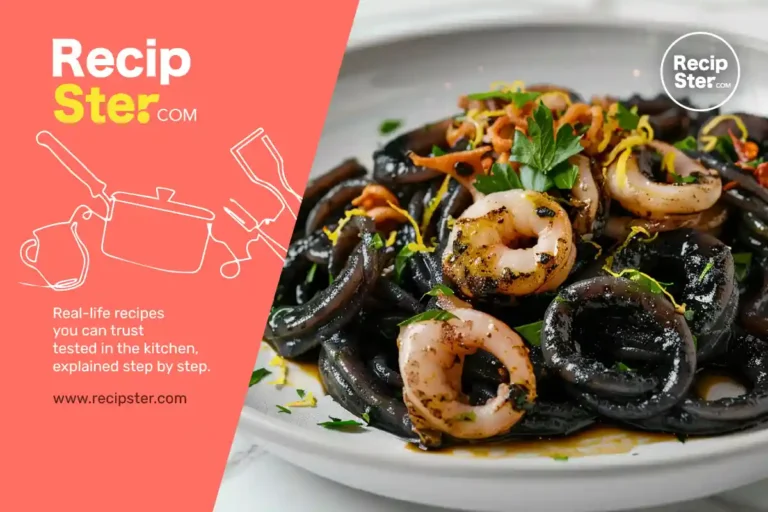
Calamari Ink Pasta: A Cozy, Inky Love Letter to the Sea
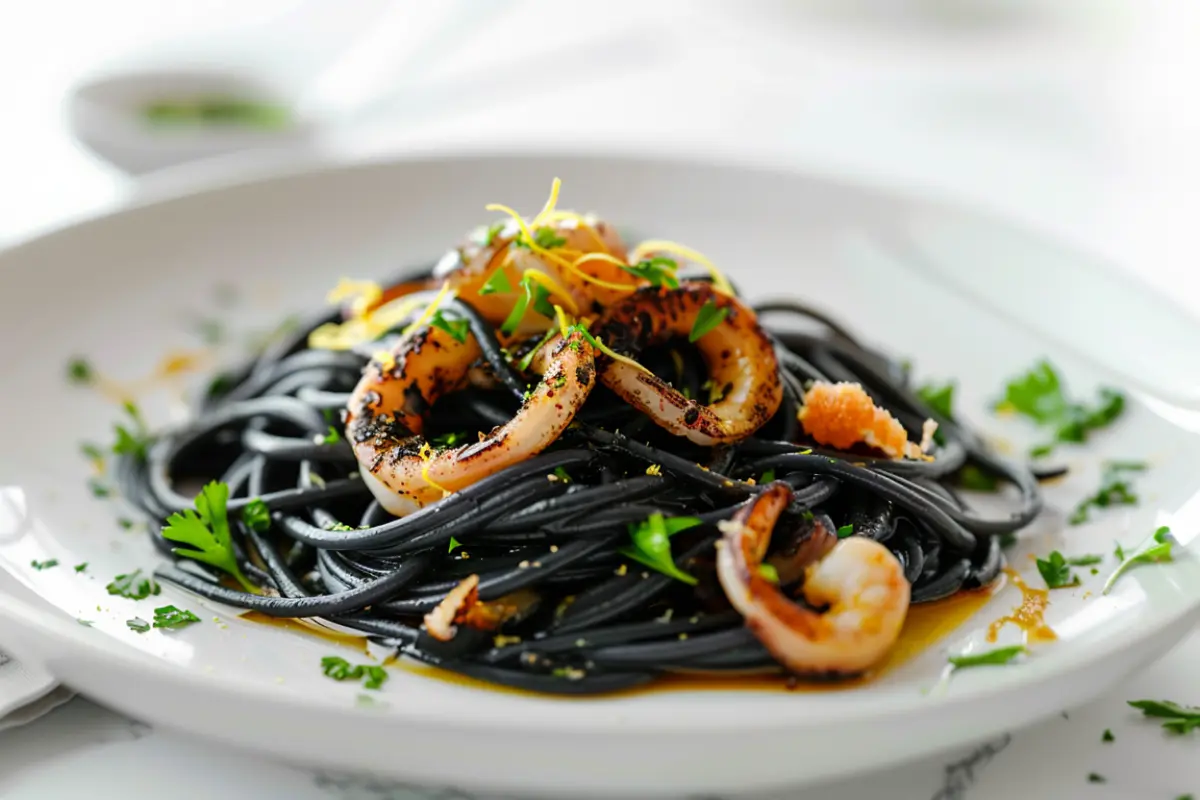
Calamari ink pasta is a quiet, cozy seafood pasta with deep savory flavor.
Silky black noodles, tender calamari, garlic, olive oil, and a bright finish of lemon zest.
Elegant, simple, and best enjoyed hot.
- Total Time: 30 minutes
- Yield: 2–3 servings 1x
Ingredients
12 oz squid ink pasta
2 tbsp olive oil
3 garlic cloves, thinly sliced
1/2 tsp red pepper flakes (optional)
1 cup dry white wine
1–2 tsp calamari (squid) ink
3/4 lb fresh or thawed calamari, sliced into rings
Salt, to taste
Fresh parsley, finely chopped
Lemon zest, to finish
Instructions
1. Bring a large pot of well-salted water to a boil.
2. Cook the pasta until just al dente.
3. Reserve 1/2 cup of pasta water, then drain the pasta.
4. Heat olive oil in a wide pan over medium-low heat.
5. Add garlic and cook gently until fragrant and soft, not browned.
6. Add red pepper flakes if using.
7. Pour in the white wine and let it reduce by half.
8. Lower the heat and stir in the calamari ink until evenly dark.
9. Add the sliced calamari and cook for 2–3 minutes, just until tender.
10. Add pasta to the pan with a splash of reserved pasta water.
11. Toss until glossy and fully coated.
12. Season lightly with salt.
13. Finish with parsley and lemon zest.
14. Serve immediately.
Notes
Keep the heat low after adding the ink to avoid bitterness.
Calamari cooks fast; overcooking makes it tough.
Skip cheese—this dish shines without it.
Loosen sauce with warm pasta water, not oil.
- Prep Time: 10 minutes
- Cook Time: 20 minutes
- Category: Main Course
- Method: Stovetop
- Cuisine: Italian
Nutrition
- Serving Size: 1 bowl
- Calories: 520
- Sugar: 3 g
- Sodium: 680 mg
- Fat: 18 g
- Saturated Fat: 3 g
- Unsaturated Fat: 14 g
- Trans Fat: 0 g
- Carbohydrates: 58 g
- Fiber: 3 g
- Protein: 28 g
- Cholesterol: 180 mg
Why Calamari Ink Pasta Feels So Special
I always say calamari ink pasta is quietly confident.
No fireworks. No shouting. Just depth.
The ink brings a gentle ocean salinity, not fishy, not loud. More like the smell of wet stone after a wave pulls back. The texture of the pasta turns silky, almost velvety, once it’s coated.
Wait… is this going to stain everything?
Actually… no… not if you’re mindful. And even if it does, that’s half the charm.
Test Note:
- Use dark towels and wooden utensils
- Ink washes off hands easily with lemon + soap
It’s one of those recipes where you feel a little grown-up making it. Like lighting the good candles on a Tuesday.
Ingredients That Make It Cozy, Not Complicated
There’s something grounding about a short ingredient list.
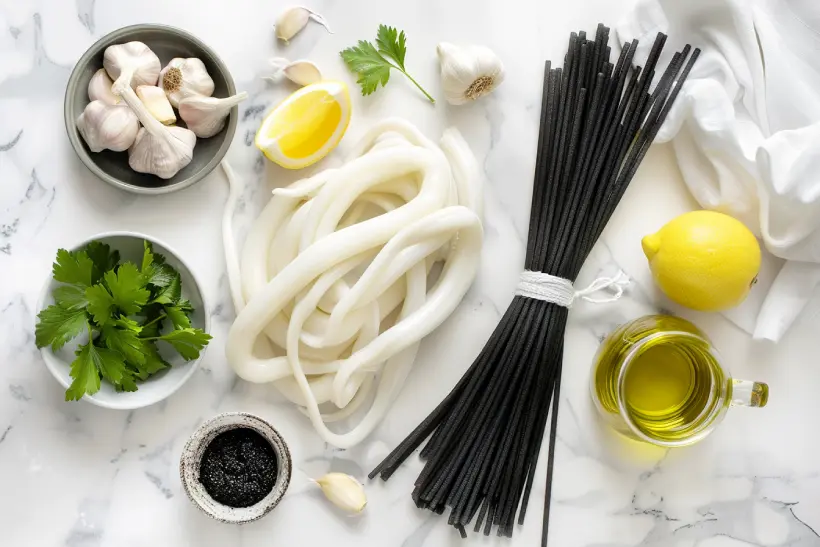
Nothing fancy. Nothing fussy.
You’ll need:
- 12 oz squid ink pasta (or regular pasta + ink)
- 2 tbsp olive oil
- 3 cloves garlic, thinly sliced
- ½ tsp red pepper flakes (optional, but lovely)
- 1 cup white wine (dry, crisp)
- 1–2 tsp calamari ink
- ¾ lb fresh calamari, sliced
- Salt, to taste
- Fresh parsley, chopped
- Lemon zest, just a whisper
Actually… no… you don’t need cheese. This dish doesn’t want it.
Test Note:
- Frozen calamari works beautifully—just pat it very dry
- A stainless steel pan gives the best flavor base
The Gentle Art of Cooking with Calamari Ink
Cooking with ink feels intimidating until it doesn’t.
Kind of like learning to trust yourself.
This isn’t a rush job.
Low heat.
Slow breathing.
Let it be what it is.
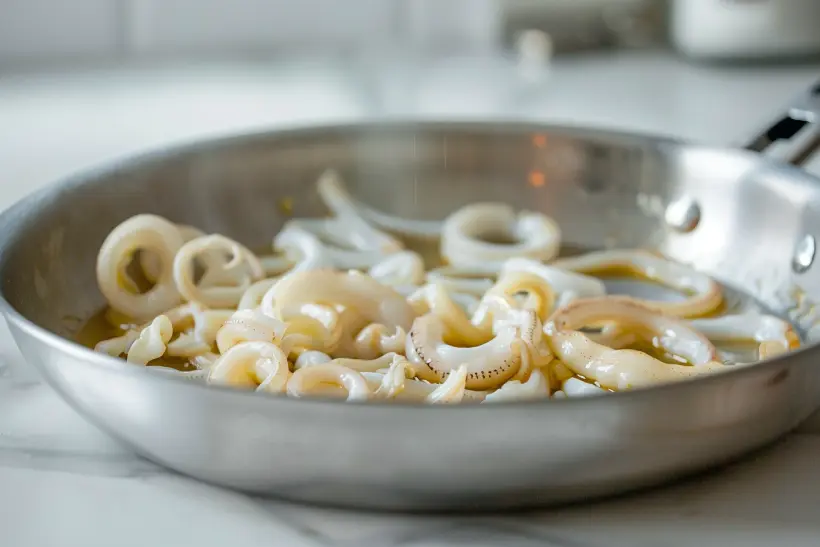
Wait… that’s it?
Actually… yes… that’s it.
When you stir it in, the sauce turns midnight-black instantly.
There’s a soft hiss from the pan.
The smell changes—deeper, warmer, like the sea at dusk.
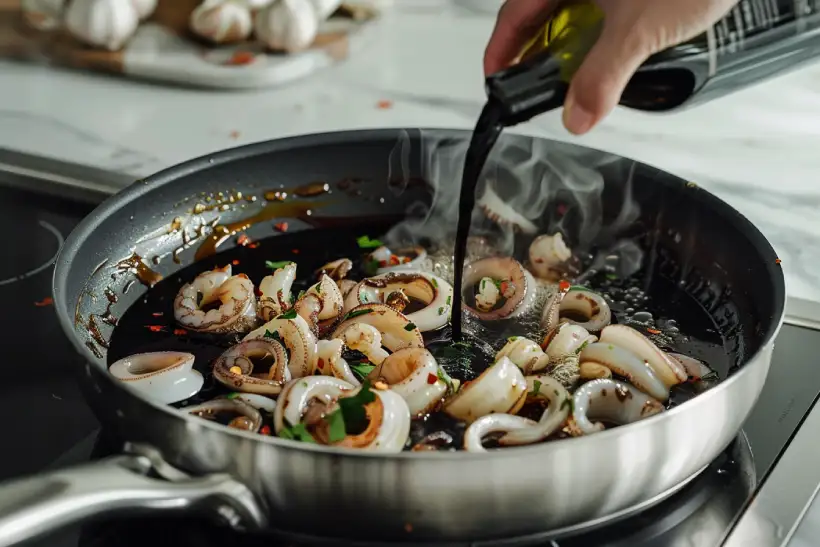
Tips for success:
- Add ink off direct heat
- Stir gently to avoid bitterness
- Taste early, then again later
Test Note:
- Too much ink = metallic edge
- Start small; you can always add more
Step-by-Step: How to Make Calamari Ink Pasta
Take your time here.
This dish rewards patience.
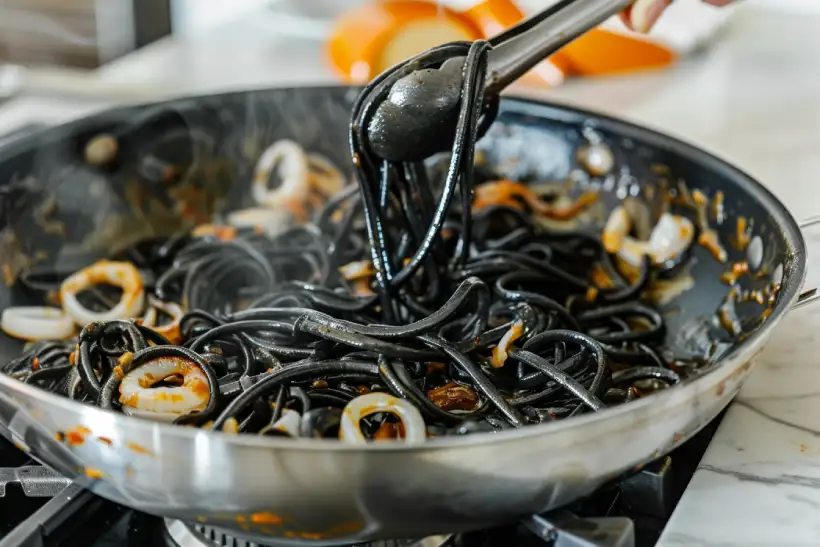
1. Cook the Pasta
- Bring well-salted water to a boil
- Cook pasta until just al dente
- Reserve ½ cup pasta water
- Drain and set aside
Actually… no… don’t rinse it. Ever.
2. Build the Base
- Heat olive oil over medium-low heat
- Add garlic slices
- Cook until soft, not browned
- Sprinkle in red pepper flakes
You’ll smell it before you see it. Warm. Toasty.
3. Deglaze & Darken
- Pour in white wine
- Let it reduce by half
- Lower heat
- Stir in calamari ink
Wait… it’s turning black.
Actually… yes… and it’s beautiful.
4. Cook the Calamari
- Add sliced calamari
- Cook 2–3 minutes max
- Season lightly with salt
Overcook it and it turns rubbery.
That’s the line in the sand.
Test Note:
- Calamari cooks fast or forever—never in between
5. Bring It Together
- Add pasta to the pan
- Splash in reserved pasta water
- Toss gently until glossy
- Finish with parsley + lemon zest
The sauce should cling, not pool.
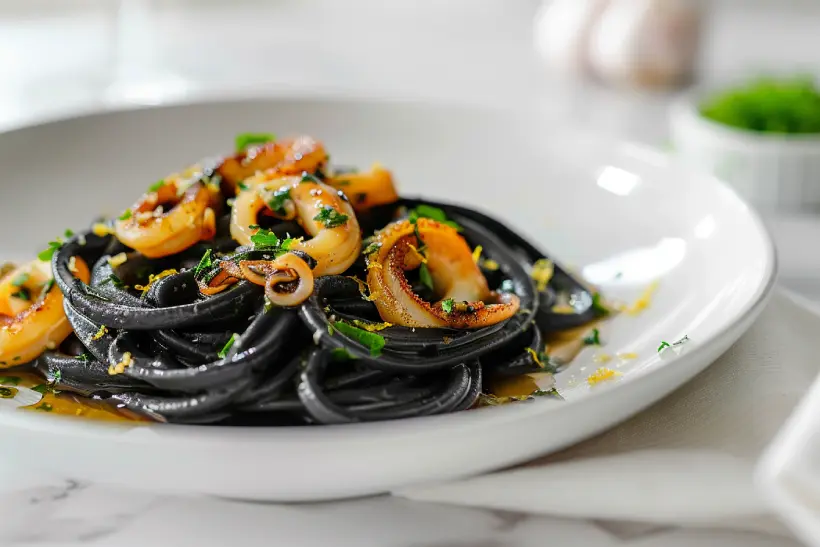
What It Tastes Like (Honestly)
Calamari ink pasta tastes like quiet confidence.
Savory. Slightly sweet. Deep without being heavy.
The texture is silky. The smell? Warm garlic with a saline whisper. When you twirl it, the noodles shine like polished stone.
Wait… why does this feel nostalgic?
Actually… no… it’s because it slows you down.
This is not a scrolling dinner.
This is a sit-down, fork-twirl, sigh-between-bites meal.
Mistakes I’ve Made (So You Don’t Have To)
Oh, I’ve learned the hard way.
- Too much ink → metallic bitterness
- High heat → scorched sauce
- Overcooked calamari → chewy regret
- Adding cheese → flavor clash
If keeping calamari tender feels tricky, this calamari salad recipe goes deeper into timing and technique.
Test Note:
- If sauce feels tight, add warm pasta water, not oil
Like they say, slow and steady wins the race—and this dish proves it.
Cozy Variations Worth Trying
Sometimes you cook from memory.
Sometimes from mood.
Try these gentle twists:
- Shrimp instead of calamari (sweet contrast)
- Shallots instead of garlic (softer aroma)
- Butter finish (1 tbsp, glossy warmth)
- Cherry tomatoes (just a few, burst at the end)
Actually… no… keep it simple. That’s where it shines.
How to Serve Calamari Ink Pasta
Presentation matters here—but softly.
Serve with:
- Wide bowls (keeps heat)
- Twisted nests of pasta
- Fresh lemon wedges
- Crusty bread for swiping
The sound of bread cracking.
The steam lifting.
That first bite.
It’s all part of it.
Storing & Reheating (If There’s Any Left)
Truthfully? It’s best fresh.
But life happens.
- Store in airtight container up to 24 hours
- Reheat gently over low heat
- Add 1–2 tbsp water to loosen
Test Note:
- Microwave dulls the flavor—avoid if you can
Why This Dish Keeps Calling Me Back
Calamari ink pasta isn’t flashy.
It doesn’t beg for attention.
But it lingers.
It’s the kind of meal you remember making more than eating. The quiet. The stirring. The way the kitchen smells long after the plates are cleared.
Wait… maybe that’s the point.
Actually… yes… it always is.
FAQ
Is calamari ink pasta actually good for you?
I get this one a lot. It’s not a “health food” in the trendy sense, but it’s far from heavy. Squid ink itself is very light, and the dish relies more on olive oil and seafood than cream or butter. If you listen to the portions and don’t overload it, it feels nourishing, not indulgent.
Does calamari ink pasta taste really fishy?
This is the biggest fear—and honestly, it’s not true. The flavor is more savory than fishy, almost mineral. Like the smell of the sea air, not the sea itself. If it tastes strong, it’s usually because too much ink was added or the heat was too high.
Can I make it if I don’t have fresh calamari?
Absolutely. I’ve done it more times than I can count. The ink carries most of the character, not the squid. Shrimp works beautifully, and even without seafood, the pasta still feels complete with garlic, olive oil, and a bit of lemon at the end.
Will squid ink stain everything in my kitchen?
It looks dramatic, but it’s not as scary as it seems. Your teeth will be fine. Hands wash clean with soap and warm water. I just avoid porous wooden boards. Stainless steel pans clean up easily if you don’t let them sit too long.
Where do people usually buy squid ink or ink pasta?
Most people find it at Italian markets or seafood shops, but it’s become much easier to get. Many regular grocery stores carry it now, and online options are reliable. Once you buy it once, it tends to sit in your pantry until the right quiet evening comes along.
What People Said About Calamari Ink Pasta
Sophie M. — Brooklyn, NY
“Grace, I made this last night after a long day and didn’t expect much. But the kitchen went quiet in the best way. The sauce came together exactly like you said. I ate slowly, which never happens. Just wanted to say thank you.”
Daniel R. — Portland, OR
“I was nervous about the ink, not going to lie. Followed your steps, kept the heat low, and it worked. The flavor was subtle, not overpowering. Even the cleanup was easier than I expected. This one’s staying in my rotation.”
Elena V. — San Diego, CA
“I’ve had calamari ink pasta in restaurants but never tried it at home. Your recipe made it feel doable. The lemon at the end really mattered. It felt calm cooking this, which I didn’t expect from a weeknight dinner.”
Marco L. — Boston, MA
“Made this on a rainy evening. The house smelled amazing. I appreciated the notes about not overcooking the calamari—that saved me. Simple, thoughtful recipe. Exactly my pace.”
Hannah T. — Madison, WI
“I usually rush through dinner, but this slowed me down. The sauce was smooth, not heavy, and the pasta held it well. It felt intentional, like cooking with purpose instead of habit.”
Conclusion — A Dish That Gives More Than It Takes
Calamari ink pasta isn’t memorable because it’s dramatic.
It’s memorable because it asks you to slow down—and rewards you when you do.
There’s real value in a recipe like this. It teaches restraint. Gentle heat. Trusting your senses instead of the clock. You listen for the soft sizzle, watch the sauce thicken, smell when the garlic is ready instead of browned. Wait… is it done already?
Actually… yes… because you were paying attention.
The first forkful tells you everything. Silky noodles. A quiet depth of flavor. Nothing excessive. Nothing missing. It’s the kind of meal that reminds you cooking doesn’t have to be loud to be meaningful.
This isn’t a pasta you rush through after a long day.
It’s one you sit with.
One you finish slowly.
One that leaves the kitchen smelling faintly of the sea and comfort.
And that’s the real gift of calamari ink pasta.
Not just nourishment—but presence. A calm moment, well spent, that lingers long after the plate is cleared.