
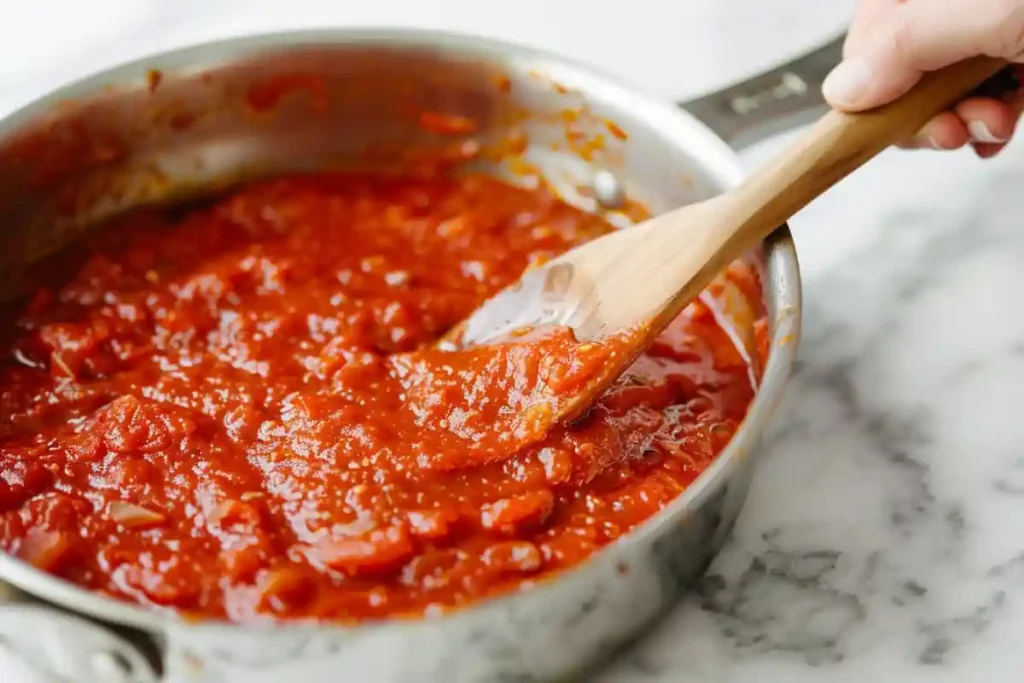
Hi, it’s Grace. Every time I grab a jar of marinara sauce or start chopping garlic, I think about those weeknights when a simple sauce saved dinner. Some nights call for speed; others deserve the slow comfort of tomatoes simmering on the stove.
There’s no single right choice. It depends on your day, your dish, and the flavor you want. Even the smell of garlic hitting warm oil can shift the whole mood of an evening.
Whether you’re making baked ziti, spaghetti, or pizza, choosing between homemade and store-bought can feel harder than it should. I’ve tested both more times than I can count—burned garlic included—and each little mistake taught me when one works better than the other.
This guide shares everything I’ve learned, from taste and texture to ingredients and time. By the end, you’ll know exactly when to reach for the jar and when it’s worth pulling out the pot.
Table of content
Table of Contents
Marinara Sauce Guide: Real Tests for Store-Bought vs Homemade Flavor
A simple, bright, homemade marinara sauce made with garlic, olive oil, and crushed tomatoes. Perfect for spaghetti, baked pasta, pizza, or dipping.
- Total Time: 35 minutes
- Yield: 4 cups 1x
Ingredients
3 tablespoons extra virgin olive oil
4 garlic cloves, minced
1 can (28 oz) crushed tomatoes (San Marzano if possible)
1 teaspoon kosher salt
1 teaspoon dried oregano
1/2 teaspoon red pepper flakes (optional)
5–6 fresh basil leaves, torn
1 teaspoon sugar or pinch of baking soda
Freshly ground black pepper
Instructions
1.
2. Heat the olive oil in a medium saucepan over medium heat until warm but not smoking.
3. Add the garlic and sauté for 60–90 seconds until fragrant and lightly golden.
4. Pour in the crushed tomatoes carefully and stir in salt, oregano, and red pepper flakes.
5. Bring to a simmer, then lower heat and let it bubble for 20–30 minutes, stirring occasionally.
6. Taste and adjust seasoning: add sugar or baking soda if too acidic.
7. Stir in the fresh basil during the last 5 minutes.
8. Finish with olive oil and black pepper before serving.
9.
Notes
Use San Marzano tomatoes for the best flavor.
Add a parmesan rind while simmering for extra depth.
Simmer longer for a thicker sauce.
Freeze in small portions for quick weeknight meals.
- Prep Time: 5 minutes
- Cook Time: 30 minutes
- Category: Sauce
- Method: Stovetop
- Cuisine: Italian
Nutrition
- Serving Size: 1/2 cup
- Calories: 95
- Sugar: 5g
- Sodium: 420mg
- Fat: 7g
- Saturated Fat: 1g
- Unsaturated Fat: 5g
- Trans Fat: 0g
- Carbohydrates: 7g
- Fiber: 2g
- Protein: 2g
- Cholesterol: 0mg
What Makes a Great red sauce
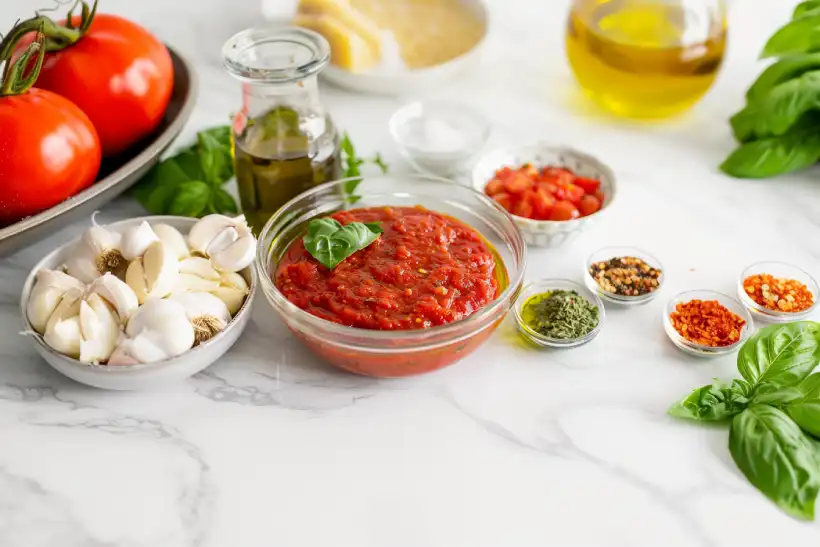
Before we compare the two, let’s talk about what actually makes a marinara sauce worth using in the first place. Because whether it comes from your pantry or your stovetop, great sauce always has the same fundamentals.
A good marinara sauce comes down to four things: flavor, texture, tomatoes, and balance. None of it is complicated, but each element matters more than you’d ever expect.
Flavor That Feels Real
A great marinara sauce tastes like tomatoes first. Not sugar. Not acidity. Not garlic screaming at you. Tomatoes. The garlic, olive oil, basil, and oregano are supporting characters. If any of them overpower the sauce, something feels off.
The best red sauce tastes clean, bright, and round, with no metallic aftertaste or that weird processed tang some jarred sauces have. When I taste a good sauce—homemade or store-bought—the tomato flavor comes through clearly without fighting against sugar or excessive salt. It just tastes right.
Texture That Clings
Texture decides whether the sauce hugs your pasta or slides off like water. Good marinara sauce has body. It shouldn’t be watery, grainy, or overly thick like paste. It should coat a spoon and stay there for a moment before slowly dripping. That’s the kind of texture that turns spaghetti or baked pasta into something genuinely comforting.
Watery marinara is honestly one of my biggest kitchen frustrations. You know that moment when it pools at the bottom of the bowl and leaves your pasta looking sad and under-sauced? That’s exactly what we’re avoiding here.
Quality Tomatoes
If there is one place where quality truly matters, it’s the tomatoes. San Marzano tomatoes are famous for a reason: they’re naturally sweeter, less acidic, and have fewer seeds. They grow in volcanic soil near Mount Vesuvius in Italy, and the difference in flavor is actually noticeable—not just food snob talk.
You don’t need to be picky every day. But when flavor counts—like for simple pasta dishes where the sauce is basically the whole dish—these tomatoes make a real difference. Look for “DOP” (Denominazione di Origine Protetta) on the label for authentic San Marzano tomatoes. I keep two or three cans in my pantry for nights when it matters.
A Short Ingredient List
Traditional red sauce includes tomatoes, garlic, olive oil, basil, salt, and maybe a pinch of oregano or red pepper flakes. That’s it. If your jar has a paragraph of ingredients with words you can’t pronounce, it’s not classic marinara anymore. It’s something else pretending to be marinara.
I’ve learned to read labels carefully at the grocery store. The best jarred rich tomato sauce options have ingredient lists that look almost identical to what I’d use at home. Five to seven ingredients max.
With that foundation in mind, let’s compare the two options home cooks debate constantly.
Flavor Showdown: Store-Bought vs. Homemade
Store-Bought Marinara
Some nights, this is absolutely the right answer. When you open a jar, you know exactly what you’re getting: instant flavor, zero prep, minimal cleanup.
Pros:
- Ready in seconds
- Consistent flavor every single time
- No chopping or simmering required
- Long shelf life
- Perfect for busy nights or cooking with kids
Cons:
- Can taste flat or processed
- Often higher in salt or sugar
- Limited customization
- Texture varies between brands
I’ve gone through phases where I felt genuinely guilty reaching for a jar, as if I was somehow failing at cooking. But honestly? On a Tuesday night when I’m exhausted and just need dinner on the table in 20 minutes, a good jar of the base sauce
is a lifesaver.
Best Jarred Marinara Sauce Brands
Some jarred sauces truly hold their own in taste tests. I’ve tried at least 15 brands over the past 2 years, and these are the ones I actually keep in my pantry.
- Rao’s Homemade Marinara – Closest to homemade you’ll find in a jar. Yes, it’s pricier—around $8–10—but the flavor is rich, clean, and balanced. No added sugar.
- Cucina Antica – Italian import made with San Marzano tomatoes and no added sugar. Clings beautifully to pasta.
- Barilla Traditional Marinara – Budget-friendly, reliable, and perfect for layered dishes like baked ziti or lasagna.
- Victoria Marinara Sauce – Slightly chunky texture, simple ingredients, family-owned brand energy that feels honest.
When Store-Bought Works Best
A jar shines when the dish has other strong flavors or will bake for a long time. Think baked ziti, lasagna, stuffed shells, casseroles. The oven does half the work for you, melding everything together. Even a basic jar of marinara sauce can become something layered and complex.
Store-bought marinara sauce also works beautifully for:
- Weeknight spaghetti
- Quick pizza sauce base
- Kids’ dinners
- Large crowd meals (feeding 10+ people)
- Dips for breadsticks or mozzarella sticks
If you choose a jar with clean ingredients, I promise no one will know you didn’t simmer your own sauce—especially once it’s tucked under mozzarella and ricotta.
Great for dishes like baked ziti, lasagna, or stuffed shells—any recipe where the oven blends everything into something rich and comforting.
Homemade Marinara
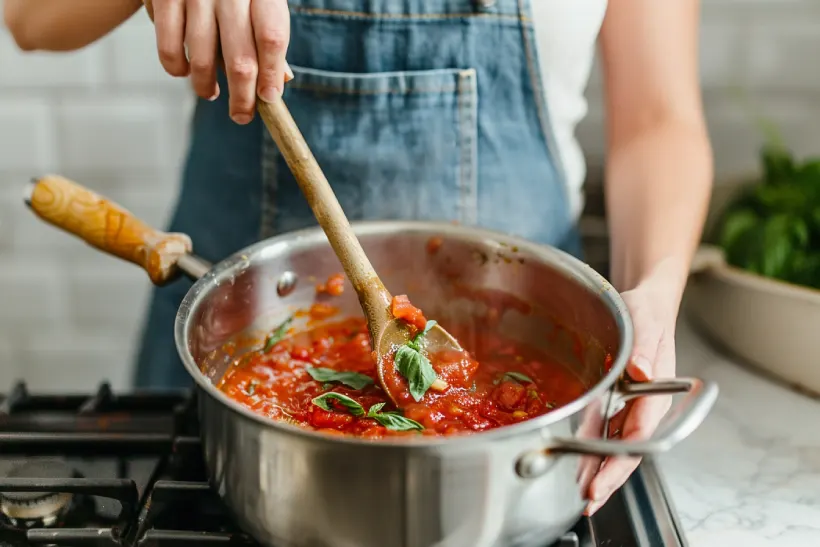
When you have 30 to 40 minutes, homemade marinara sauce brings something jarred sauces rarely match: freshness, aroma, depth.
Pros:
- Fully customizable
- Fresher, brighter flavor
- Total control over salt, sugar, and acidity
- Impressive for guests
- Therapeutic to make
Cons:
- Takes 30–45 minutes
- Requires quality tomatoes and fresh garlic
- More dishes to wash
- Results vary if you’re new to it
Sometimes I start with garlic hitting warm olive oil, and within 30 seconds the whole kitchen smells like my grandmother’s Sunday dinners. Homemade marinara sauce carries an emotion that jarred sauce simply can’t imitate.
When Homemade Wins
Use homemade when the sauce is the star of the show: spaghetti night, pasta al pomodoro, fresh bread dipping, pizza margherita, or date night. When the sauce sits front and center, the difference between jarred and homemade marinara sauce is unmistakable.
Homemade marinara also wins when:
- You’re cooking for a special occasion
- You have garden-fresh tomatoes
- You’re meal prepping
- You want to control sodium
- You enjoy cooking from scratch
Quick Comparison: Store-Bought vs. Homemade
| Feature | Store-Bought | Homemade |
|---|---|---|
| Prep Time | 0–2 minutes | 25–35 minutes |
| Flavor | Mild, consistent | Fresh, rich, customizable |
| Texture | Smooth, sometimes thin | Thick, rustic, adjustable |
| Best For | Baked pasta, casseroles | Pasta dishes, dipping, fresh meals |
| Ingredient Control | Low | High |
| Cost | $3–9 | $4–7 |
How to Make the Best Homemade Marinara Sauce
This is my go-to recipe when I want real flavor without complicated technique. It’s straightforward, foolproof, and honestly better than 90% of jarred options I’ve tried. Every time I make this homemade marinara sauce, I remember exactly why slow-simmered flavors matter.
Simple Homemade Marinara Recipe
Prep Time: 5 minutes
Cook Time: 20–30 minutes
Total Time: 30–35 minutes
Yields: About 4 cups
Best For: Spaghetti, lasagna, baked ziti, pizza, dipping
Ingredients
- 3 tablespoons extra virgin olive oil
- 4 garlic cloves, minced (not pressed—minced for better texture)
- 1 can (28 oz) crushed tomatoes (San Marzano if possible)
- 1 teaspoon kosher salt
- 1 teaspoon dried oregano
- ½ teaspoon red pepper flakes (optional)
- 5–6 fresh basil leaves, torn
- 1 teaspoon sugar or a pinch of baking soda
- Freshly ground black pepper
Instructions
- Heat the olive oil in a medium saucepan over medium heat. Don’t rush this—you want the oil warm but not smoking. A good start sets up a great red sauce.
- Add the garlic and sauté for 60–90 seconds, just until fragrant and golden. Burnt garlic = bitter sauce, and no amount of fix can save it.
- Pour in the crushed tomatoes carefully; they can splatter. Stir in salt, oregano, and red pepper flakes.
- Bring to a gentle simmer, then reduce heat to low. Let it bubble softly for 20–30 minutes, stirring occasionally. The longer it simmers, the better your homemade marinara sauce tastes.
- Taste and adjust: if too acidic, add a pinch of sugar or a tiny amount of baking soda. If you want more depth, add more salt or a splash of balsamic.
- Tear in fresh basil during the last 5 minutes of cooking. Tearing releases more flavor than chopping.
- Finish with olive oil and black pepper.
That’s it. Simple, bold, and better than most jars of marinara sauce.
Pro Tips for Better Homemade Marinara
- Add a parmesan rind while simmering—serious umami depth.
- Use whole peeled San Marzano tomatoes and crush by hand for control.
- Let the sauce rest for 10 minutes before serving.
- Double the batch and freeze half for quick weeknight meals.
- A splash of balsamic vinegar adds complexity without sweetness.
Which Marinara Sauce Is Better for Different Dishes
The honest answer? It depends on what you’re making. Different dishes highlight different qualities of marinara sauce.
Best Marinara for Baked Pasta Dishes
Store-bought wins here.
Use a quality jar like Rao’s or Cucina Antica. The long bake time melds everything—pasta, ricotta, mozzarella—and even basic jarred homemade red sauce becomes rich and full.
Best Marinara for Spaghetti or Simple Pasta
Homemade all the way.
When the sauce is basically the dish—like on simple spaghetti or pasta al pomodoro—fresh, bright homemade marinara sauce makes a night-and-day difference.
Best Marinara for Pizza
Either works, but for jarred red pasta sauce, simmer it uncovered for 10–15 minutes to thicken it. Pizza sauce needs body to avoid soggy crust.
Best Marinara for Meal Prep
Homemade is ideal.
Make a big batch on Sunday, portion it and freeze it. I freeze mine in 2-cup containers, perfect for quick meals.
Best Marinara for Kids’ Dinners
Store-bought tends to win.
Kids love consistency and slightly sweeter flavor. Barilla or Prego work well here.
How to Upgrade Store-Bought Marinara in 10 Minutes
Want homemade flavor without the full process? This is my favorite shortcut and I use it at least twice a month.
Quick Upgrade Method
- Heat 1–2 tablespoons olive oil
- Sauté 2 minced garlic cloves (1 minute)
- Pour in jarred tomato sauce
- Stir fresh or dried basil
- Optional: splash of red wine, balsamic, or 1 tablespoon cream
- Simmer 10 minutes
Result: a jarred simple marinara that tastes 80% homemade with 20% of the effort.
Other Easy Upgrades
- Sautéed onions or shallots
- 1 tablespoon tomato paste
- Red pepper flakes
- A pat of butter
- Fresh torn basil
These upgrades make even average marinara sauce taste layered and intentional.
What to Avoid When Choosing Jarred Marinara Sauce
Not all jarred marinara sauce is worth your money. After wasting too many jars, here’s what I always check:
- Corn syrup or high fructose corn syrup
- More than 6 grams of sugar per serving
- Artificial flavors or colors
- Watery texture or separation
- Ingredient lists longer than 8–10 items
- “Tomato puree” listed first (lower quality)
A good marinara sauce label reads like a home recipe.
Storage & Shelf Life: Jarred vs. Homemade
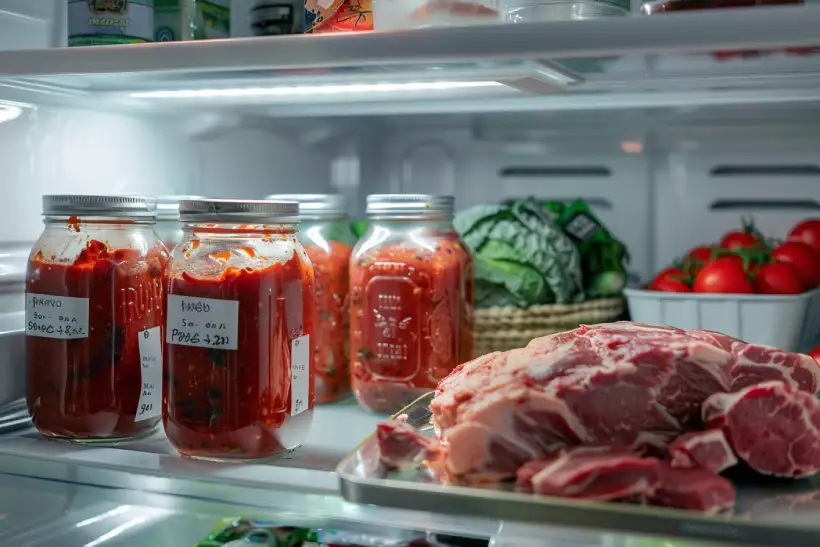
Store-Bought Marinara Storage
- Unopened: 12–18 months
- Opened: refrigerate and use within 5–7 days
- Freezing: not recommended (texture breaks)
Pro tip: Transfer leftovers to a glass container. Better taste, zero metallic notes.
Homemade Marinara Storage
- Refrigerator: up to 1 week
- Freezer: 3–4 months
- Canning: 12–18 months
Best way to freeze homemade red sauce
Use silicone muffin tins or ice cube trays. Freeze, pop out, bag them. Perfect single-serving portions.
FAQ: The Best Marinara Sauce Questions Answered
Is marinara sauce the same as spaghetti sauce?
Not exactly. Marinara is simple—tomatoes, garlic, olive oil, herbs. Spaghetti sauce can include ground beef, mushrooms, sausage, etc.
Can I use marinara sauce for pizza?
Yes—but thicken it 10–15 minutes first to avoid soggy crust.
Why does homemade marinara sauce sometimes taste bitter?
Usually burnt garlic, too much oregano, or acidic tomatoes. Fix with a pinch of sugar or a tiny amount of baking soda (¼ teaspoon max).
What tomatoes are best for marinara sauce?
San Marzano tomatoes—sweeter, less acidic, fewer seeds.
Is Rao’s marinara sauce worth it?
Yes. High quality and clean ingredients. Especially worth it when the sauce is the star.
Final Verdict: Store-Bought or Homemade?
There’s no universal winner here. The best choice depends on your day, your dish, and how much time you actually have.
Choose store-bought when:
- Time is tight
- You’re feeding a crowd
- The sauce will bake with strong flavors
- You want consistency
- You’re cooking with kids
Choose homemade when:
- The sauce is the star
- You want deeper, fresher flavor
- You have 30–40 minutes
- You want full control over ingredients
- You’re meal prepping for the week