
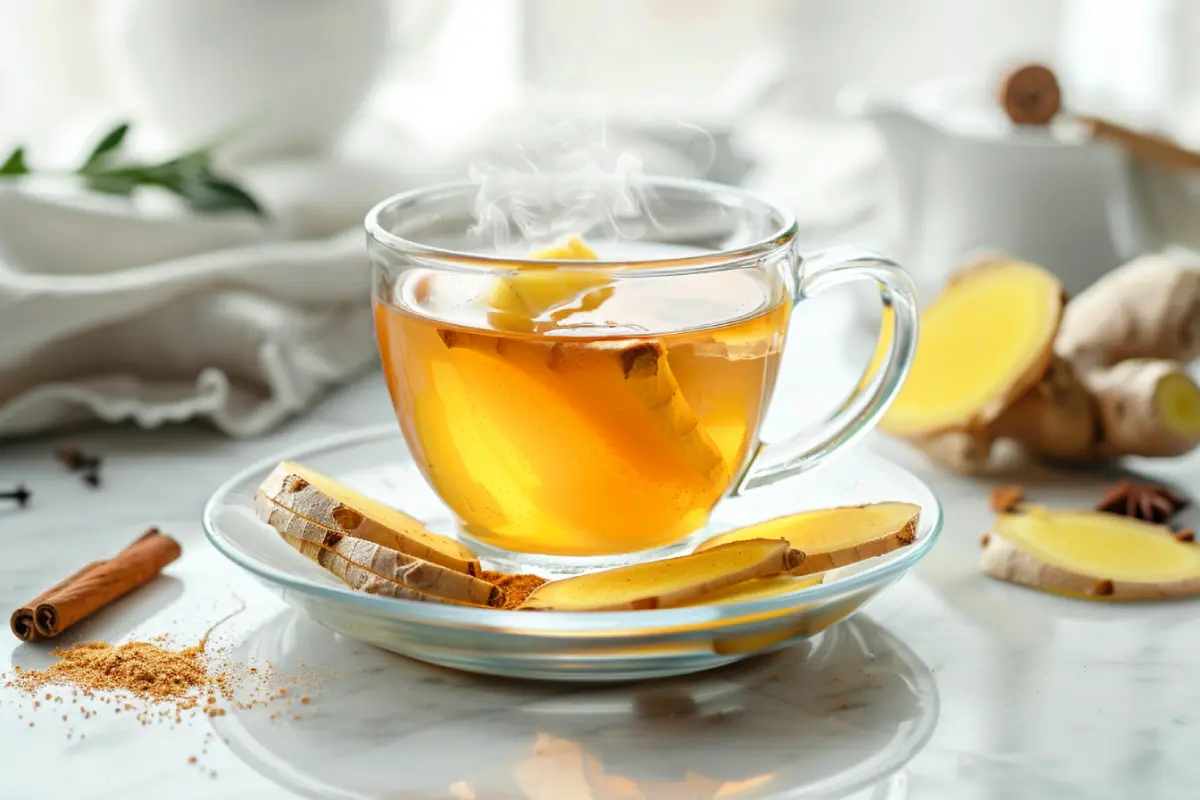
Ginger tea for winter hits differently the moment that first cold front sweeps in.
That spicy perfume rising from the cup… the warm steam brushing your cheeks… the way one sip feels like it travels straight to your bones.
And as I Amara Diallo stood by my grandmother’s tin kettle one December morning, listening to the low hiss as ginger met boiling water, I thought, “Wait… why does this feel like more than tea?”
Actually… no… I knew exactly why: winter needs fire. And ginger tea is fire you can drink.
This is the kind of cup that snaps you awake, wraps you in comfort, and whispers, “You’re not alone in this cold.”
Below you’ll find the most complete, sensory-rich, human-crafted guide to ginger tea for winter: benefits, recipes, variations, cultural twists, brewing mistakes, serving rituals, and more.
Let’s warm the season from the inside out.
Table Of Contents
Table of Contents

Ginger Tea for Winter: A Bold, Warming Ritual You’ll Crave All Season
A bold and warming ginger tea for winter made with fresh ginger, cinnamon, cloves, lemon, and honey. Perfect for immunity, circulation, and deep seasonal comfort.
- Total Time: 12 minutes
- Yield: 2 servings 1x
Ingredients
2 cups water
1 1/2 tablespoons fresh ginger, thinly sliced
1 cinnamon stick
2–3 cloves
1 tablespoon honey (or to taste)
1 lemon slice
Instructions
1. Bring water to a gentle simmer.
2. Add ginger, cinnamon, and cloves.
3. Simmer for 8–10 minutes until aromatic.
4. Remove from heat and add lemon.
5. Let it rest 2 minutes.
6. Sweeten with honey and serve hot.
Notes
Thinly sliced ginger releases more flavor than chunks.
Do not boil aggressively—gentle simmer protects essential oils.
Adjust ginger amount based on preferred heat.
For stronger spice, add a pinch of cayenne or black pepper.
Remove cloves if steeping longer than 10 minutes to avoid bitterness.
- Prep Time: 2 minutes
- Cook Time: 10 minutes
- Category: Tea, Winter Drinks, Herbal Remedies
- Method: Simmering
- Cuisine: Multicultural
Nutrition
- Serving Size: 1 cup
- Calories: 35
- Sugar: 8g
- Sodium: 2mg
- Fat: 0g
- Saturated Fat: 0g
- Unsaturated Fat: 0g
- Trans Fat: 0g
- Carbohydrates: 9g
- Fiber: 0g
- Protein: 0g
- Cholesterol: 0mg
Why Ginger Tea for Winter Feels Like a Seasonal Lifeline
The first time I served ginger tea to a friend shivering after a snowstorm, she wrapped her hands around the mug and said, “This feels like putting sunshine back in my body.”
I laughed—then caught myself thinking, Wait… isn’t that exactly the point?
The zing, the heat, the peppery aroma—they hit fast.
Actually… no… they dance in, and the cold doesn’t stand a chance.
Test Note: Fresh ginger delivers more heat than powdered. Slice it thin to increase surface area and maximize the infusion.
Why people crave it in winter:
- Natural warming spice that boosts circulation
- Soothes winter coughs thanks to its natural compounds
- Eases digestive heaviness common in cold months
- Smells like comfort, spice, and holidays
- Pairs with honey, lemon, cinnamon, cloves, and mint
And if warming, ginger-forward dishes are your kind of comfort,
you’ll love Grace’s Honey Ginger Chicken the same cozy heat,
just wrapped into a weeknight dinner.
Winter is long. A cup of ginger tea makes it feel shorter.
The Science Behind Ginger’s Winter Warming Power
I grew up hearing elders say, “Ginger wakes the blood.”
As a kid, I didn’t understand.
But years later—on a freezing January evening—I felt that rush of warmth spreading from my chest outward and thought, Oh… so that’s what they meant.
*Actually… no… it was more dramatic than that. I felt alive again.
Here’s what’s happening:
- Gingerols and shogaols naturally increase blood flow
- Thermogenic effects slightly raise body temperature
- Anti-inflammatory compounds ease muscle tension
- Warm liquids help decongest sinuses
- Aromatic steam soothes winter dryness
Test Note: Don’t over-boil ginger. Simmering for 10–15 minutes preserves the oils that give ginger its signature kick.
When cold weather hits, ginger isn’t just tea—it’s strategy.
Ingredients You Need for the Perfect Winter Ginger Tea
I once grabbed old, dry ginger from the back of my pantry.
The tea tasted like… disappointment.
Wait… why did I think stale ginger would bring any heat?
Actually… no… I knew better.
Winter deserves the good stuff.
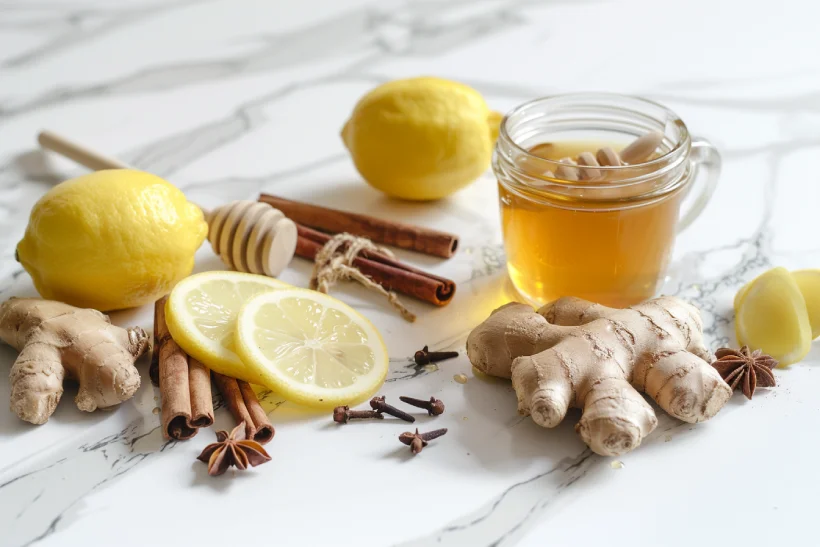
Essential Ingredients
- Fresh ginger root (2–3 inches)
- Filtered water (2 cups)
- Honey or maple syrup
- Lemon slices
Optional Winter Boosters
- Cinnamon stick – adds warmth & aroma
- Cloves – bring a holiday scent
- Star anise – slight sweetness
- Turmeric – earthy depth
- Black pepper – wakes up the gingerols
- Mint – cooling contrast
Test Note: If your ginger skin looks wrinkled, the root is drying out. Choose firm, heavy pieces.
The ingredients are simple—what they do together is magic.
How to Make Ginger Tea for Winter (The Signature Method)
There are many ways to make ginger tea, but this version has kept me company on icy nights, during storms, and after long walks in cold air.
As the steam rises, you might whisper, “Oh… I needed this.”
Step-by-step
- Slice ginger thinly (do not peel unless dirty).
- Bring 2 cups water to a boil.
- Add ginger, lower heat, simmer 12 minutes.
- Add cinnamon stick or cloves if using.
- Remove from heat.
- Add lemon and honey after the boil.
The sound of ginger hitting the hot water—soft, almost like a sigh—is its own winter soundtrack.
Test Note: Lemon becomes bitter if boiled. Add it afterward.
Ginger Tea for Winter: Variations That Bring the Heat
A friend once told me my kitchen smelled like a spice bazaar in the snow.
Wait… was that supposed to be an insult?
Actually… no… I took it as a compliment.
1. Spicy Winter Ginger Tea
- Add 1 pinch cayenne
- Pair with dark honey
2. Holiday Ginger Tea
- Add 1 cinnamon stick
- Add 2 cloves
- Squeeze of orange
Smells like December markets.
3. African Ginger Tea (Makrut Style)
- Add crushed black pepper
- Add mint
- Optional: splash of milk
Warm, bold, unforgettable.
4. Ginger Turmeric Winter Tonic
- Add ½ tsp turmeric
- Add black pepper
- Sweeten lightly
5. Bedtime Ginger Tea
- Add chamomile
- Add vanilla drop
- Avoid lemon
Test Note: Avoid too much turmeric—it settles at the bottom and dominates the cup.
Using Ginger Tea for Winter Immunity
One night last December, I felt a scratch in my throat—one of those here we go sensations.
Wait… was I getting sick?
Actually… no… I refused to accept that fate.
I made a pot of strong ginger tea with lemon and honey.
By morning, everything felt… easier.
Here’s why people swear by it:
- Vitamin C from lemon supports immunity
- Gingerols help soothe throat irritation
- Warm steam loosens congestion
- Hydration keeps your system functioning
- Honey coats and calms
Test Note: Use raw honey if possible—heat destroys some of its soothing benefits.
You’re not curing anything—but you’re supporting everything.
Ginger Tea for Winter Mornings: A Ritual That Changes the Day
There’s something about the quiet winter light filtering through the window while ginger simmers.
The air smells sharp, spicy, alive.
And I remember thinking, “Wait…why do I ever start my mornings any other way?”
Actually… no… the real question is: why doesn’t everyone?
Why it’s perfect in the morning:
- Jumpstarts digestion
- Warms the chest and belly
- Clears the mind and sinuses
- Sets a calm, strong tone for the day
Test Note: If ginger is too intense on an empty stomach, pair the tea with a small snack.
A good winter day starts with heat.
Ginger Tea for Winter Evenings: Slow, Deep Comfort
Night ginger tea tastes different from morning ginger tea.
It’s softer.
Quieter.
Like a blanket instead of a spark.
There are evenings when the world feels too loud, too cold.
Wait… why am I holding onto this tension?
Actually… no… let it go.
Perfect evening add-ins:
- Chamomile
- Cinnamon
- Vanilla
- Lavender (very tiny pinch)
Test Note: If you want deeper relaxation, reduce the ginger by half and extend the steeping time of calming herbs.
The night feels friendlier with a warm cup in your hands.
Common Mistakes When Making Ginger Tea for Winter
1. Using too little ginger
Winter demands boldness.
2. Boiling lemon
Turns the tea bitter.
3. Not slicing thin enough
You lose flavor.
4. Sweetening too early
Kills the complexity.
Wait… did I make all these mistakes myself?
Actually… no… I still make #3 sometimes.
Test Note: If your tea tastes flat, your ginger was old or your simmer was too short.
Avoid these and winter becomes delicious.
Serving Ginger Tea in Winter: Rituals That Warm the Heart

My grandmother believed tea wasn’t just served—it was offered.
The sound of pouring, the little swirl of steam, the clink of the mug—all part of the moment.
Winter serving ideas:
- Use heavy ceramic mugs that retain heat
- Garnish with a ginger slice or lemon wheel
- Serve with spiced cookies
- Add a cinnamon stick stirrer
Sometimes these details matter more than the recipe.
Test Note: Pre-warm your cup with hot water so the tea stays hot longer.
Small rituals make winter feel less cold.
FAQ
Is ginger tea good in winter?
Yes—its warming properties, digestive support, and soothing effects make it ideal for winter.
Can I drink ginger tea every day in winter?
Most people can, but keep it moderate if you have acid sensitivity.
Is fresh ginger better than powdered for winter tea?
Fresh ginger has stronger flavor and more natural oils—perfect for cold weather.
What’s the best time to drink ginger tea in winter?
Morning for energy, evening for comfort, anytime for soothing warmth.
Can ginger tea help with winter colds?
It won’t cure anything, but it may support hydration, soothe throat irritation, and ease congestion.
What People Said About Ginger Tea for Winter
1. Nadia — Paris, France
“I honestly forgot how fast ginger warms you up. I tried your version with lemon and cloves… I felt the heat in my chest right away. It kept me comfortable the whole evening. I’m definitely making it again tomorrow.”
2. Mamadou — Montreal, Canada
“Winter hits hard here. I followed your recipe with the pepper and a bit of cayenne. I only drank one cup and the shivering stopped. I thought it would be too strong but no, it goes down smooth. Really works.”
3. Leila — Marseille, France
“My throat was hurting for like three days. I tried your version with garlic and mint. I hesitated at first but I made it anyway. Honestly I could breathe better within an hour. It’s my evening drink now.”
4. Kofi — Brussels, Belgium
“I drink tea a lot but never like this. The mix of ginger, cinnamon, and orange surprised me. I felt like I was drinking something powerful but soft at the same time. I’m keeping this recipe for winter.”
Conclusion
Winter has a way of creeping under the skin—quiet, cold, relentless. But ginger tea for winter pushes back with fire, flavor, and that deep-down comfort you feel before the first sip even lands.
Every cup is a reminder that warmth doesn’t just come from heaters or blankets.
It comes from rituals. From spices that travel across continents. From recipes passed down with love and grit.
And as I sit with my own steaming mug, I catch myself thinking, “Wait… why does this simple drink feel like strength in liquid form?”
Actually… no… not strength—connection. To culture. To memory. To yourself.
So the next time winter presses a little too hard, simmer a pot of ginger, lemon, cinnamon, whatever twist you claim as your own.
Let the aroma rise.
Let the moment slow.
Let the heat move through you.
Because in the heart of winter, this isn’t just tea.
It’s your warmth. Your ritual. Your power.