
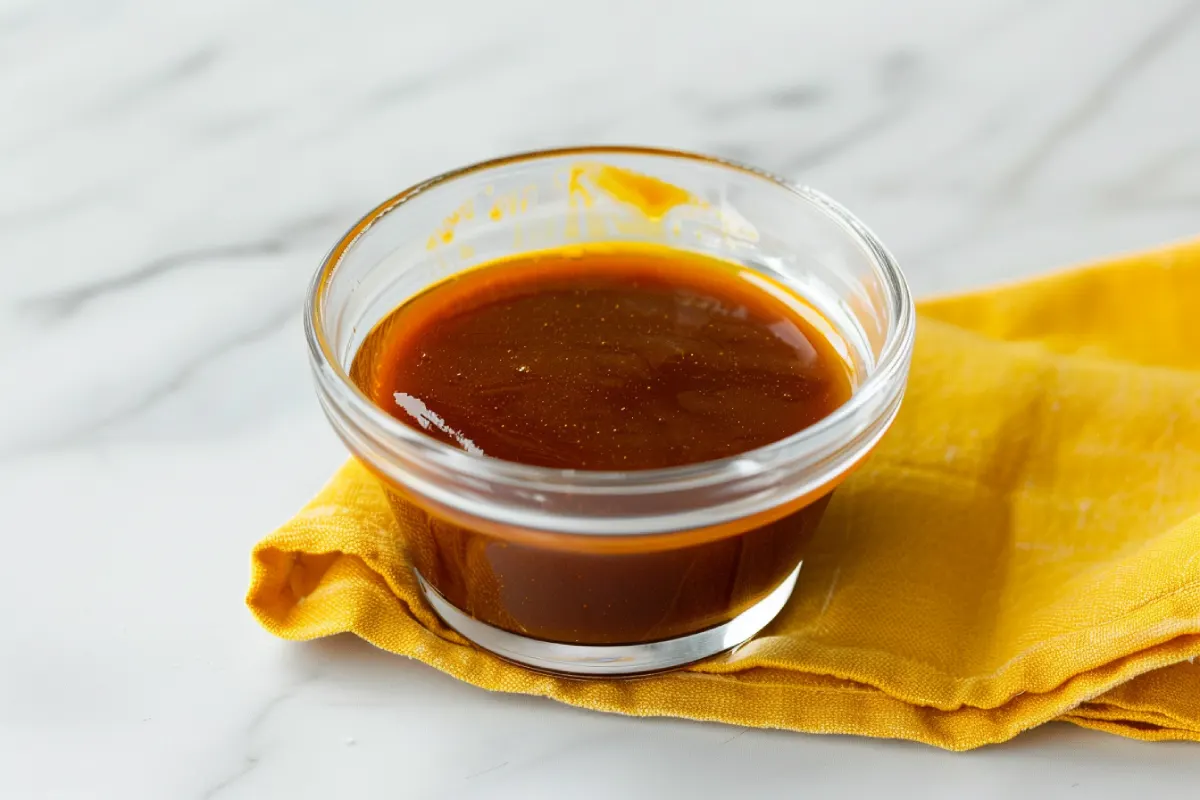
Tonkatsu Sauce doesn’t announce itself loudly.
It arrives with calm confidence—dark, glossy, grounded. The aroma settles before the taste does, sweet and savory at once, familiar but not obvious. Wait… why does this feel comforting already?
Actually… no… comforting isn’t the right word. It feels balanced. And balance has weight.
This sauce isn’t decoration.
It’s structure.
Across many food cultures, sauces are optional. Add-ons. Something you drizzle if you feel like it. Here, the sauce is part of the design. Without it, the dish feels unfinished, like a rhythm missing its downbeat.
This is the story of a sauce that understands restraint, contrast, and purpose—and why that matters more than hype.
Table Of Contents
Table of Contents

Tonkatsu Sauce: Japan’s Addictive Umami Secret
A thick, sweet-savory Japanese sauce built on balance rather than intensity. This homemade tonkatsu sauce is designed to complement fried foods without overpowering them. It’s smooth, glossy, and quietly addictive.
- Total Time: 12 minutes
- Yield: 1 cup 1x
Ingredients
½ cup ketchup
2 tablespoons soy sauce
2 tablespoons sugar
2 tablespoons Worcestershire sauce
1 tablespoon rice vinegar
1 tablespoon grated apple
½ teaspoon garlic powder
½ teaspoon onion powder
Instructions
1. Combine all ingredients in a small saucepan.
2. Whisk gently over medium-low heat until smooth.
3. Let the sauce simmer softly for 5–7 minutes, stirring occasionally.
4. Remove from heat and allow it to cool before serving.
Notes
The sauce will thicken naturally as it cools.
Do not over-reduce; thickness develops with rest, not heat.
Taste again after cooling before adjusting seasoning.
- Prep Time: 5 minutes
- Cook Time: 7 minutes
- Category: Sauce
- Method: Simmering
- Cuisine: Japanese
- Diet: Vegetarian
Nutrition
- Serving Size: 2 tablespoons
- Calories: 45
- Sugar: 7g
- Sodium: 420mg
- Fat: 0g
- Saturated Fat: 0g
- Unsaturated Fat: 0g
- Trans Fat: 0g
- Carbohydrates: 11g
- Fiber: 0g
- Protein: 0g
- Cholesterol: 0mg
What This Sauce Really Is
At its most basic level, Tonkatsu Sauce is a thick, sweet-savory Japanese condiment traditionally paired with breaded pork cutlets. But stopping there misses everything that makes it meaningful.
This sauce was never meant to stand alone. It exists to mediate—between crunch and softness, fat and freshness, indulgence and clarity. That role shapes every decision behind it.
I remember tasting it on its own once, just to understand it. Wait… it’s calmer than I expected.
Actually… no… calm isn’t empty. It’s intentional.
Core characteristics that define it:
- Rounded sweetness, never sharp
- Savory depth without saltiness
- Gentle acidity that resets the palate
- A texture that clings instead of running
Test Note: If the sauce tastes aggressive or thin, it’s out of balance.
Why Fried Food Needed This Exact Answer
Frying solves one problem and creates another.
It gives crunch.
It gives richness.
It also gives weight.
Many cuisines respond by adding spice or heat. Japanese cooking often responds by adding contrast. That’s where Tonkatsu Sauce earns its place.
I imagine a cook standing over a pan of oil, listening to the quiet crackle. Wait… this needs relief.
Actually… no… it needs harmony.
Sweetness softens fat.
Acidity cuts through oil.
Umami grounds everything.
Idiom: Don’t fight fire with fire—balance it.
A Sauce Born from Adaptation, Not Imitation
This sauce belongs to yoshoku cuisine, often misunderstood as “Western food in Japan.” That definition misses the nuance.
Yoshoku isn’t copying.
It’s translation.
Western cutlets arrived. Japanese technique reshaped them—lighter breading, precise frying, cleaner finishes. Sauces followed the same logic. Sharpness was softened. Sweetness was controlled. Everything became more measured.
Wait… is this fusion?
Actually… no… fusion implies collision. This is conversation.
The Flavor Architecture
This sauce works because every element has a job.
The internal structure looks like this:
- Sweetness cushions richness
- Saltiness anchors the palate
- Acidity refreshes between bites
- Umami creates depth without heaviness
Nothing dominates. Nothing disappears.
Test Note: If you can identify one ingredient immediately, the balance is off.
Ingredients: Familiar, Used with Intention
On paper, nothing looks exotic. That’s the brilliance.
Soy sauce. Sugar. Vinegar. Fruit. Aromatics.
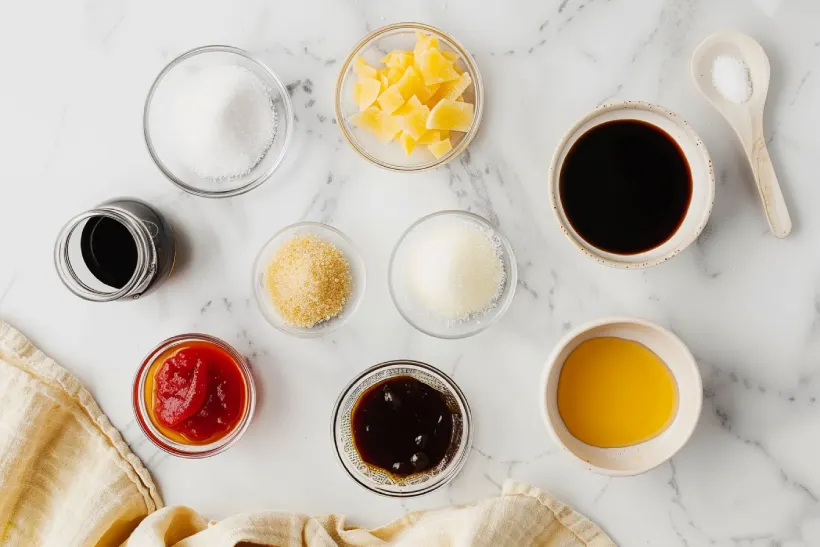
Wait… fruit in a savory sauce?
Actually… no… fruit here isn’t fruity. It’s structural. It binds sweetness and acidity into something smooth.
Common building blocks:
- Soy sauce for savory depth
- Sugar for roundness
- Vinegar for clarity
- Apple for softness and body
- Onion and garlic for warmth
Test Note: You should never taste “apple.” If you do, pull back.
Store-Bought vs Homemade: The Wrong Debate
People love to argue this point. It’s unnecessary.
Store-bought versions exist because consistency matters. They behave predictably with fried food, in any kitchen, at any table.
Homemade versions exist because control matters too.
Some nights, you want reliability.
Some nights, you want authorship.
Actually… no… neither is more authentic. Intention decides.
Idiom: Different roads, same destination.
How to Make Tonkatsu Sauce from Scratch
This method respects tradition—but it allows flexibility.
Nothing rigid. Nothing precious. Just balance, built step by step.
You don’t need special tools.
You need attention.
Wait… can something this simple really work?
Actually… no… simplicity here is the entire point.
Ingredients (about 1 cup)
- ½ cup ketchup
- 2 tablespoons soy sauce
- 2 tablespoons sugar
- 2 tablespoons Worcestershire sauce
- 1 tablespoon rice vinegar
- 1 tablespoon grated apple
- ½ teaspoon garlic powder
- ½ teaspoon onion powder
Each ingredient has a role. None are filler.
Steps
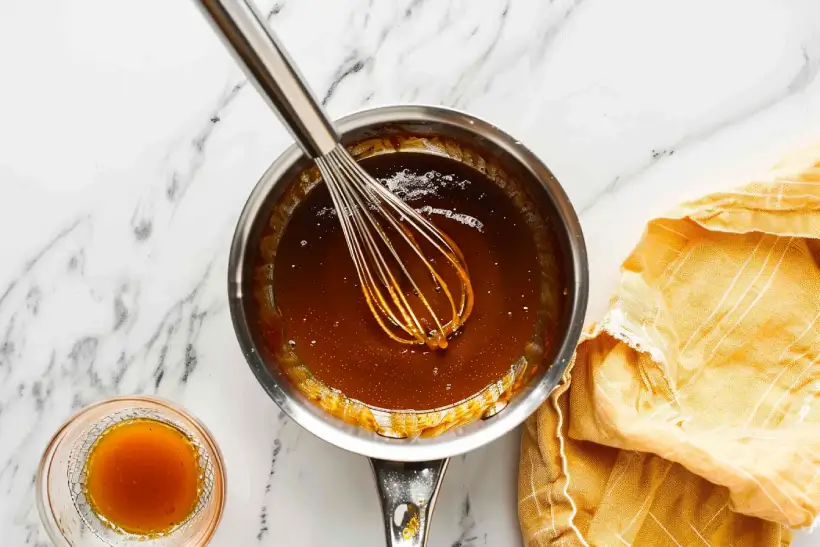
- Combine all ingredients in a small saucepan
- Whisk gently over medium-low heat
- Let it simmer softly for 5–7 minutes, stirring occasionally
- Remove from heat and allow it to cool
Wait… ketchup?
Actually… no… think of it as efficiency. Tomato, sweetness, and acidity already working together.
Test Note: The sauce thickens as it cools.
Don’t chase thickness with heat—patience does better work.
Texture: The Silent Decider
Flavor gets attention. Texture does the work.
A proper Tonkatsu Sauce should:
- Coat food evenly
- Leave a glossy finish
- Stay in place without pooling
I once rushed a batch, thinned it too much. Wait… why won’t this stick?
Actually… no… time fixed it.
Idiom: Measure twice, thin once.
Traditional Use and Why It Matters
This sauce is rarely poured aggressively.
- Drizzled lightly after slicing
- Served on the side for dipping
- Paired with raw cabbage and rice
The goal isn’t saturation.
It’s punctuation.
Test Note: Apply after slicing so the crust stays crisp.
Beyond Pork: Expanding the Context
Once you understand the logic, it becomes versatile.
That same balance works especially well with crispy seafood, like these Fish Sticks in Air Fryer, where the crunch needs something grounding on the side.
It works wherever there is:
- Crunch that needs grounding
- Fat that needs contrast
- Simplicity that needs depth
Chicken, tofu, vegetables, neutral starches—all respond well.
If you’re drawn to sauces that balance sweetness with depth, you might also enjoy this BBQ Mayo Sauce, which leans more toward creaminess while keeping that same comforting backbone.
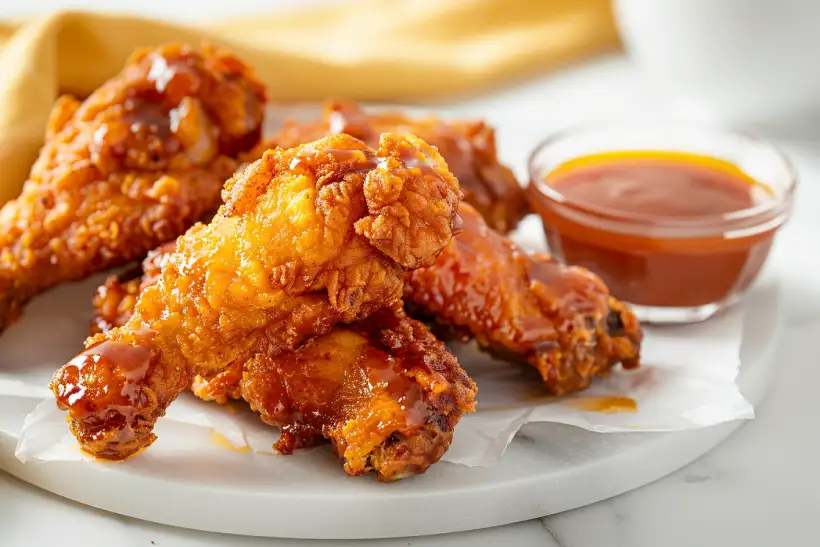
Wait… fries?
Actually… no… it makes sense immediately.
Common Mistakes and How to Fix Them
Everyone makes them.
The usual problems:
- Too sweet
- Too acidic
- Too thin
- Overcooked
Wait… did I ruin it?
Actually… no… most mistakes are reversible.
Fixes:
- Add apple to soften acidity
- Add soy sauce for depth
- Simmer gently, never rush
Storage and Shelf Life
- Store in an airtight container
- Refrigerate
- Keeps 2–3 weeks
Flavor improves after resting.
Test Note: It should smell warm and savory, never sharp.
Why This Sauce Works Emotionally
Food memory isn’t logical.
It’s physical.
A bite lands.
You pause. Wait… this feels familiar.
Actually… no… it feels safe.
Balance reassures the body before the mind understands.
FAQ
Is this sauce meant only for pork?
Not at all.
Tonkatsu Sauce was designed with fried pork in mind, but its logic travels well.
Anywhere there’s crunch, richness, or something neutral that needs grounding, it works.
Chicken, vegetables, tofu, even simple starches respond naturally.
Why does it taste better after resting?
Right after cooking, Tonkatsu Sauce can feel slightly unsettled.
As it cools, sweetness, acidity, and umami reconnect.
Nothing changes dramatically, but everything aligns.
That pause is part of the recipe, not an afterthought.
Can it be adjusted without breaking the balance?
Yes, but restraint matters.
With Tonkatsu Sauce, small changes matter more than big ones.
Taste, step back, then adjust once.
Chasing perfection usually does more harm than good.
Is homemade really better than store-bought?
Better isn’t the right word.
Homemade Tonkatsu Sauce gives control, while store-bought offers consistency.
Both work when used with intention.
Context matters more than effort.
What’s the most common mistake people make?
Trying to make it louder.
More sugar, more acid, more heat.
Tonkatsu Sauce isn’t built for that.
Its strength is knowing when to stop.
What People Said About This Sauce
These are messages Amara received after people cooked, tasted, and lived with Tonkatsu Sauce in their own kitchens.
Jason M. — Brooklyn, New York
Hey Amara, I finally made this last night. Didn’t even put it on pork at first, just tasted it on its own. Tonkatsu Sauce felt calm, almost settled. Nothing sharp, nothing loud. Ended up dipping fries into it way past midnight. No regrets.
Linh T. — San Jose, California
I wanted to tell you this worked exactly the way you described. I served it with chicken cutlets, and everyone thought I bought it from a Japanese store. The balance surprised me most. It didn’t take over the plate.
Marco R. — Queens, New York
Tried it today. I almost added more sugar, then remembered what you said about restraint. Glad I didn’t. It settled after a few minutes. Way better once it cooled.
Aisha K. — Dearborn, Michigan
I grew up with a lot of sauces on the table, but Tonkatsu Sauce felt different. It didn’t fight the food. It kind of held everything together. My kids noticed too, which never happens.
Daniel P. — Portland, Oregon
I’m usually impatient with sauces, but this forced me to slow down. I tasted it hot and thought it was flat. Came back later and understood what you meant. That cooling note was real.
Sofia L. — Austin, Texas
Made it this weekend. Simple ingredients, but it didn’t taste simple. It felt finished, like it knew where it was going. I wrote it down in my notebook. That’s rare for me.
Conclusion
This sauce never asks to be the center of attention.
It doesn’t shout. It doesn’t rush.
Tonkatsu Sauce shows up steady, grounded, and sure.
A spoonful lands on something crisp.
You pause. Wait… that’s exactly what was missing.
Actually… no… Tonkatsu Sauce was always there, quietly doing the work.
What makes it endure isn’t trend or nostalgia.
It’s restraint.
It’s balance.
It’s knowing when to stop.
In a world that pushes flavor louder and faster, Tonkatsu Sauce moves differently.
It softens.
It connects.
It completes.
And that’s why Tonkatsu Sauce stays.