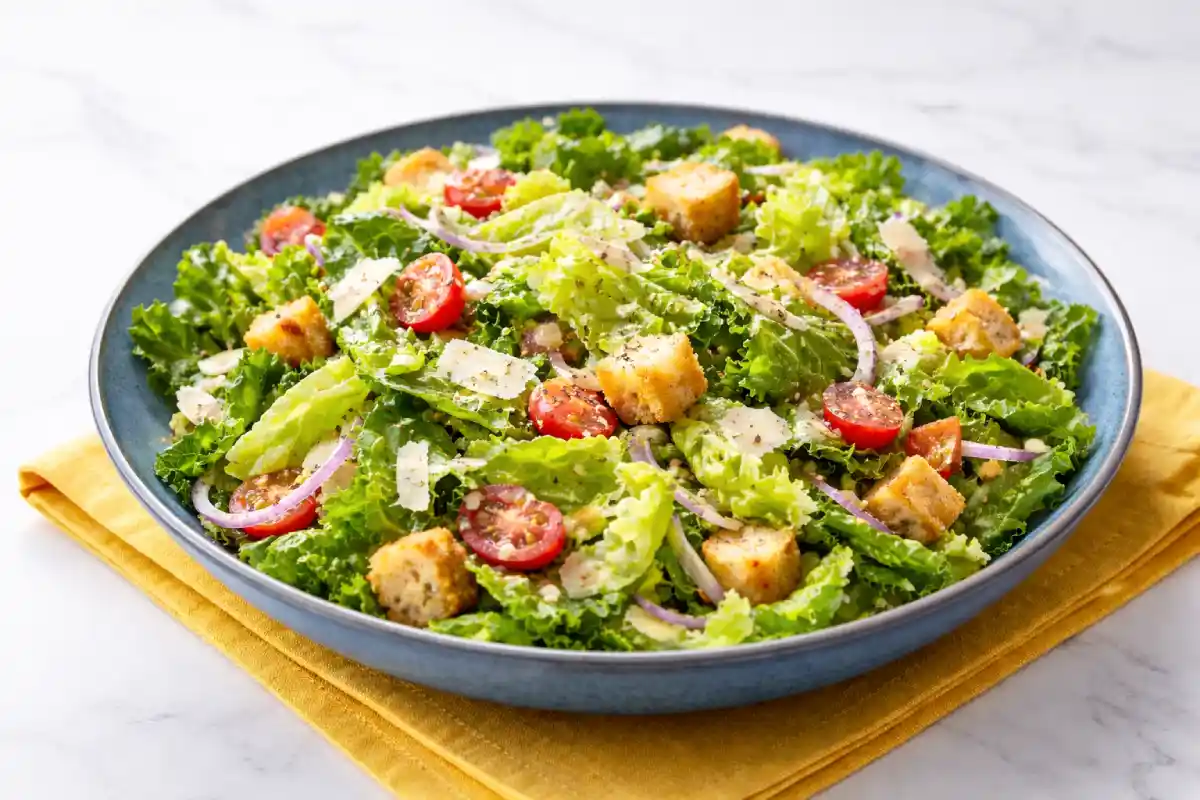

The 1905 salad has a funny way of showing up in memories before it shows up on a plate.
Nobody invented it in a big moment. It just sort of… happened.
It began in a small neighborhood restaurant—one of those places where the lights buzz softly and the chairs wobble a little, but no one complains because the food feels like home.
Back then, Spanish and Cuban families came in after long shifts.
Some still in work boots.
Some with tired shoulders.
Everyone hungry for something warm, simple, familiar.
A server would bring out a bowl and mix the salad right at the table.
No fuss.
Just warm garlic drifting through the air and people leaning in because it smelled too good not to.
I imagine the cooks in the back talking loudly over each other, someone slicing cheese into uneven strips, someone else crushing garlic with the side of a knife because they were in a hurry.
Real kitchen energy.
Nothing polished.
Sometimes, when I make this salad now, I get this strange little flash—like I’m hearing echoes from that old room.
Wait… maybe I’m imagining it.
Actually… no… food carries memories even if they aren’t ours.
This salad is one of those.
Table Of Contents
Table of Contents

1905 Salad: A Nostalgic, Flavor-Rich Classic With Century-Old Roots
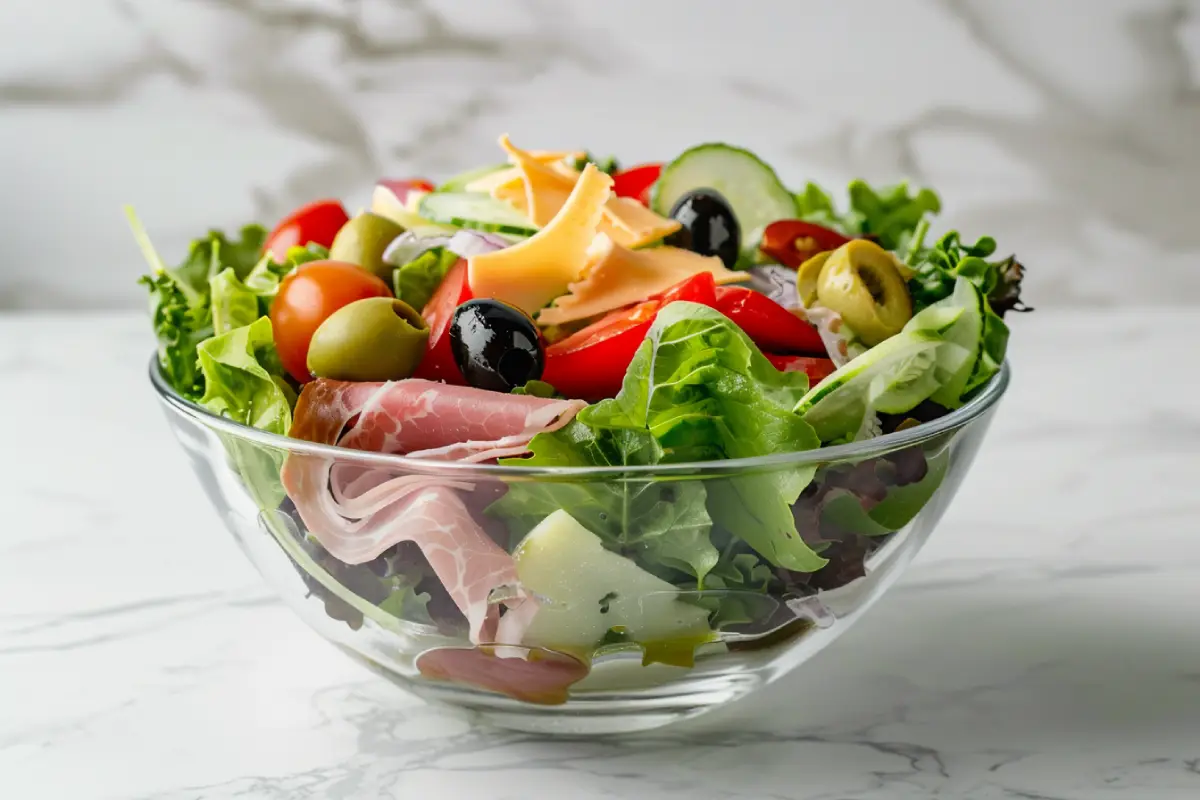
A warm, garlicky 1905 salad with crisp romaine, Swiss cheese, tomatoes, olives, and thin-sliced ham tossed in a classic table-side dressing.
- Total Time: 15 minutes
- Yield: 4 servings 1x
Ingredients
1 large head romaine lettuce, chopped
6 oz Swiss cheese, sliced into thin strips
2 firm Roma tomatoes, cut into wedges
1 cup Spanish green olives
1 cup thin-sliced smoked ham, cut into ribbons
1/2 cup olive oil
4 garlic cloves, minced
2 tbsp white wine vinegar
1 tbsp Worcestershire sauce
1 tbsp lemon juice
1 tsp dried oregano
Salt and cracked black pepper
Instructions
1. Chill the salad bowl to keep the greens crisp.
2. Warm the olive oil gently and bloom the garlic without browning it.
3. Remove the pan from heat and add vinegar, Worcestershire, lemon juice, and oregano.
4. Season the dressing with salt and cracked black pepper to taste.
5. Add chopped romaine to the chilled bowl.
6. Pour the warm dressing around the edges of the bowl.
7. Add Swiss cheese strips, tomato wedges, olives, and ham ribbons.
8. Toss the salad with light lift-and-drop motions until everything is coated.
9. Serve immediately while the lettuce is still crisp.
Notes
Use very cold romaine for the best crunch.
Warm the dressing only until fragrant; too much heat will wilt the greens.
Slice cheese into thin ribbons so it softens slightly but keeps its shape.
Toss the salad right before serving; the warm dressing softens the leaves quickly.
- Prep Time: 15 minutes
- Cook Time: 0 minutes
- Category: Salad
- Method: Tossed
- Cuisine: American
Nutrition
- Serving Size: 1 serving
- Calories: 320
- Sugar: 4
- Sodium: 820
- Fat: 26
- Saturated Fat: 9
- Unsaturated Fat: 15
- Trans Fat: 0
- Carbohydrates: 10
- Fiber: 3
- Protein: 12
- Cholesterol: 45
Why the 1905 Salad Still Feels Alive Today
What continues to astonish me about the 1905 salad is how it feels both unpretentious and deeply curated.
It’s not flashy.
It doesn’t need reinvention.
It’s the culinary equivalent of a handwritten letter—warm, intimate, slightly imperfect in the best way.
I remember making it during a summer storm once. Rain hammered the windows, the kitchen lights flickered, and the scent of garlic blooming in warm oil grounded me instantly.
I caught myself whispering, Wait… this smells like home.
Actually… no… it smelled like a memory that wasn’t even mine—something inherited, passed down through the generations.
Sensory detail:
The dressing has this soft sizzle when the garlic first hits the oil, like a tiny promise being made.
Micro-story:
My grandfather—who swore he didn’t “believe in salad”—once took a bite of this and quietly asked for seconds. No speech, no praise, just that understated request that told me everything.
Idiom:
That day, the salad “hit the nail on the head.”
Test Note:
Use fresh garlic. Pre-minced garlic tastes muted and metallic in warm dressing.
The Warm Dressing: A Sunlit, Aromatic Signature
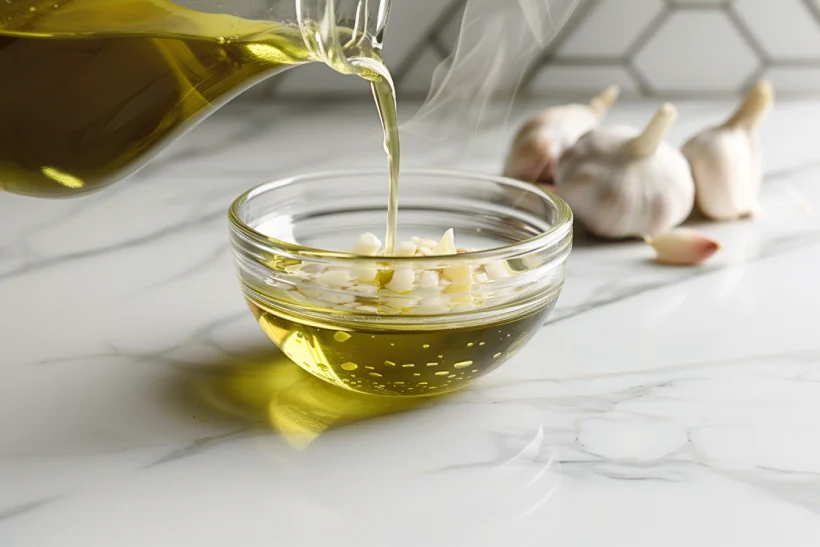
Most salads rely on cold dressings, but not this one.
The 1905 salad whispers its secret through warmth.
The first time I whisked the dressing, I hesitated.
Wait… am I overheating this?
Actually… no… the gentle warmth unlocks aromas cold oil could never reach.
What makes this dressing special
- Warm olive oil that softens but never fries the garlic
- Sharp white wine vinegar cutting through richness
- Worcestershire offering savory depth
- Oregano that conjures old Mediterranean kitchens
- Fresh lemon juice brightening every bite
Sensory detail:
The smell rises like a small cloud—herbal, garlicky, comforting.
Micro-story:
Once, while preparing this dressing, my niece leaned over the pot and said, “It smells like someone lit a candle made of dinner.” Kids always tell the truth.
Test Note:
Heat the oil only until just warm—around 100–120°F. Too hot and the garlic turns bitter.
Romaine Lettuce: The Backbone of the 1905 Salad
Romaine isn’t just an ingredient here—it’s the architecture.
Its ribs snap crisply, like breaking fresh ice, and its leaves hold up to warm oil without surrendering.
I tried using mixed greens once, thinking I was “modernizing.”
Wait… why does everything look tired already?
Actually… no… romaine is irreplaceable.
Why romaine works
- Crunch factor: unmatched
- Water content: perfectly balanced
- Cold structure: resists wilting
- Neutral flavor: lets dressing shine
Micro-story:
My aunt used to whirl romaine in a giant hand-cranked spinner that squeaked like an old bicycle. The sound echoed through the house—a kind of culinary windmill announcing dinner.
Idiom:
Romaine is the “backbone” of the operation.
Test Note:
Your lettuce must be bone-dry. Water repels dressing and ruins the emulsion.
Swiss Cheese: The Soft-Blunt Heartbeat
Swiss cheese may seem unexpected, but its mild nuttiness, subtle sweetness, and firm texture make it essential to the 1905 salad.
Every time I slice it into ribbons, I pause.
Wait… should I grate it instead?
Actually… no… the ribbons melt gently against the warm dressing without dissolving.
Why Swiss cheese matters
- Balances acidity
- Adds creamy notes
- Provides chewy contrast
- Absorbs warm dressing beautifully
Sensory detail:
As the warm dressing coats it, the edges soften like velvet warming in the sun.
Micro-story:
My college roommate used to swipe the cheese strips from my cutting board when she thought I wasn’t looking—her silent way of approving a recipe she never admitted she liked.
Test Note:
Always slice into thin strips. Thick chunks distract from the texture harmony.
Tomatoes & Olives: Color, Acidity, and Brine
These are the little fireworks of the 1905 salad—bright bursts of acidity and salinity that break through the richness.
I once considered skipping the olives—just once.
Wait… that feels wrong already.
Actually… no… the olives anchor everything.
Tomatoes
- Choose firm Roma tomatoes for clean wedges.
- Their mild acidity mingles beautifully with vinegar and lemon.
Olives
- Spanish-style green olives bring briny sharpness.
- They echo the salad’s early Mediterranean influences.
Sensory detail:
When you toss the bowl, the olives knock softly against the sides like small stones in gentle surf.
Test Note:
Avoid overripe tomatoes—they “bleed” and water down the dressing.
Ham: Optional, But Historically Resonant
The early versions of the 1905 salad included thin-sliced ham—mostly because restaurants used what they had on hand after slicing for sandwiches.
When I skip it, I always feel something’s missing—like a long sentence that suddenly ends mid-thought.
Wait… do I really need the ham today?
Actually… no… but it brings a smoky, salty whisper that ties the dressing to the greens.
Tips for using ham
- Use paper-thin slices
- Cut into fine ribbons
- Add gently during tossing
Micro-story:
My father used to sneak extra ham into his portion “for strength,” though everyone knew he simply loved it.
Idiom:
It’s the ingredient that “ties the room together.”
Test Note:
Skip thick cubes—they dominate the bite instead of supporting it.
The Ritual: A Warm Dressing Meets Cold Greens
This is the part that feels almost sacred.
A chilled bowl.
Cold romaine.
Warm dressing poured in a slow ribbon.

And suddenly the kitchen smells like old-world hospitality.
I always hear my mother’s voice during this moment:
“Be gentle. Greens aren’t soldiers.”
I laugh because she was right—tossing isn’t stirring.
Wait… am I tossing too fast?
Actually… no… let the bowl guide you.
Tossing steps (the authentic way)
- Place very cold romaine in a chilled bowl.
- Drizzle warm dressing around the edges first, not in the center.
- Add cheese, tomatoes, olives, ham.
- Lift and let fall—never mash.
- Serve instantly.
Sensory detail:
The sound of tongs brushing against the bowl is soft, rhythmic, almost soothing.
Test Note:
Never toss ahead of time—the warm oil will wilt the leaves within minutes.
Why the 1905 Salad Feels Like a Time Capsule
Every component of this dish tells a story—from the immigrants who blended Mediterranean ingredients with local flavors, to the families who gathered after long days of labor, to the servers who performed table-side tossings as though conducting a quiet symphony.
It’s not just a salad.
It’s a moment preserved in flavor.
I often wonder, Wait… do recipes really carry emotional memory?
Actually… no… they carry the hands that taught them, the kitchens that sheltered them, the faces that first tasted them.
Idiom:
It’s a recipe that “stands the test of time.”
Test Note:
If serving with a main dish, pair with grilled steak, roast chicken, paella, or garlic shrimp.
Full 1905 Salad Recipe (Authentic & Warm)
Ingredients
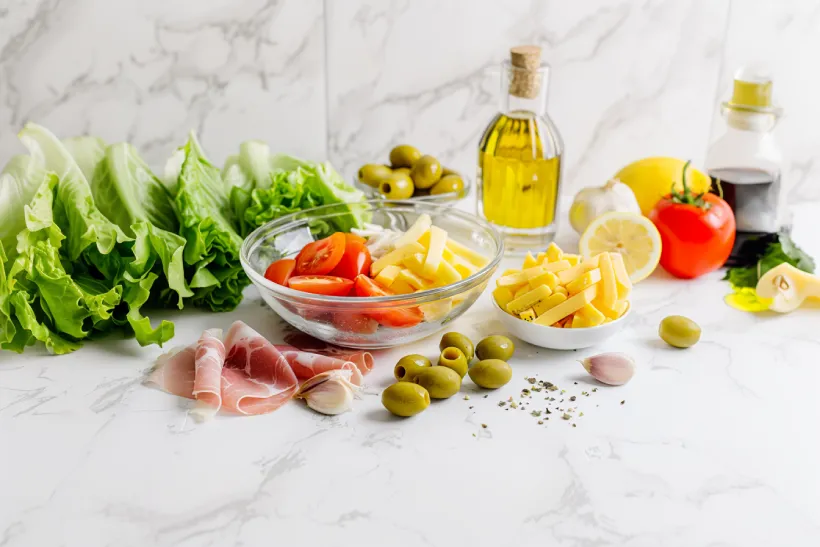
- 1 large head romaine, chopped
- 6 oz Swiss cheese, cut into thin strips
- 2 firm Roma tomatoes, wedged
- 1 cup Spanish green olives, sliced or whole
- 1 cup thin-sliced smoked ham, cut into ribbons
- ½ cup olive oil
- 4 garlic cloves, freshly minced
- 2 tbsp white wine vinegar
- 1 tbsp Worcestershire
- 1 tbsp lemon juice
- 1 tsp dried oregano
- Salt & cracked black pepper
Instructions
- Prep the bowl: Chill it for 10 minutes.
- Warm the oil: Heat olive oil until just warm.
- Add garlic: Let it gently bloom—no browning.
- Off heat: Add vinegar, Worcestershire, lemon, oregano.
- Season: Salt and pepper to taste.
- Assemble: Add romaine to chilled bowl.
- Dress: Pour warm dressing around edges.
- Add mix-ins: Cheese, tomatoes, olives, ham.
- Toss: Light lift-and-drop motions.
- Serve immediately.

Test Note:
Taste the dressing before tossing—it should feel sharp, aromatic, and slightly warm.
Creative Variations While Staying True to the Spirit
1. The Citrus Dawn Version
Add orange zest, swap lemon for sherry vinegar, and include shaved Manchego.
2. The Smoky Evening Version
Replace ham with smoked turkey, add a pinch of smoked paprika to the dressing.
3. The Garden Market Version
Add thin-sliced red onions, cucumber, and fresh oregano leaves.
4. The Heritage Version
Use Spanish olive oil, jamón serrano, and marinated tomatoes.
FAQ
Q: So… where did the 1905 Salad actually come from?
From a tiny old restaurant in Florida that opened in 1905.
The salad wasn’t the star at first; it kind of grew into one over time.
People liked the warm garlic dressing, so it stuck.
Why the name “1905”?
It’s basically a nod to the year the restaurant began.
The salad itself showed up later, but the name stayed anyway.
It’s more of a tradition than a literal timestamp.
What’s supposed to be in the “real” version?
Usually romaine or iceberg, Swiss cheese strips, tomatoes, green olives, and some ham.
The warm dressing—garlic, vinegar, oregano, a splash of Worcestershire—that’s the part you can’t skip.
Everything else can wiggle a bit.
Can I swap ingredients?
Of course. People do it all the time.
Turkey instead of ham, shrimp instead of turkey… it all works.
Just keep the garlic dressing warm and you’re still in the ballpark.
How do I keep it crisp?
Cold bowl, cold lettuce, no exceptions.
Don’t toss anything until you’re literally ready to eat.
Warm dressing waits for no one—it softens greens fast.
What people said about the 1905 Salad
Lena M. — Austin, Texas
Grace, I tried your 1905 salad last night and honestly didn’t expect much, but it surprised me. The warm dressing changed everything. I kept tasting it while I mixed and thought, wait, is it supposed to smell this good. Anyway, the bowl was empty faster than I planned.
Caroline R. — St. Petersburg, Florida
Hi Grace, just wanted to tell you something funny. My husband said he didn’t want salad for dinner. I made it anyway. He ended up eating more than half the bowl and asked if there was any left for lunch. So yes, this recipe is staying in our rotation.
Marco D. — Chicago, Illinois
Grace, I made the salad after work and it reminded me of the little cafés my grandmother used to take me to. The garlic hit the pan and I stopped what I was doing because it smelled familiar. Didn’t expect that. Good dish. Simple in the best way.
Conclusion
The funny thing about the 1905 salad is that it never tries too hard.
It just shows up with warm garlic, cold lettuce, a bit of history… and somehow that’s enough.
Some dishes feel like they need a whole story.
This one already has one — even if half of it lives in our imagination.
And, honestly, that’s part of its charm.
You make it once, then again, and suddenly it becomes your version.
A bit more cheese one day.
Less vinegar the next.
You adjust without thinking.
I guess that’s how recipes survive — not because they’re perfect, but because people keep returning to them, even on days when they don’t plan to.
Anyway… that’s the 1905 salad for me.
Simple.
Warm in its own way.
Worth making whenever you need something that feels familiar, even if you’ve never made it before.
If you enjoy fresh, bright dishes like this one, you might also love my Mediterranean Bowl — another simple recipe that feels both comforting and vibrant.