
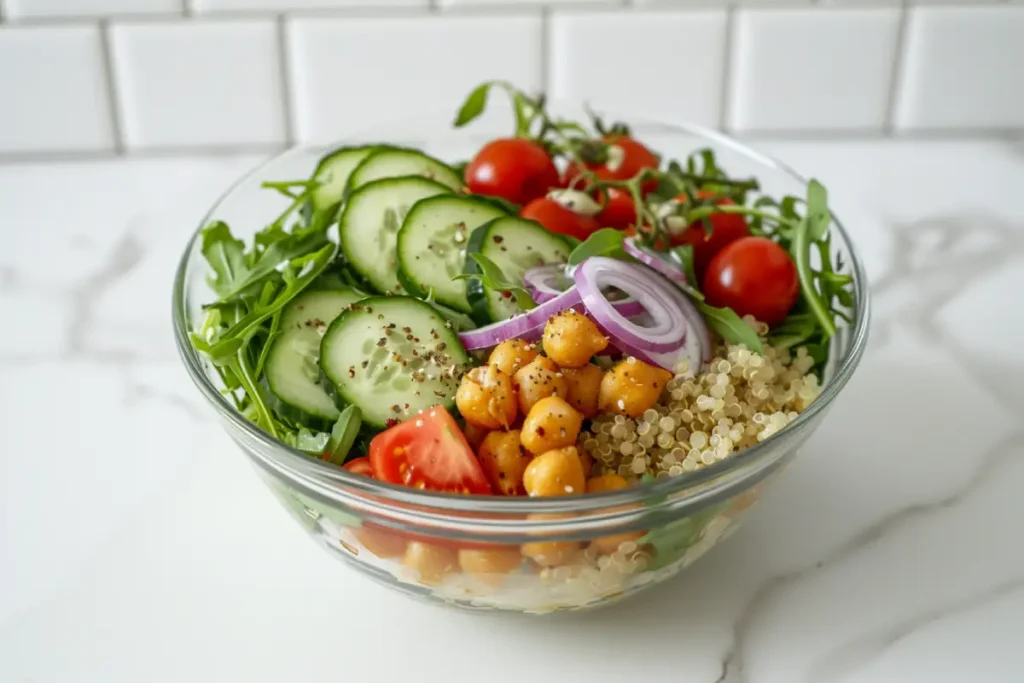
There’s a small, sunlit corner in my kitchen where I always prep bowls.
Something about that spot — the warm tile under bare feet, the faint smell of lemon lingering from yesterday’s cutting board — makes food taste different. Softer. Kinder.
A Mediterranean Bowl belongs in a place like that.
It’s a bowl layered with warmth and coolness, with grains that feel steady beneath the fork and herbs that move like tiny green fireworks. I’ve made hundreds of versions — polished ones, messy ones, experimental ones I regretted immediately — and every time, the bowl reminds me why this dish feels like a breath of fresh air.
It’s the colors.
The crunch.
The creamy notes.
The simplicity that hides little choices that matter.
Today, I want to take you into that corner of my kitchen — to show you how I build a Mediterranean Bowl that feels alive, comforting, imperfect in the best way.
Come with me.
table of content
Table of Contents
Mediterranean Bowl — A Heartfelt Guide to Building a Flavorful, Nourishing Bowl
A bright, fast, messy-in-the-best-way Mediterranean Shrimp Skillet made with tomatoes, garlic, lemon, olives, feta, and olive oil. Bursting with color, cooked in minutes, and forgiving even when the pan gets too hot.
- Total Time: 22 minutes
- Yield: 4 servings 1x
Ingredients
1 lb raw shrimp, peeled and deveined
2 cups cherry tomatoes
4 cloves garlic, minced
1 lemon (zest + juice)
1/4 cup kalamata olives, halved
2 tablespoons olive oil
1/4 teaspoon red pepper flakes
1/4 cup crumbled feta
Fresh basil, torn
Salt and pepper to taste
Optional: 2 tablespoons water to loosen sauce
Instructions
1. Pat shrimp completely dry so they sear, not steam.
2. Slice tomatoes, mince garlic, zest the lemon.
3. Heat olive oil in a skillet over medium-high until shimmering.
4. Add shrimp in a single layer and sauté until barely pink (about 60–90 seconds per side). Remove from skillet.
5. Add tomatoes, garlic, olives, red pepper flakes to the skillet; cook until tomatoes begin to burst.
6. Deglaze with lemon juice; add 1–2 tablespoons water if sauce reduces too fast.
7. Return shrimp to skillet and toss gently until coated.
8. Finish with feta, basil, lemon zest, and black pepper.
9. Serve warm over couscous, rice, or with crusty bread.
Notes
Don’t overcrowd shrimp — they steam instead of sear.
Cold-water thawing keeps shrimp firm; warm water makes them mushy.
If sauce reduces too quickly, add a splash of water.
Cast-iron gives the deepest flavor; stainless steel gives a lighter sauté.
Tomatoes often burst early — it’s normal and delicious.
Shrimp turn rubbery if reheated hot; use low heat with a splash of water.
- Prep Time: 10 minutes
- Cook Time: 12 minutes
- Category: Dinner
- Method: Skillet
- Cuisine: Mediterranean
Nutrition
- Serving Size: 1 portion
- Calories: 265
- Sugar: 4g
- Sodium: 780mg
- Fat: 14g
- Saturated Fat: 3g
- Unsaturated Fat: 10g
- Trans Fat: 0g
- Carbohydrates: 7g
- Fiber: 1g
- Protein: 26g
- Cholesterol: 185mg
ingredients for a mediterranean bowl
All the fresh ingredients that bring this Mediterranean Bowl to life come together here, simple and vibrant. This is everything I use when I build the bowl layer by layer — nothing more, nothing less.
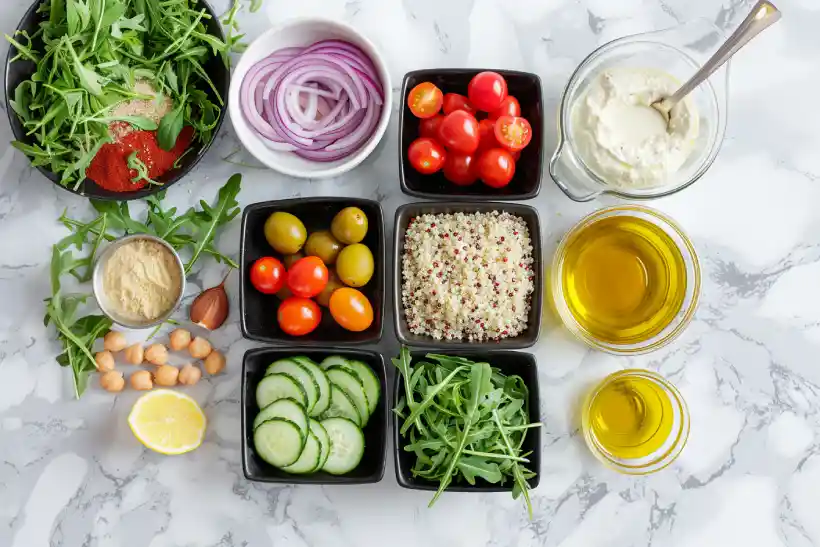
Ingredients:
- quinoa
- cucumbers
- cherry tomatoes
- red onion
- arugula
- chickpeas
- tahini
- lemon
- olive oil
- fresh herbs
the heart of the mediterranean bowl
what makes a mediterranean bowl so comforting?
Some dishes soothe you with warmth.
A Mediterranean bowl soothes you with life.
The smell of olive oil hitting warm grains.
The briny kiss of olives.
The bright spark of lemon zest.
The way cucumbers crack gently when your knife finds the center.
Here’s the thing no one tells you: this bowl isn’t just healthy — it’s expressive. Every color tells you something. Every temperature shift makes you pay attention.
I remember once making a bowl late at night after a long day. I barely had anything left in the fridge. Some quinoa, half a cucumber, two tomatoes, a spoonful of tahini. It shouldn’t have worked. It did. And somehow it made me feel… steadier.
Test Note — Flavor Balance:
20 cm ceramic bowl, grains warm (not hot).
Lemon added after olive oil → cleaner flavor.
Salt added last → everything wakes up.
the base: grains that set the tone
choosing the right grain (and why each changes the mood)
Let me confess something: I’ve burned quinoa more times than I’d like to admit. And farro? It demands patience I don’t always have. But each grain brings its own personality:
Quinoa → bright, quick, slightly nutty
Farro → deep, earthy, grounding
Brown rice → soft, steady, comforting
One evening, I tried using leftover basmati — and it tasted almost floral under the lemon and herbs. Another time, I grabbed barley without thinking; it took forever, but the chewiness made the bowl feel almost meditative.
A mediterranean grain bowl doesn’t need perfection.
Just care.
Test Note — Grain Cooking:
Quinoa: 12 min simmer + 8 min covered rest.
Farro: 32 min simmer, drained.
Brown rice: 45 min cook; fluff gently to avoid clumps.
proteins that bring the bowl to life
chicken, salmon, chickpeas, tofu — each one tells a different story
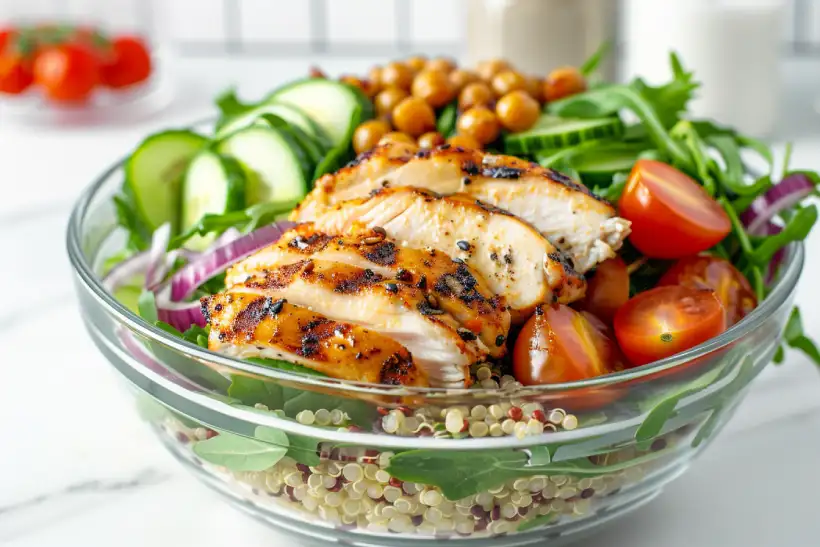
There are days when I need a protein-packed mediterranean bowl that feels grounding. That’s when I reach for chicken thighs — marinated with lemon zest, garlic, smoked paprika, and a good glug of olive oil.
But some days call for calmness — that’s when I roast chickpeas until they pop lightly in the pan. The sound always makes me smile, like little applause for your effort.
For a lighter mood, salmon flakes beautifully into warm grains.
For plant-based days, tofu with za’atar becomes a little surprise in the bowl.
I once made falafel for a date — they collapsed instantly. I called them “falafel bites” and pretended it was intentional. He believed me… mostly.
Test Note — Proteins:
Chicken: 400°F → 23 minutes.
Chickpeas: 425°F → 28 minutes, shake twice.
Salmon: 345°F → 14 minutes.
vegetables that make the bowl feel alive
fresh veggies are the heartbeat of a mediterranean bowl
A fresh veggies mediterranean bowl is a color story.
Crisp cucumbers.
Cherry tomatoes bursting with sweetness.
Thin shavings of red onion (I use a mandoline with a slightly crooked blade — don’t judge me).
Arugula that smells faintly peppery.
Here’s a tiny truth: texture matters more than people think. Warm grains underneath cool vegetables create a temperature contrast that feels almost emotional.
how to layer your vegetables for texture and warmth
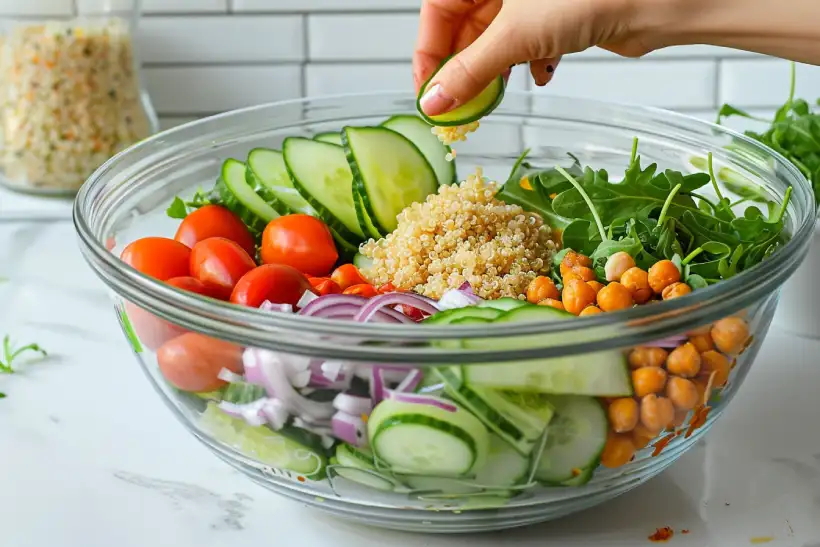
My order (which I’ve changed at least 40 times):
- Warm grains
- Cool veggies
- Creamy element (hummus, yogurt, or tahini)
- Crunch (seeds, nuts, pita chips)
Someone once told me this was “wrong.”
I smiled and kept doing it.
Test Note — Veg Prep:
Cucumbers: 3 mm slices.
Tomatoes: halved.
Arugula: dressed last second.
Red onion: half-moon slices, quick soak in cold water → softer bite.
sauces that make everything sing
tahini, lemon, olive oil, fresh herbs — the mediterranean quartet
If bowls had personalities, tahini would be the introvert — quiet alone, expressive when surrounded by friends.
Mix it with lemon, garlic, and cold water and something magical happens: it loosens, brightens, and coats every grain with a soft, silky whisper.
Olive oil brings warmth.
Lemon brings spark.
Herbs bring identity.
how to balance creaminess and brightness
I once added so much garlic to my tahini sauce that my friend said it “tasted like a breakup.”
I laughed… then fixed it with more lemon.
Test Note — Sauces:
Tahini: 3 tbsp tahini + 1 tbsp lemon + 1 tbsp cold water + micrograted garlic.
Salt at the end → opens the flavor.
mediterranean bowl meal prep
a mediterranean bowl works surprisingly well for busy days
A meal prep Mediterranean bowl can be a lifesaver if you store ingredients separately. Grains go in one container, veggies in another, proteins in another, and dressing in a tiny jar you’ll lose twice before lunch.
Here’s the trick:
Don’t dress greens ahead of time.
Don’t mix tomatoes and cucumbers — moisture war.
Once during meal prep week, I forgot to separate the roasted veg… they turned mushy. I ate them anyway. They tasted like defeat but a delicious one.
how to store and assemble
Cucumbers stay crisp wrapped in a paper towel.
Grains reheat beautifully with a splash of water.
Chickpeas lose crunch — warm them briefly to bring it back.
Micro-dialogue:
“Did you already add the dressing?”
“No. I like myself.”
Test Note — Storage:
3 days fresh.
Sauce lasts 5 days.
Grains reheat 45 sec (covered).
serving your mediterranean bowl
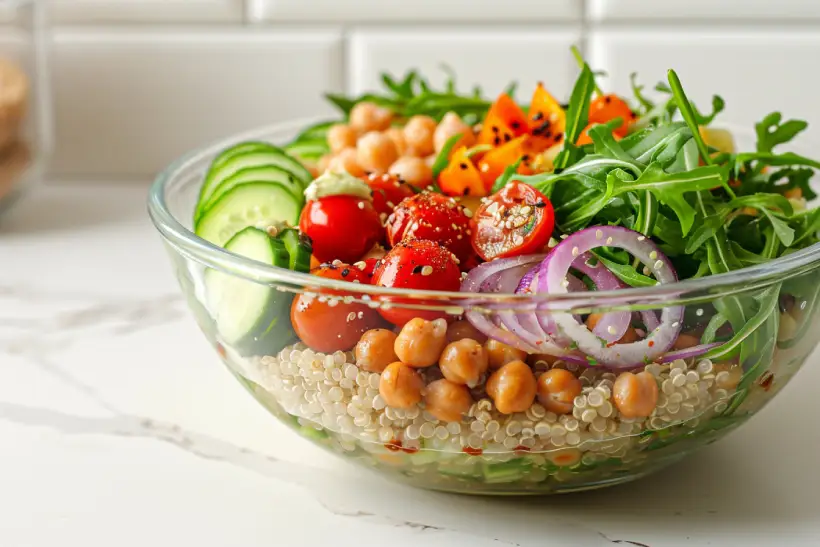
should a mediterranean bowl be hot or cold?
Honestly? Both.
Warm quinoa with cool cucumbers is magic.
Cold bowls taste refreshing and bright.
Warm everything tastes… comforting, but sometimes too cozy.
And here’s my contradiction of the day:
I always say not to warm tomatoes — but sometimes I do.
And they become sweet and tender in a way that feels like a tiny love letter.
Test Note — Temperature:
Warm base + cool veg = best balance.
Cold chickpeas → dull; warm them lightly.
variations for everyone
gluten-free, vegetarian, vegan — this bowl loves everyone
A gluten-free Mediterranean bowl is easy: skip farro, add more quinoa or rice.
Vegetarian? Double the legumes.
Vegan? Add olives, hummus, extra herbs.
I once hosted a “build your own bowl” dinner. Kids piled their bowls with feta, strawberries, pita chips, and tahini. It shouldn’t have worked. It did.
Test Note — Variations:
Falafel stayed crisp 11 minutes.
Rice stayed soft 4 hours (covered).
If you love bowls that feel warm, cozy, and layered with deeper flavors, you’ll probably fall in love with my Roasted Vegetable Quinoa Bowl Recipe. It’s the kind of bowl that tastes like late afternoon sunlight — caramelized edges, tender quinoa, and vegetables that almost melt into the grains. A little moodier, a little earthier, and absolutely worth exploring next.
troubleshooting your bowl
mistakes people never admit (but I will)
Bowl too bland? → your lemon is too shy.
Soggy veggies? → dressed too early.
Dry grains? → under-salted water.
Flat flavor? → needs herbs, not more salt.
Once my tahini seized so badly it resembled wet clay.
I almost gave up.
Fix: cold water, 1 teaspoon at a time, like calming someone mid-panic.
Test Note — Fixes:
Oversalted grains → add unsalted chickpeas.
Weak flavor → lemon zest, not juice.
FAQ
Is a Mediterranean Bowl healthy?
Yes — it’s balanced, fiber-rich, full of vegetables, grains, and protein.
What goes in a Mediterranean Bowl?
A mix of grain, veggies, protein, herbs, lemon, olive oil, and a creamy element.
Can I make it ahead?
Yes — keep components separate for best texture.
Which grain should I use?
Quinoa for speed, farro for depth, rice for comfort.
Can I add extra protein or make it vegan?
Yes — chicken, salmon, tofu, chickpeas… or go fully plant-based.
Hot or cold?
Both work beautifully.
Mediterranean Bowl vs Mediterranean Salad?
The bowl is grain-based; the salad is greens-first.
What Real People Said About Mediterranean Bowls
Sofia R — Seattle, Washington
je fais des mediterranean bowls pour le lunch depuis une semaine c est super frais et léger mais je ne reste pas faim après et ça prend pas longtemps à préparer
Daniel M — Austin, Texas
j ai ajouté du poulet grillé et un peu de riz et honnêtement ça a le même goût qu au resto je pensais pas que ce serait aussi simple à faire à la maison
Claire J — Boston, Massachusetts
je meal prep le dimanche et les mediterranean bowls tiennent super bien au frigo les couleurs restent belles et le goût est encore meilleur le lendemain
conclusion — why this bowl feels like home
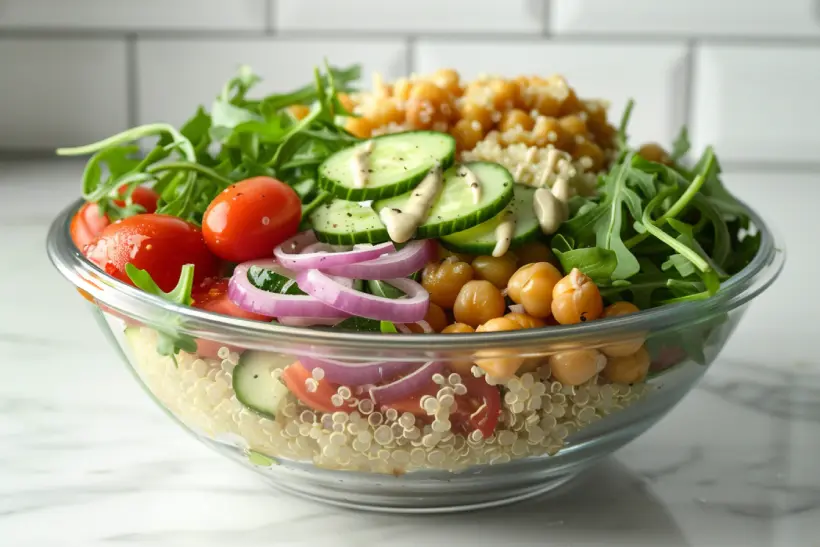
A Mediterranean Bowl isn’t just food.
It’s an exhale.
The warmth of grains, the cool brightness of vegetables, the creaminess of tahini — they build a moment, not just a meal.
Every bowl is a small story.
Every story tastes different.
Every taste pulls you back to yourself.
And maybe that’s the quiet beauty of it.