
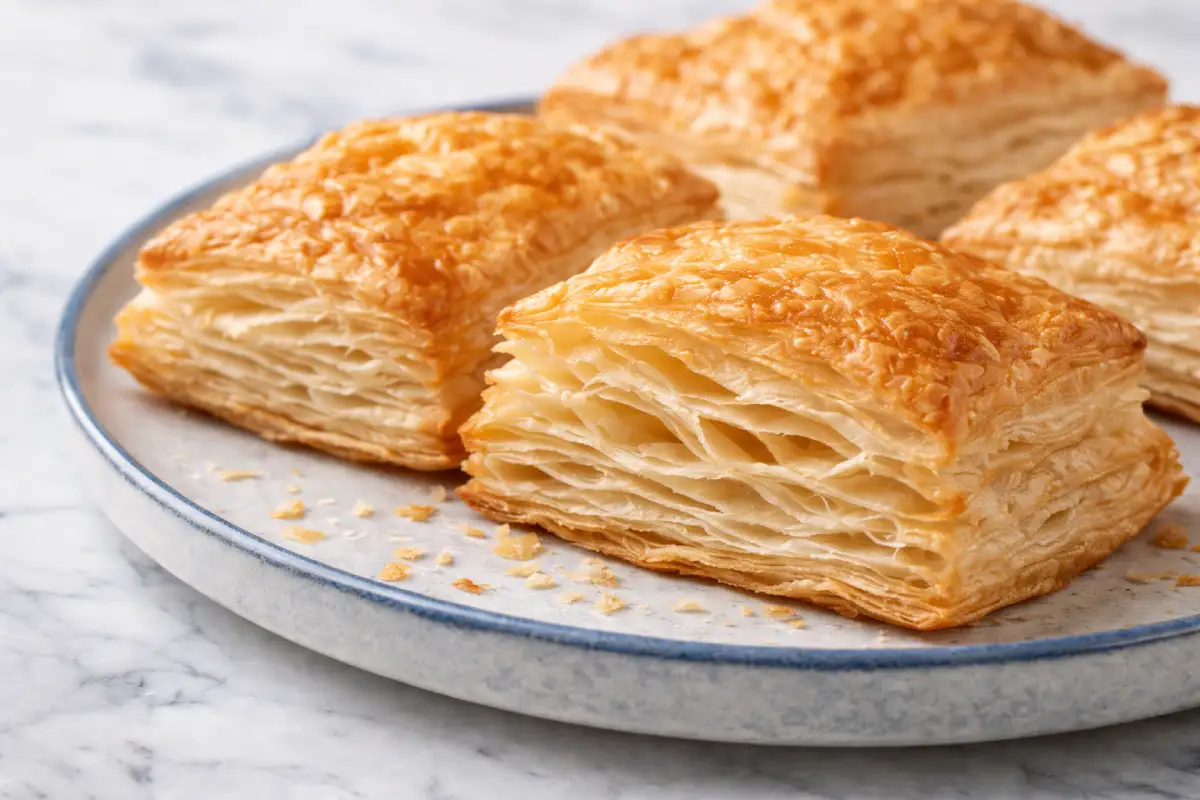
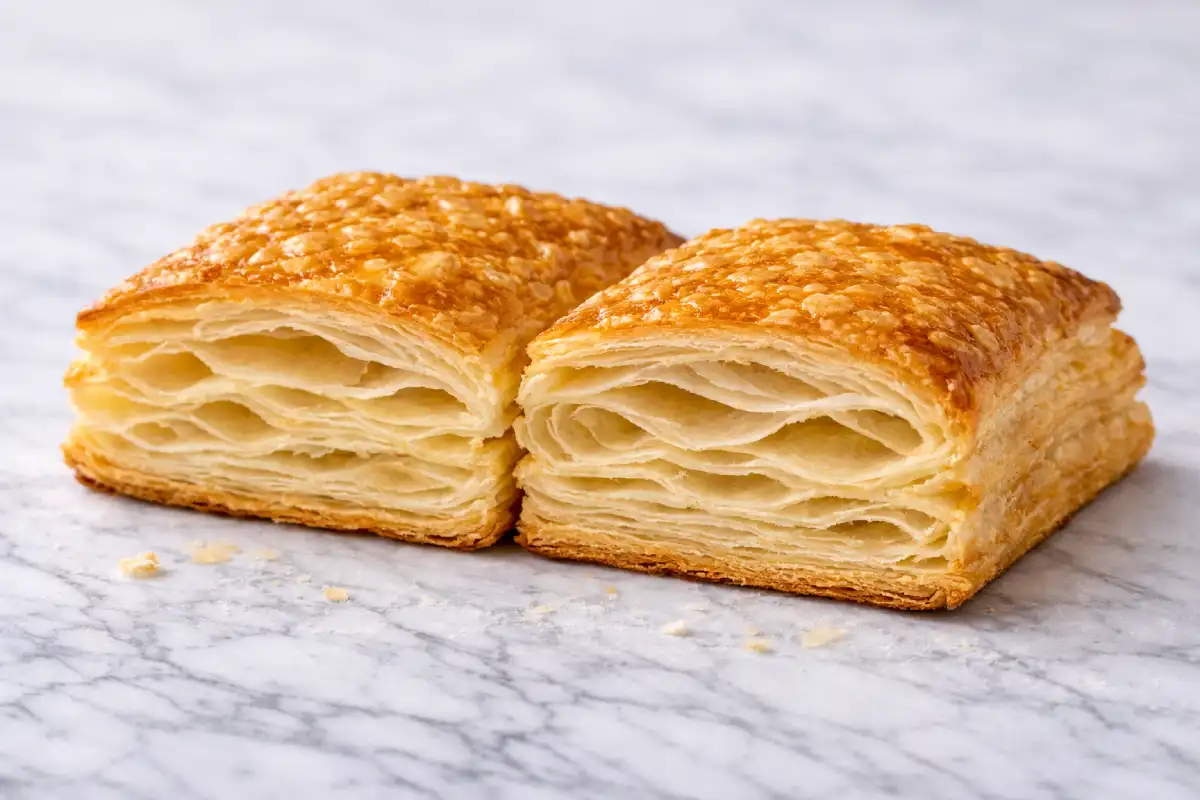
Puff pastry is a laminated pastry dough engineered to rise through steam expansion rather than fermentation.
It is widely used because it produces crisp, flaky layers with minimal preparation and no kneading.
Despite its simplicity, results vary dramatically.
Some bakes rise evenly and stay dry.
Others collapse, leak fat, or turn dense.
This reference article explains how puff pastry works, how to control it, and how to use it efficiently in both classic and no-dough applications.
Table Of Contents
Table of Contents
Composition and Structural Logic
Puff pastry is built from a short list of ingredients, but their interaction is precise.
Core components
- Flour
- Water
- Salt
- Butter or laminated fat
There is no yeast and no chemical leavening.
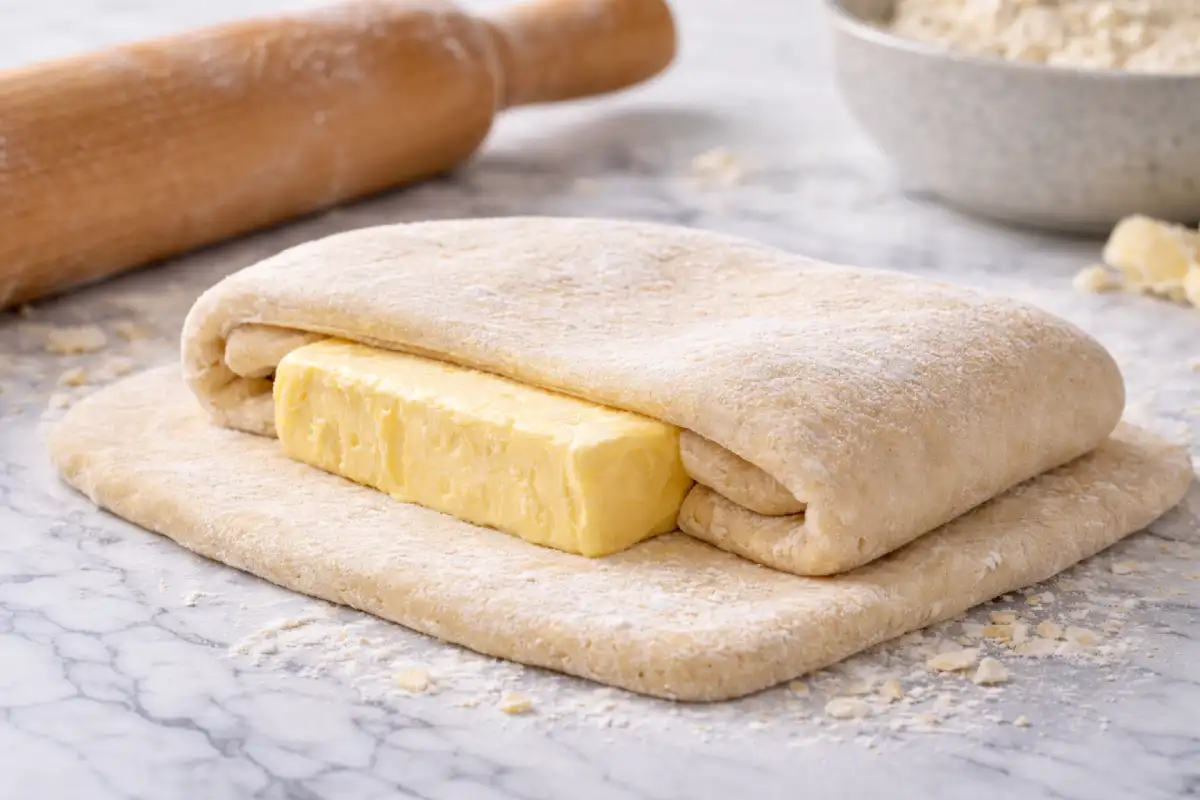
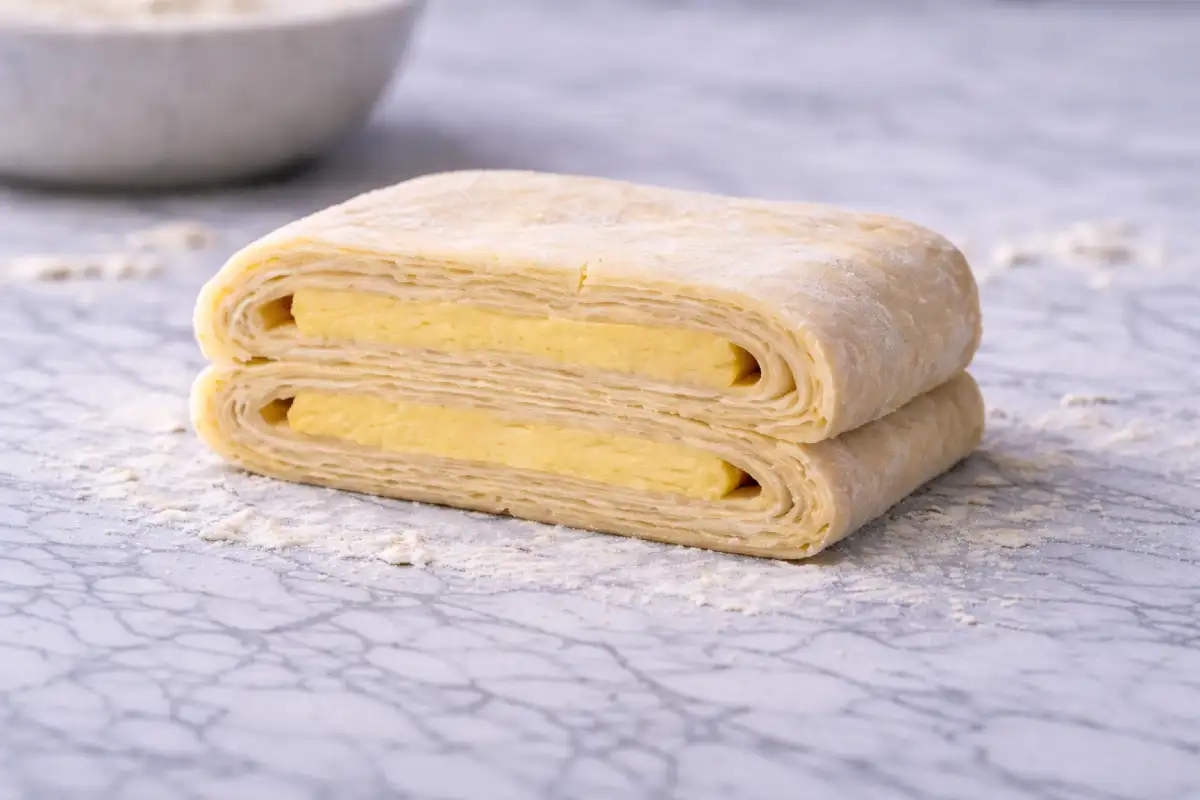
The defining process is lamination:
- Dough layers alternate with fat layers
- Fat creates separation
- Moisture trapped in fat becomes steam
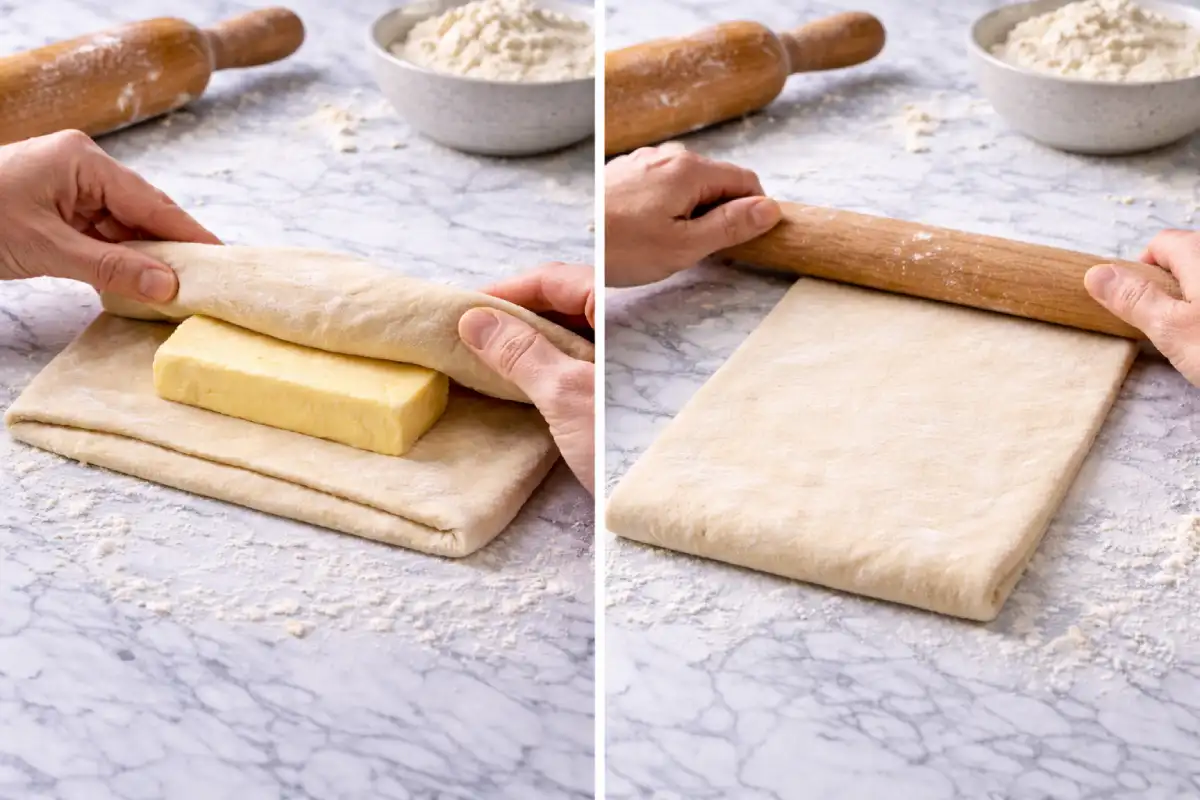
That steam is the only lifting force.
Most failures come from disrupting this structure.
Steam Expansion: Why the Layers Rise
| Stage | Physical Change | Structural Effect |
|---|---|---|
| Cold dough | Fat remains solid | Layers stay distinct |
| Rapid heat | Water turns to steam | Vertical lift |
| Dough setting | Proteins coagulate | Shape locks |
This sequence must happen in order.
If fat melts before steam forms, layers fuse.
If steam escapes before the dough sets, height is lost.
This explains most inconsistent results.
It sounds obvious. It usually isn’t.
Temperature Control (Critical Variable)
Temperature governs every stage.
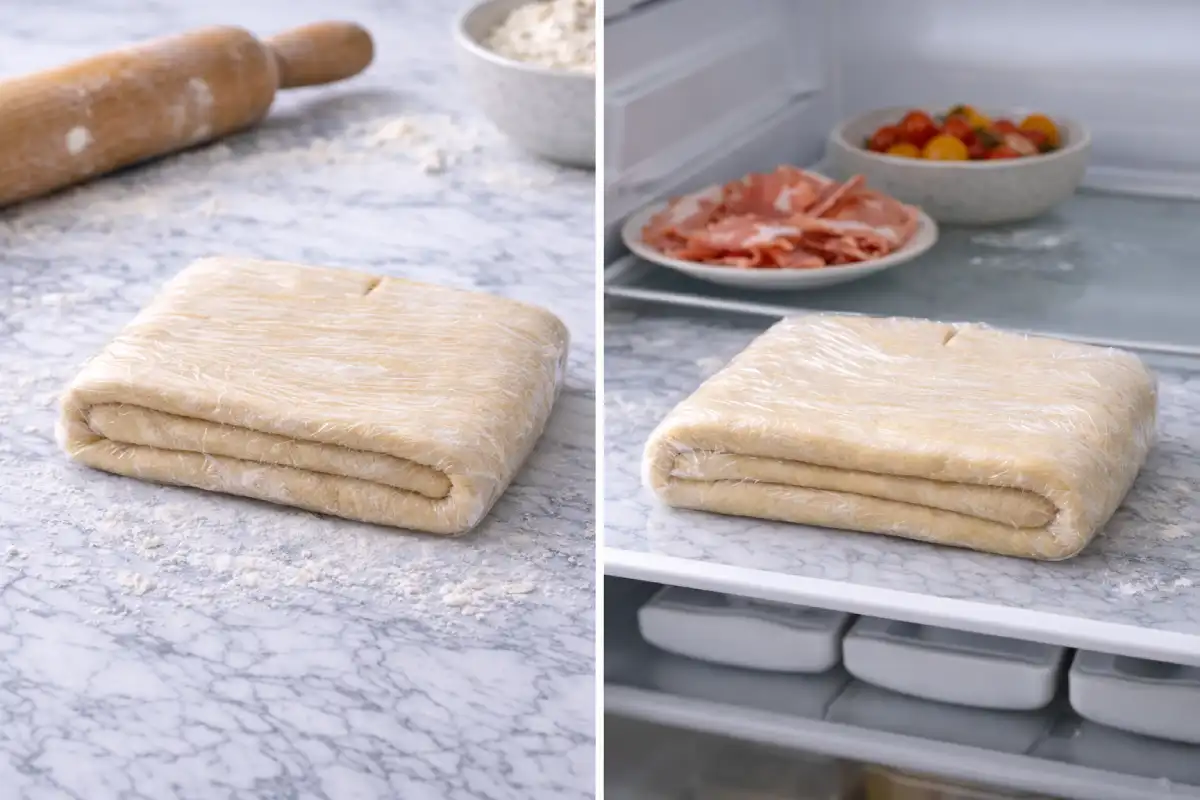
Practical rules
- Dough must stay cold before baking
- Oven must be fully preheated
- Heat must be high and stable
| Oven Range | Outcome |
|---|---|
| Below 375°F | Greasy, weak lift |
| 400–425°F | Clean rise, crisp layers |
| Above 450°F | Burn risk |
Most problems start with an underheated oven.
That detail matters more than it seems.
Laminated Pastry vs Yeasted Dough
| Criteria | Laminated Pastry | Yeasted Dough |
|---|---|---|
| Leavening | Steam | Fermentation |
| Prep time | Short | Long |
| Texture | Crisp, flaky | Elastic, chewy |
| Resting | Minimal | Required |
| Error tolerance | Low | Higher |
These doughs serve different purposes.
One should not replace the other by default.
Store-Bought vs Homemade Lamination
Industrial lamination is extremely consistent.
| Option | Strength | Limitation |
|---|---|---|
| Homemade | Flavor control | Time, precision |
| Store-bought | Uniform layers | Neutral taste |
For savory cooking and flat bases, store-bought sheets are usually the practical choice.
Some cooks swear by homemade versions.
Others don’t.
Both are valid.
A classic example is Traditional Galette des Rois, where puff pastry structure matters more than filling.
Fat Quality and Layer Integrity
Fat determines lift quality.
What matters
- Fat percentage (82%+)
- Low water content
- Stable melting behavior
| Fat Type | Baking Behavior |
|---|---|
| Standard butter | Early melt |
| High-fat butter | Controlled release |
| Margarine | Predictable, less flavor |
When fat leaks early, lamination is already compromised.
Thawing and Storage Rules
Improper thawing ruins structure.
Correct handling
- Thaw under refrigeration
- Dough should bend without cracking
- Surface must feel cool
If the surface feels soft or oily, layers are already merging.
This is usually where things go wrong.
Rolling Without Destroying Layers
Rolling laminated dough is about control.
| Parameter | Target |
|---|---|
| Pressure | Light |
| Direction | Center outward |
| Rotation | ¼ turn per pass |
| Thickness (flat bases) | ~3 mm |
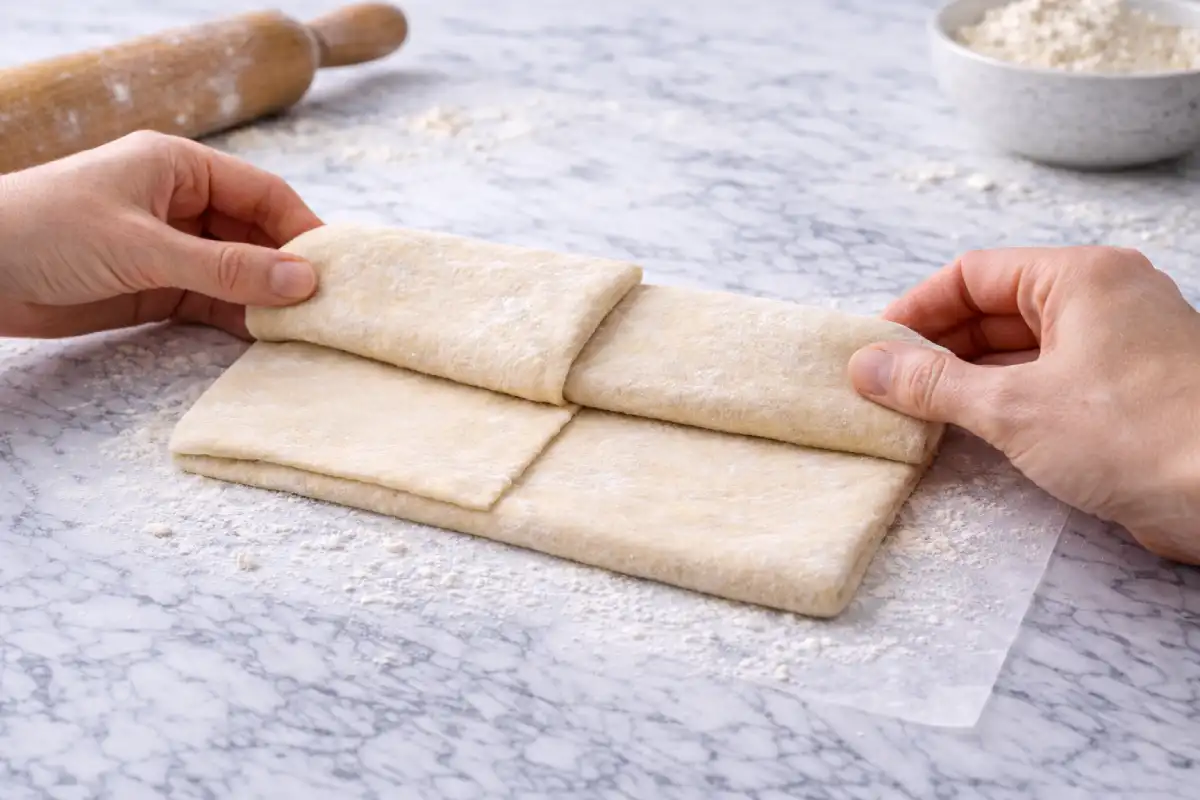
Stretching compresses layers.
Uneven thickness causes uneven steam distribution.
Docking Strategy (When Flat Is Required)
Docking limits vertical expansion.
Dock when
- Flat base is needed
- Toppings are heavy
Avoid docking when
- Lift is desired
- Baking time is short
For flat savory uses, docking the center while leaving edges free creates balance.
Baking Surface and Oven Setup
| Variable | Recommendation |
|---|---|
| Rack | Middle |
| Surface | Steel or heavy tray |
| Preheat | 20 minutes minimum |
| Convection | Avoid unless tested |

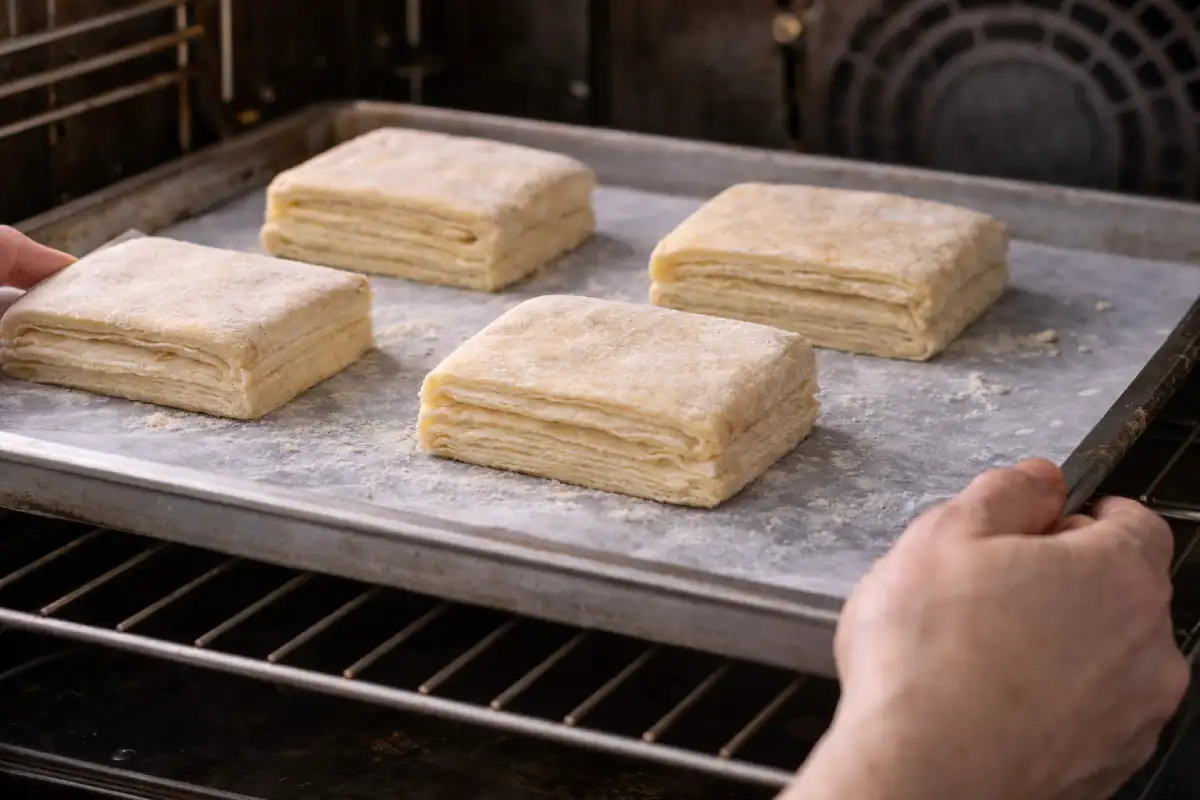
A cold surface absorbs heat and delays steam formation.
Moisture Control in Savory Applications
Water is the primary enemy of lamination.
Control methods
- Thin sauce layers
- Pre-cooked vegetables
- Low-moisture cheeses
- Fresh toppings added after baking
Moisture management often matters more than recipe choice.
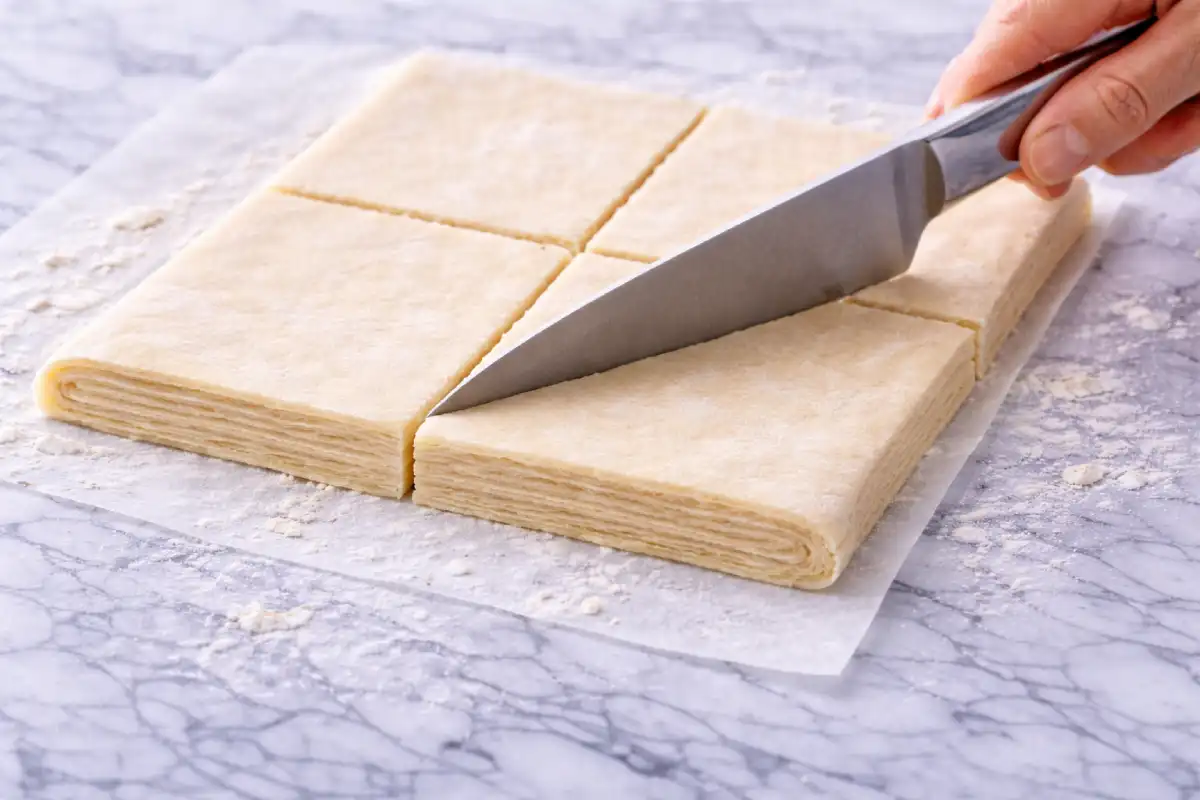
Cutting and Portioning
| Tool | Advantage |
|---|---|
| Sharp knife | Clean separation |
| Pizza wheel | Straight pressure |
| Bench scraper | Precision |
Never twist the blade.
Twisting seals layers.
Most people don’t notice this at first.
Common Failures and Fixes
| Issue | Cause | Correction |
|---|---|---|
| Flat bake | Oven too cool | Increase heat |
| Greasy base | Fat melted early | Chill dough |
| Uneven lift | Uneven rolling | Measure thickness |
| Shrinkage | Gluten tension | Rest before baking |
These issues are mechanical, not random.
Flat and No-Dough Applications
Because laminated pastry creates structure without fermentation, it works particularly well for:
- Flatbreads
- Savory tarts
- Appetizers
- No-dough pizza-style bases
Speed, crispness, and predictability matter more here than chew.
This makes it a natural base for flat, no-dough applications where crispness matters more than chew, such as flaky puff crust pizza.
Shelf Life, Storage, and Freezing Considerations
Laminated pastry dough is sensitive to time and temperature, even when frozen.
Storage guidelines
- Keep unopened sheets frozen until needed
- Once thawed, use within 24 hours
- Store flat to avoid compressing layers
Repeated temperature changes gradually destroy lamination.
| Storage State | Impact on Layers |
|---|---|
| Properly frozen | Structure preserved |
| Extended refrigeration | Gradual layer fusion |
| Room temperature | Lamination failure |
Many baking issues originate during storage, not baking.
Scaling for Different Formats and Portions
Laminated pastry adapts to different formats, but thickness control becomes more critical as size changes.
Scaling principles
- Smaller formats require thinner rolling
- Larger bases need careful docking
- Edges should remain slightly thicker than centers
Cutting after baking preserves structure better than cutting before baking.
This applies especially to:
- Sheet-pan formats
- Appetizer portions
- Shared savory bakes
Reheating and Holding
Laminated pastry performs best fresh.
Reheating guidelines
- Use oven, not microwave
- Reheat uncovered
- High heat, short duration
Microwaves reintroduce moisture and collapse layers.
If This Recipe Fails, Read This
Check these first (in order)
- Dough temperature
- If it felt soft or greasy, layers were already merging.
- Oven heat
- If the oven wasn’t fully preheated, steam never formed fast enough.
- Thickness
- Uneven rolling causes uneven lift.
- Moisture from toppings
- Too much liquid collapses layers from the top down.
Common Symptoms and What They Mean
| What You See | Most Likely Cause |
|---|---|
| Grease on the pan | Fat melted too early |
| Flat, dense bake | Oven too cool |
| Uneven rise | Inconsistent thickness |
| Soggy center | Excess moisture |
Before Trying Again
- Change one variable at a time
- Start with temperature, not ingredients
- Don’t add more flour or butter to compensate
Puff pastry fails for mechanical reasons.
Fix the mechanics, and the recipe usually works.
FAQ
Is puff pastry suitable for daily cooking?
Yes, it can be.
Especially when speed and consistency matter.
Puff pastry doesn’t rely on fermentation or long resting times, which makes it practical for everyday cooking. With proper cold handling and a hot oven, it delivers reliable structure and crisp texture without planning hours ahead.
That’s why it works well for quick savory meals when predictable results matter.
Can puff pastry be baked directly from frozen?
No.
That usually leads to uneven results.
When baked straight from frozen, the outside sets too quickly while the inside can’t release steam evenly. The layers fail to separate properly, and the texture often turns dense or flat. A slow thaw in the refrigerator gives much more reliable lift.
Why does it sometimes taste bland?
Because the dough itself isn’t meant to be flavorful.
Its job is to provide structure and texture. Flavor is expected to come from fillings, toppings, or finishing touches added later. That’s why seasoning at the end often has a bigger impact than changing the dough.
This is intentional, not a flaw.
Is docking always required?
No.
And that’s where confusion starts.
Docking is useful when a flat base is the goal or when toppings are heavy. In other cases, it limits expansion and reduces visual lift. Whether to dock or not depends entirely on the final shape you want.
It’s a technique, not a rule.
Why does butter leak during baking?
In most cases, it’s a temperature issue.
If the dough is warm or the oven isn’t fully preheated, the fat melts too early. Instead of creating steam inside the layers, it escapes onto the pan. Once that happens, lift is already lost.
Cold handling and proper heat prevent this.
How thick should it be rolled?
There isn’t a single correct measurement.
Thinner sheets work better for flat bases, while slightly thicker ones allow more lift. What matters most is consistency. Even thickness allows steam to distribute evenly during baking.
Uneven rolling almost always shows in the final result.
Can puff pastry be reheated without losing texture?
Yes, but only with the right method.
Reheating works best in the oven, uncovered, and at high heat for a short time. This drives off surface moisture and helps restore crispness. Microwaves soften the layers and permanently damage the structure of puff pastry, so they should be avoided.
What People Said About Puff Pastry
Claire M. — Lyon, France
“I thought puff pastry was just something you buy and hope for the best. Reading this made me realize why mine kept turning greasy. The part about oven temperature was the missing piece for me.”
James R. — Brooklyn, NY
“I’ve used puff pastry for years but never really understood it. This finally explained why some bakes worked and others didn’t. Simple, but not dumbed down. I appreciate that.”
Sofia L. — Barcelona, Spain
“I liked that it didn’t push one method as the only right one. Homemade, store-bought, flat uses, all explained calmly. It feels written by someone who actually bakes.”
Marco D. — Milan, Italy
“The section on moisture control helped a lot. I stopped blaming the dough and started fixing my toppings. That changed everything for my savory bakes.”
Conclusion
Puff pastry looks simple on paper.
In practice, it rewards precision and punishes shortcuts.
Temperature matters.
So does timing.
Once the fat warms too early or the oven isn’t ready, the structure breaks. There’s no mystery there.
Used with intention, puff pastry stops being fragile. It becomes predictable. That’s when it works for more than just classic pastries, especially in fast, no-dough formats where crispness matters more than tradition.
Understanding the limits is what makes it usable.
That’s also what turns puff pastry from a convenience product into a dependable base.