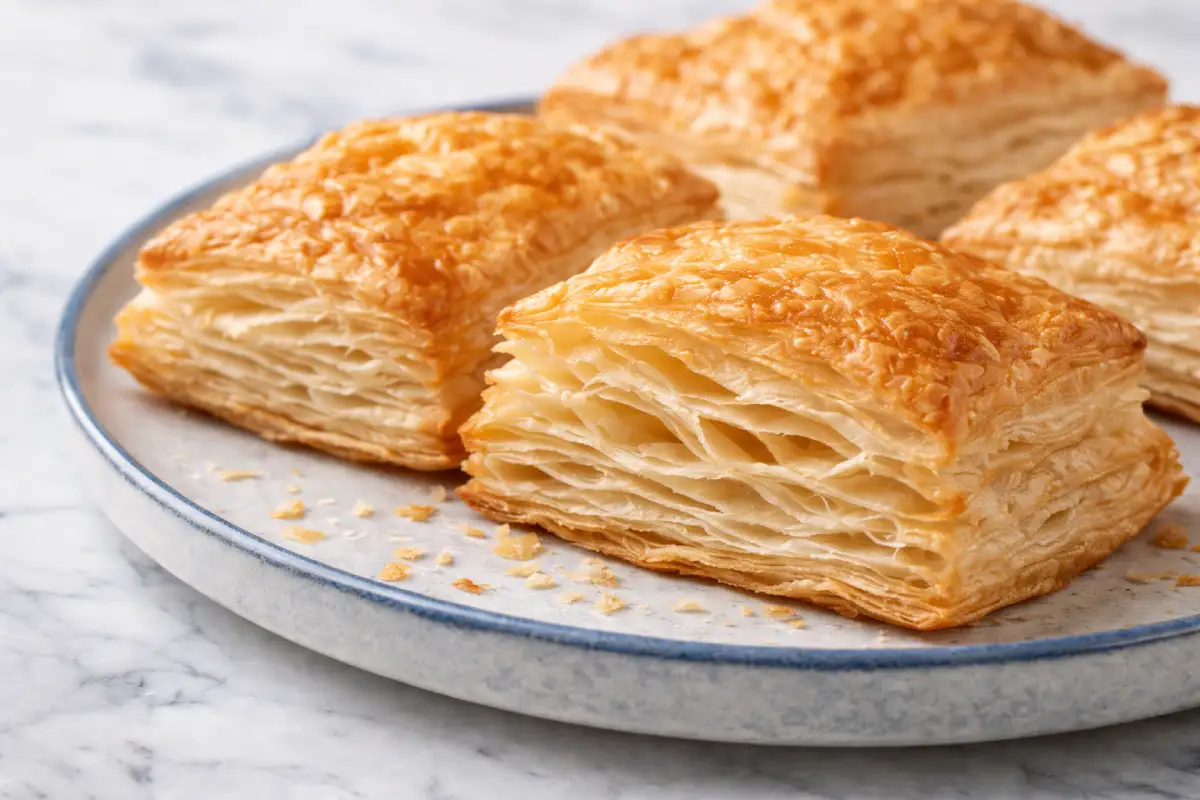

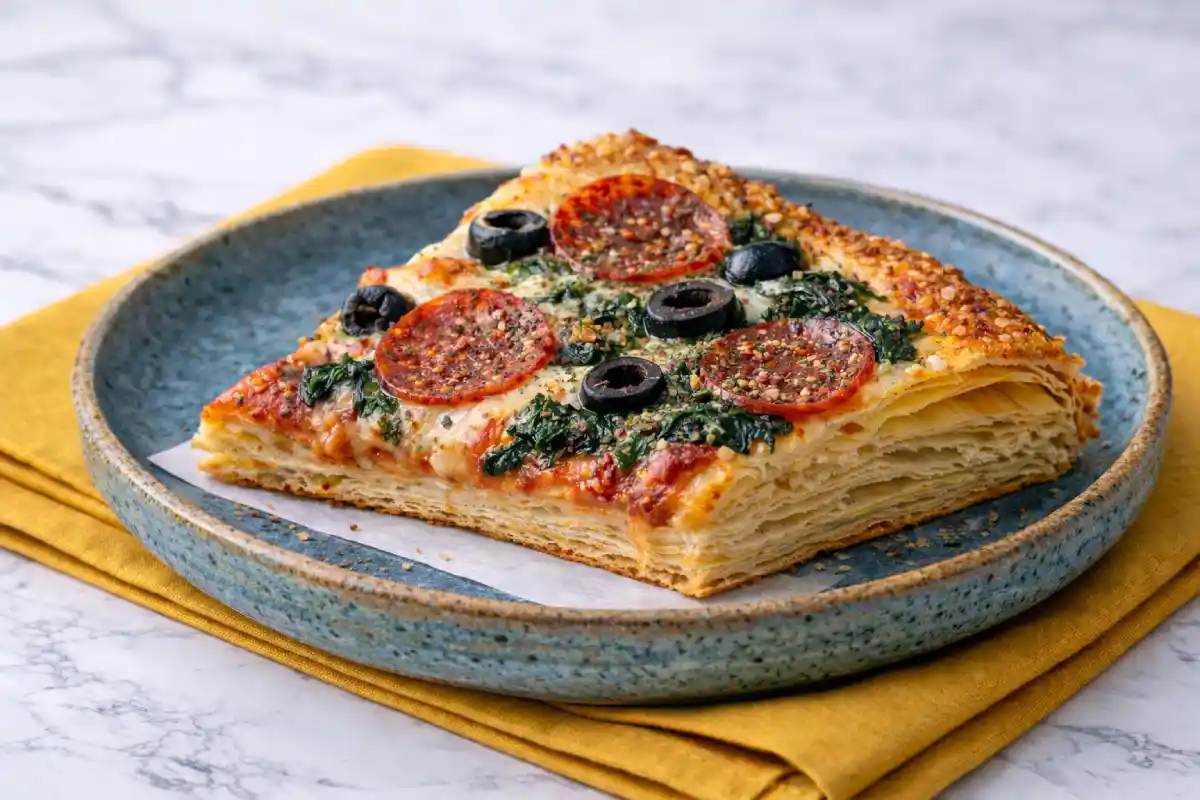
Flaky Puff Crust Pizza recipe is made with store-bought puff pastry baked hot in the oven until crisp and layered. It skips traditional dough entirely and comes together fast, using simple toppings and no long prep.
The pastry is kept cold, lightly rolled, then baked at high heat with sauce, cheese, and just a few dry toppings. Once the oven is hot, the whole process takes about 20 minutes, start to finish.
It’s easy, a little different, and fits into a normal night without much planning.
Wait… is this really pizza?
Actually… no… not in the traditional sense.
There’s no fermentation to manage, no dough to stretch or rest. What’s doing the work here is lamination, steam, and timing. That shift changes how you think about the crust—and how quickly you can get real structure and crunch out of your oven.
I’m Leo Santana, so we’re not guessing our way through this.
We’re looking at why this works, how the layers stay flaky, and which small decisions quietly decide whether those 20 minutes deliver lift and crispness—or fall flat.
This isn’t a shortcut.
It’s a smart construction.
Table Of Contents
Table of Contents

Flaky Puff Crust Pizza Recipe (Crispy Layers, No Dough)
Flaky Puff Crust Pizza recipe made with store-bought puff pastry baked hot until crisp and layered. A fast, no-dough pizza method that delivers flaky layers, controlled moisture, and reliable crunch in about 20 minutes.
- Total Time: 20 minutes
- Yield: 1 pizza 1x
Ingredients
1 sheet all-butter puff pastry, thawed but cold
2 tablespoons all-purpose flour, for dusting
1/2 cup thick pizza sauce, low moisture
1 1/2 cups low-moisture mozzarella, shredded
1/4 cup Parmesan cheese, finely grated
1 tablespoon olive oil
Dry toppings of choice (pepperoni, olives, pre-roasted mushrooms)
Red pepper flakes or dried oregano (optional)
Instructions
1. Preheat the oven to 425°F and place a rack in the lower-middle position.
2. Lightly flour a work surface and unfold the puff pastry while it is still cold.
3. Roll the pastry gently just to even the edges without compressing the layers.
4. Transfer the pastry to a parchment-lined baking sheet.
5. Dock only the center of the pastry with a fork, leaving a 3/4-inch border undocked.
6. Spread a thin, even layer of pizza sauce over the docked center.
7. Sprinkle mozzarella evenly over the sauce, followed by Parmesan cheese.
8. Add a few dry toppings, keeping moisture low and weight light.
9. Bake for 14–18 minutes, rotating the pan once at the 10-minute mark.
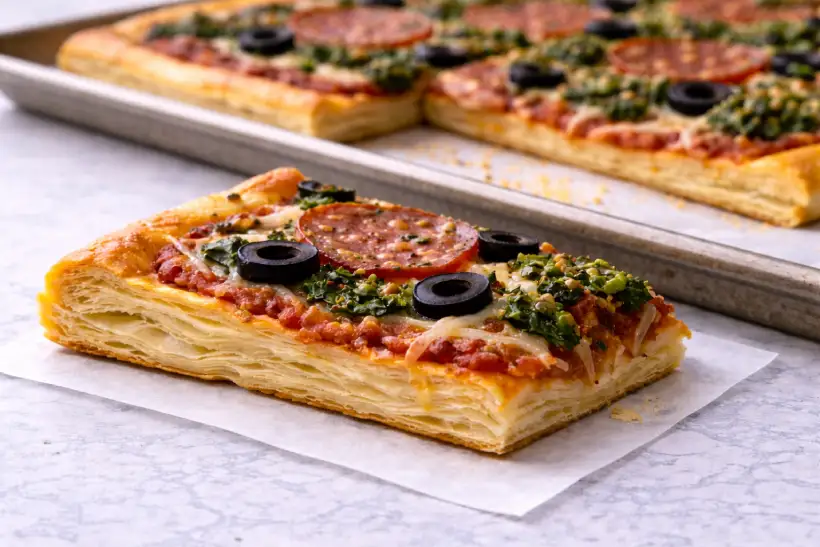
10. Remove from the oven when the crust is deeply golden and visibly layered.
11. Rest for 3–5 minutes before slicing with a sharp knife and serving.
Notes
Keep puff pastry cold at all times to preserve flaky layers.
Avoid fresh mozzarella or watery toppings, which can collapse the crust.
If the bottom browns too slowly, finish the pizza directly on the oven rack for 2 minutes.
Reheat leftovers in a 375°F oven; never microwave.
- Prep Time: 5 minutes
- Cook Time: 15 minutes
- Category: Dinner
- Method: Baking
- Cuisine: American
- Diet: Vegetarian
Nutrition
- Serving Size: 1 slice
- Calories: 320
- Sugar: 4g
- Sodium: 620mg
- Fat: 18g
- Saturated Fat: 9g
- Unsaturated Fat: 7g
- Trans Fat: 0g
- Carbohydrates: 28g
- Fiber: 2g
- Protein: 12g
- Cholesterol: 35mg
Why the Flaky Puff Crust Pizza recipe Works (The Physics of Crunch)
About This Version
This flaky puff crust pizza is an adapted interpretation of the laminated pizza technique popularized by King Arthur Baking.
Instead of building a yeast-laminated dough from scratch, this version uses all-butter puff pastry to achieve similar flake separation with more control and less prep time.
The goal here is accessibility and consistency without losing the structural logic that makes the crust work.
The oven hums at 425°F, dry heat wrapping the dough like a blanket.
You hear a faint sizzle fat meeting flour.
Wait… shouldn’t pizza dough be elastic?
Actually… no… this crust relies on lamination first, with gluten playing a secondary structural role rather than driving elasticity.
Here’s the science that makes this recipe reliable:
- Butter layers vaporize into steam
- Steam forces separation between dough sheets
- Separation = flakes, not chew
- High heat sets structure before collapse
This recipe works because puff pastry relies on lamination and steam rather than fermentation principles explained in detail in this puff pastry from scratch reference.
It’s the best of both worlds—pizza flavor with pastry architecture.
Test Note:
If your pastry warms above 65°F, butter melts early and layers fuse. Keep it cold. Cold dough is your insurance policy.
Ingredients for Flaky Puff Crust Pizza recipe (Measured, Not Guessed)
The refrigerator door opens. Butter smells clean, faintly sweet.
Wait… is store-bought okay?
Actually… yes—for this adapted version, it’s ideal when used correctly.
These ingredients reflect the adapted puff pastry version described in this recipe, not the original laminated dough formula.
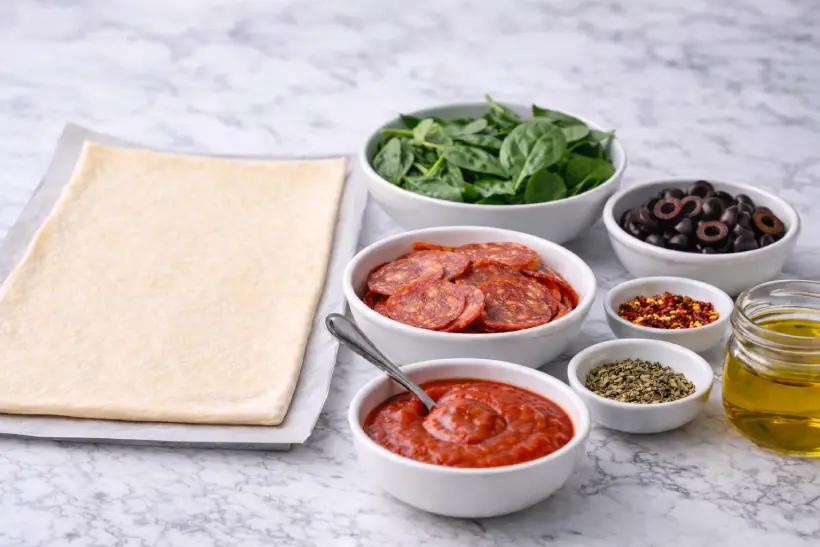
You’ll need:
- 1 sheet puff pastry, thawed but cold
- All-purpose flour, for dusting (not measured)
- ½ cup pizza sauce, thick, low-moisture
- 1½ cups low-moisture mozzarella, shredded
- ¼ cup Parmesan, finely grated
- Toppings of choice (see below)
- 1 tbsp olive oil
- Optional: red pepper flakes, dried oregano
Why these matter:
- Low-moisture cheese prevents sogginess
- Thick sauce protects layers
- Parmesan adds umami without water
Test Note:
Avoid fresh mozzarella here—it releases water at >140°F and collapses the lamination.
Choosing the Right Puff Pastry for a Crisp, Flaky Puff Crust Pizza recipe
This choice prioritizes steam generation and layer separation rather than fermentation-driven rise.
You unwrap the pastry. It’s pale, cool, pliable.
Wait… aren’t all puff pastries the same?
Actually… no… the fat source changes everything.
What to look for:
- All-butter puff pastry
- Minimal ingredients
- No shortening or palm oil
Butter melts at a lower temperature and creates cleaner steam, which equals higher lift.
Test Note:
If the ingredient list says “vegetable fat,” expect flat layers and muted flavor.
Preparing the Base (This Step Controls Lift)
Flour dusts the counter. The pastry sighs as it unfolds.
Wait… roll it thinner?
Actually… no… over-rolling crushes layers.
Do this instead:
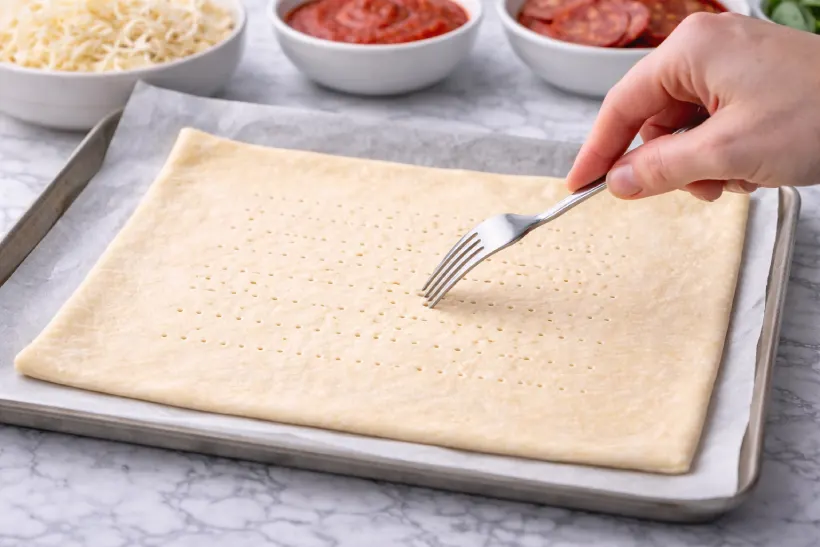
- Lightly flour your surface
- Unfold pastry gently
- Roll just enough to even edges
- Dock the center with a fork—not the edges
Why dock?
- Center docking controls vertical lift
- Edges stay tall and crisp
Test Note:
Leave a ¾-inch border undocked for a natural crust rim.
Sauce Strategy in the Flaky Puff Crust Pizza recipe
The sauce spreads thick, glossy, controlled.
Wait… more sauce equals more flavor, right?
Actually… no… moisture is the enemy.
Correct saucing method:
- Thin, even layer
- Stop before the border
- No puddles
Why?
- Puff pastry needs dry heat
- Excess liquid turns steam chaotic
- Chaos = collapse
Test Note:
If your sauce slides, reduce it on the stove for 5–7 minutes until jammy.
If you’re unsure whether to use a jar or make your own, this breakdown on store-bought vs homemade marinara sauce explains when each option actually works best—and how to adjust either one for pizza.
For this recipe, marinara is the only sauce that consistently preserves flake separation and bottom crispness.
Cheese Placement: Engineering the Melt
The mozzarella scatters like snow. Parmesan dust follows.
Wait… cheese directly on dough?
Actually… yes… cheese forms a fat barrier.
Best cheese order:
- Mozzarella first
- Parmesan second
- Toppings last
Benefits:
- Fat seals dough
- Protein browns evenly
- Salt amplifies crust flavor
Test Note:
Shred cheese yourself. Pre-shredded contains starches that inhibit melt.
Best Toppings for Flaky Puff Crust Pizza recipe
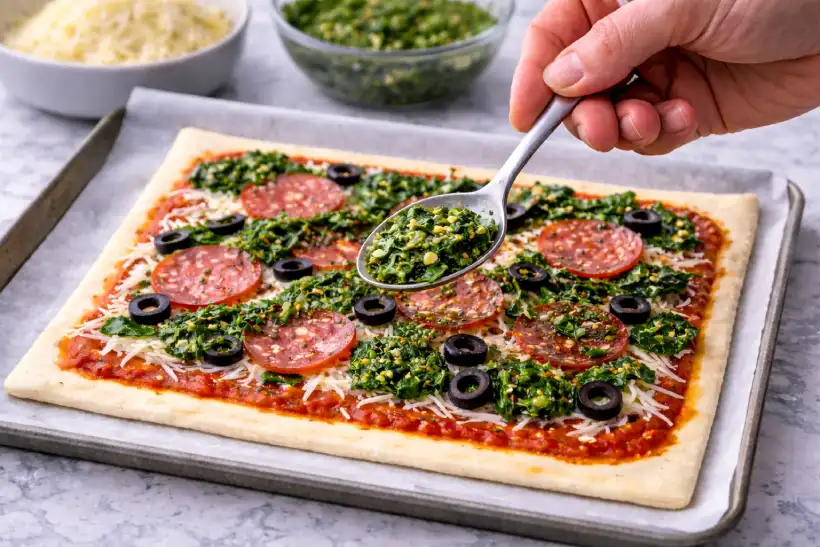
The knife taps the board. Clean cuts. Dry surfaces.
Wait… can I load this up?
Actually… no… restraint wins here.
Ideal toppings (low moisture):
- Pepperoni
- Prosciutto (post-bake)
- Mushrooms (pre-roasted)
- Olives
- Red onion (thin)
- Spinach (wilted, squeezed)
Avoid:
- Pineapple (too wet)
- Raw tomatoes
- Fresh mozzarella
- Heavy sauces
Test Note:
Cook vegetables first to drive off surface water.
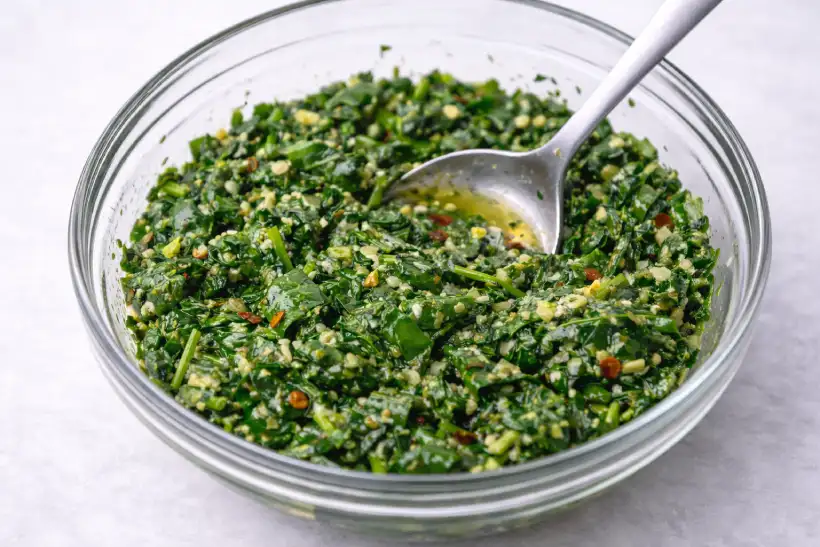
Spinach needs a little prep before it goes anywhere near puff pastry.
A quick chop and a light coating of olive oil help control moisture, improve distribution, and keep the layers crisp during baking.
Baking the Flaky Puff Crust Pizza recipe (Timing Is Everything)
The oven door closes. Heat roars.
Wait… middle rack?
Actually… no… lower-middle rack gives better bottom heat.
Bake like this:
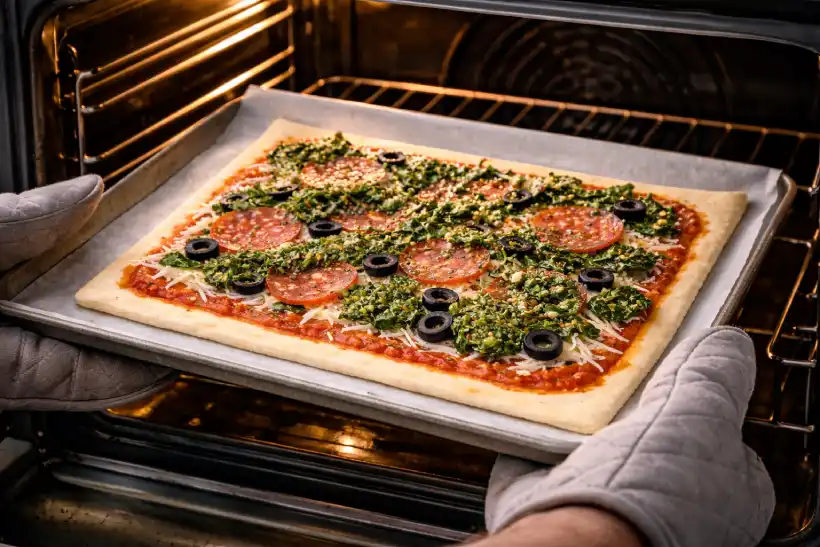
- Preheat oven to 425°F
- Bake 14–18 minutes
- Rotate once at 10 minutes
- Finish until deep golden
Listen for it—the faint crackle of butter.
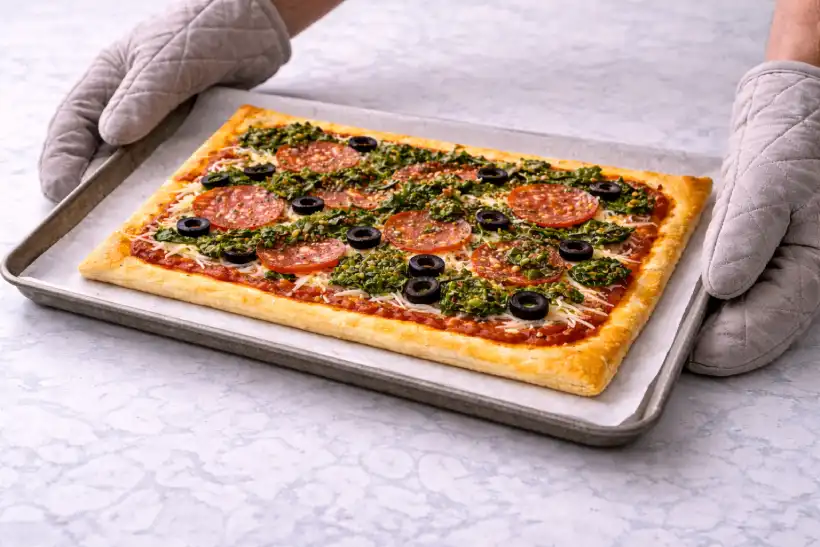
Test Note:
If the bottom pales, slide pizza directly onto the rack for the last 2 minutes.
Resting, Slicing, and Serving
You pull it out. The crust audibly sighs.
Wait… cut now?
Actually… no… resting stabilizes layers.
Resting rules:
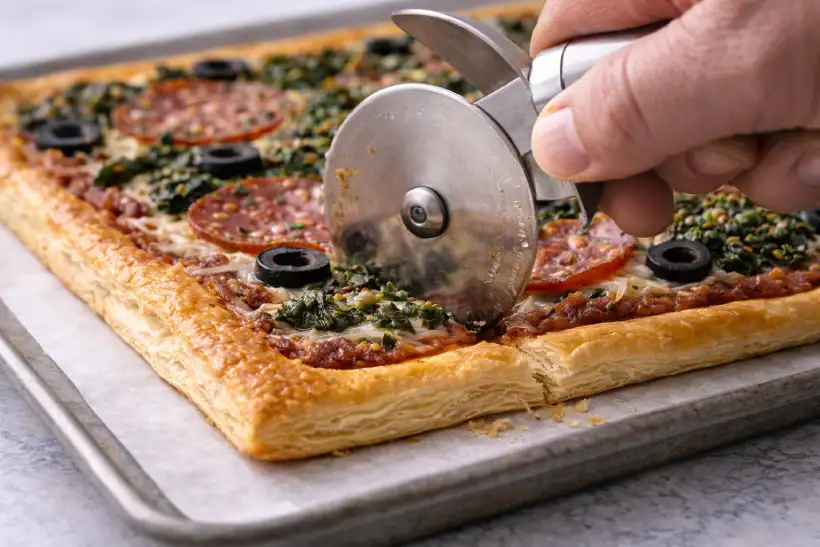
- Cool 3–5 minutes
- Slice with a sharp knife
- No pressing down
Serve hot, but not screaming.
Test Note:
A serrated knife shreds layers—use a chef’s knife instead.
Flavor Variations That Actually Work
The smell changes with each version.
Wait… dessert pizza?
Actually… yes… with adjustments.
Savory twists:
- Pesto + mozzarella + cherry tomatoes (roasted)
- White pizza: ricotta + garlic oil + spinach
- BBQ chicken (sauce reduced first)
Sweet version (technique shift):
- Dock fully
- Bake plain 10 minutes
- Add toppings
- Finish 5 minutes
Test Note:
Sugar browns faster—lower heat to 400°F for desserts.
Common Mistakes (And the Fixes)
Most failures with a Flaky Puff Crust Pizza recipe come from one issue: too much moisture too early in the bake.
Wait… why did mine go flat?
Actually… it’s usually one of these.
Problems & solutions:
- Warm dough → Chill 10 minutes
- Wet toppings → Pre-cook
- Pale crust → Increase rack heat
- Greasy bottom → Use parchment, not foil
Test Note:
Foil traps steam. Parchment breathes.
Make-Ahead & Storage
The fridge hums quietly.
Wait… can this be prepped?
Actually… partially.
Best practices:
- Assemble, then chill up to 8 hours
- Bake straight from cold
- Store leftovers airtight, 2 days
Reheat at 375°F, never microwave.
Test Note:
Microwaves melt butter unevenly—goodbye flakes.
If This Flaky Puff Crust Pizza Fails, Read This
| If you notice this problem… | It usually means… | Fix it like this (next time) |
|---|---|---|
| Flat, dense crust | Puff pastry was too warm before baking | Chill assembled pizza 10–15 minutes before baking |
| Soggy center | Sauce or toppings released too much moisture | Use thick sauce and pre-cook watery toppings |
| Pale bottom | Not enough bottom heat | Bake on lower-middle rack or finish directly on rack |
| Burnt edges, raw center | Oven too hot or uneven heat | Rotate pizza at 10 minutes and verify oven temp |
| Greasy bottom | Butter melted before structure set | Keep dough cold; avoid foil, use parchment |
| Cheese sliding off | Too much cheese or wrong order | Add cheese first, toppings second |
| No visible layers | Dough was over-rolled | Roll minimally, just to even edges |
| Crust shrank | Dough wasn’t relaxed | Let pastry rest 5 minutes after rolling |
| Uneven browning | Overloaded toppings | Use fewer, lighter toppings |
| Limp leftovers | Wrong reheating method | Reheat in oven at 375°F, never microwave |
Wait… does this mean the recipe is fragile?
Actually… no… it’s predictable.
Every failure points to a specific variable:
temperature, water, or weight.
Control those three, and the Flaky Puff Crust Pizza recipe behaves exactly the way it should.
FAQ
Can I use homemade puff pastry?
Yes, if fully laminated and chilled
Butter consistency must match dough
Is puff pastry pizza crispy?
Yes—when moisture is controlled
Crispness comes from steam escape
Can I grill this Flaky Puff Crust Pizza?
No. Indirect heat collapses layers
Why dock only the center?
Controls lift while preserving rim height
What People Said About Flaky Puff Crust Pizza recipe
Marco R. — Brooklyn, NY
Leo, quick message because I had to tell you this worked way better than I expected. I kept the sauce light like you said and didn’t rush the oven. When I cut into it, the bottom was still crisp. That never happens for me. Definitely making this again.
Elena M. — Austin, TX
So I made this last night after work, not in the mood for anything complicated. I honestly thought puff pastry would be too delicate. Then halfway through baking I heard that little crackling sound. I stopped what I was doing just to check. You were right about the moisture part. That explanation helped a lot.
David L. — San Diego, CA
Hey Leo, just wanted to say the docking tip changed everything. First try I skipped it and the center went wild. Second try I followed your steps exactly and it baked flat and clean. I like how this recipe feels thought-out, not improvised.
Nina K. — Chicago, IL
Made this for friends last night and didn’t say it was puff pastry until after. Everyone thought it was some special dough. I almost used fresh mozzarella and then remembered your warning. Glad I didn’t. The texture was spot on. This one feels very intentional.
Conclusion
The Flaky Puff Crust Pizza recipe isn’t a lazy shortcut or a clever gimmick.
It’s a deliberate technical choice, built on control, timing, and restraint.
When everything lines up — temperature, moisture, layer order — the result becomes obvious.
A base that stays crisp, clean flaky layers you can actually see, and a structure that holds from first slice to last.
And that soft crackle when the knife goes through… yes, that one.
Wait… does this replace classic pizza?
Actually… no… and it shouldn’t.
The Flaky Puff Crust Pizza recipe simply adds another tool to your repertoire.
Respect the cold.
Control the water.
Let the oven do the heavy lifting.
Do that, and you get a pizza that’s fast, refined, and technically sound.
No guesswork.
Just well-executed culinary logic.