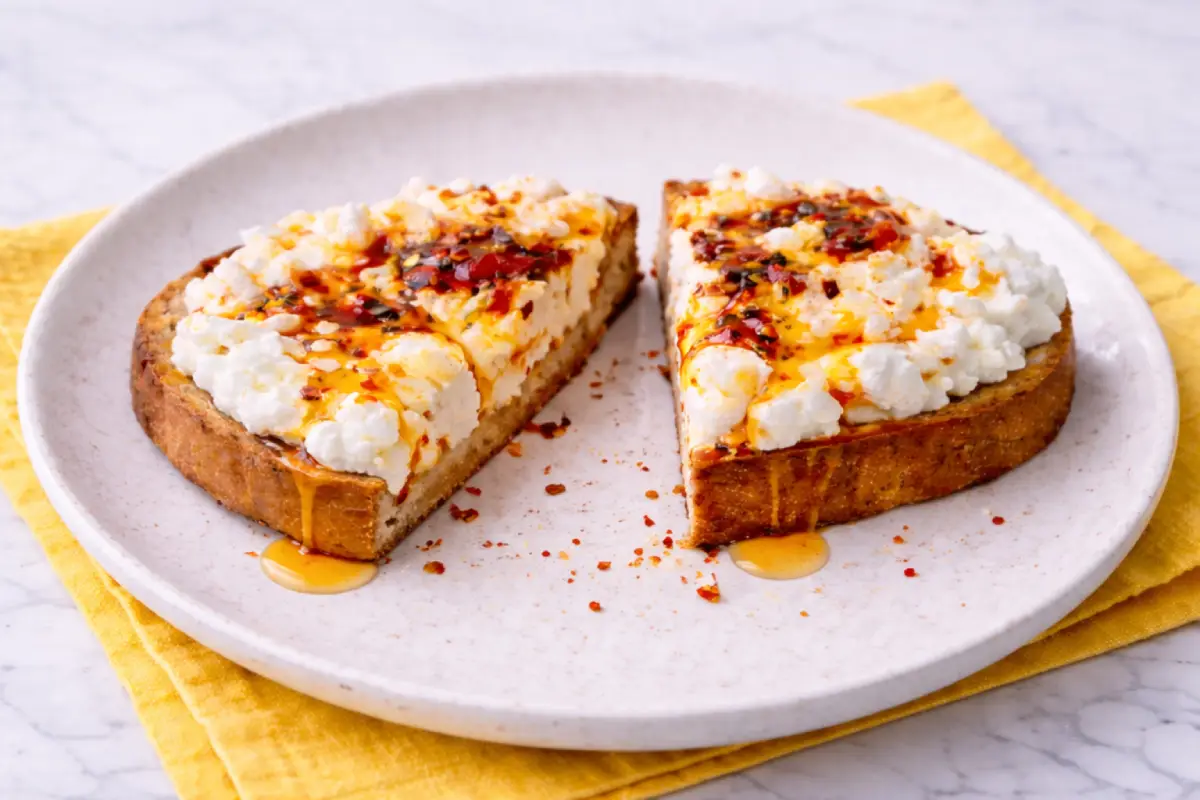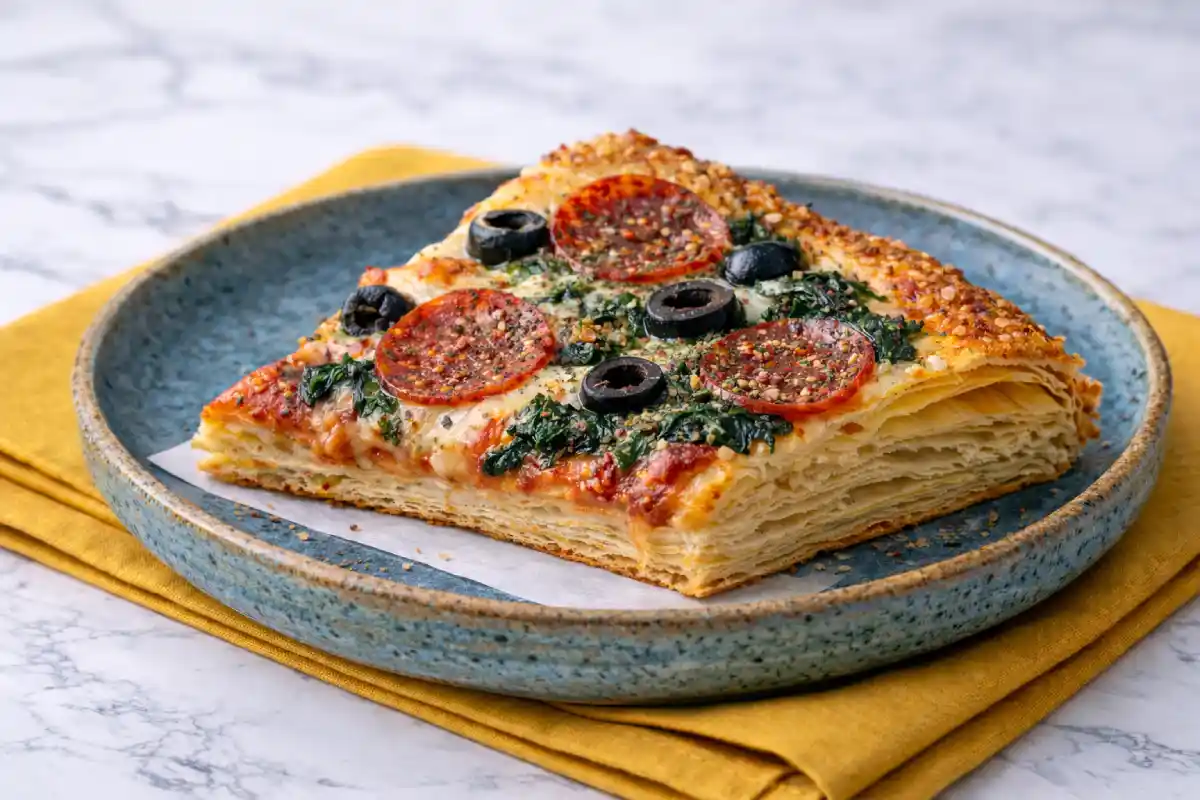


Skillet breakfast pizza is for mornings when the oven feels like too much commitment.
You’re awake, but not fully operational.
Coffee is happening. Slowly.
The kitchen is quiet in that early way where every sound feels louder than it should.
And there’s the skillet.
Heavy. Familiar. Sitting on the stove like it’s been waiting.
This version of breakfast pizza doesn’t try to impress anyone. It’s practical. It’s grounded. It works because cast iron works. Heat from below. Control in your hands. A crisp base without guessing what the oven is doing.
If you’ve ever wanted breakfast pizza with a real crunch underneath, soft eggs on top, and no soggy middle, this is the method that makes sense.
Table Of Contents
Table of Contents

Skillet Breakfast Pizza (Cast Iron, Crispy, No-Fuss)
This skillet breakfast pizza is cooked entirely in cast iron for a crisp bottom, soft eggs, and full control. No oven required. It’s a practical, filling breakfast that works especially well for slow mornings or when you don’t want to deal with long preheats.
- Total Time: 30 minutes
- Yield: 2–4 servings 1x
Ingredients
1 ball pizza dough (about 250 g), room temperature
1 tablespoon olive oil
1 cup low-moisture mozzarella, freshly grated
1/2 cup sharp cheddar, grated
3–4 large eggs
Breakfast sausage or bacon, cooked and drained
Optional vegetables (onion, bell pepper, spinach), pre-cooked
Salt and black pepper, to taste
Instructions
1. Let the pizza dough rest at room temperature for 30–45 minutes so it stretches easily.
2. Heat a 10–12 inch cast iron skillet over medium heat and add the olive oil.
3. Press the dough gently into the skillet, starting from the center and working outward.
4. Cook the dough for 2–4 minutes until the bottom is set and lightly golden.
5. Sprinkle a thin layer of cheese over the crust.
6. Add the cooked protein evenly over the pizza.
7. Add any pre-cooked vegetables, spreading them lightly.
8. Sprinkle the remaining cheese over the top.
9. Make small wells in the cheese using the back of a spoon.
10. Crack the eggs gently into each well.
11. Lower the heat to medium-low.
12. Cover the skillet with a lid or foil.
13. Cook until the egg whites are set and the yolks are still slightly soft.
14. Remove the skillet from heat.
15. Let the pizza rest for 2–3 minutes before slicing and serving.
Notes
Cast iron retains heat longer than other pans, so reduce heat early to avoid burning.
Eggs continue cooking after removal; pull the pizza while yolks still jiggle slightly.
Several readers mentioned the crust stayed crisp even when reheated gently on the stove.
This recipe is forgiving and adapts well to what you already have on hand.
- Prep Time: 15 minutes
- Cook Time: 15 minutes
- Category: Breakfast
- Method: Skillet
- Cuisine: American
Nutrition
- Serving Size: 1 slice
- Calories: 420
- Sugar: 3 g
- Sodium: 680 mg
- Fat: 22 g
- Saturated Fat: 9 g
- Unsaturated Fat: 11 g
- Trans Fat: 0 g
- Carbohydrates: 36 g
- Fiber: 2 g
- Protein: 18 g
- Cholesterol: 155 mg
Why Skillet Breakfast Pizza Works So Well in the Morning
Oven pizza relies on timing and faith.
Skillet breakfast pizza relies on attention.
You hear the dough when it hits the pan.
You smell the oil warming before anything browns.
You see the edges setting before the center even starts to cook.
Wait—does that actually matter?
Yes. A lot.
Cast iron gives you:
- Direct heat contact for a crisp base
- Slower, gentler cooking on top
- Visual control over eggs
- No long oven preheat when you’re half-awake
This is breakfast food made with awareness, not guesswork.
Test Note:
A cold skillet ruins everything. Let it heat properly before adding the dough.
Ingredients for Skillet Breakfast Pizza
This recipe is designed for one 10–12 inch cast iron skillet.
It feeds 2 hungry people or 3–4 lighter eaters.
For the Dough Base
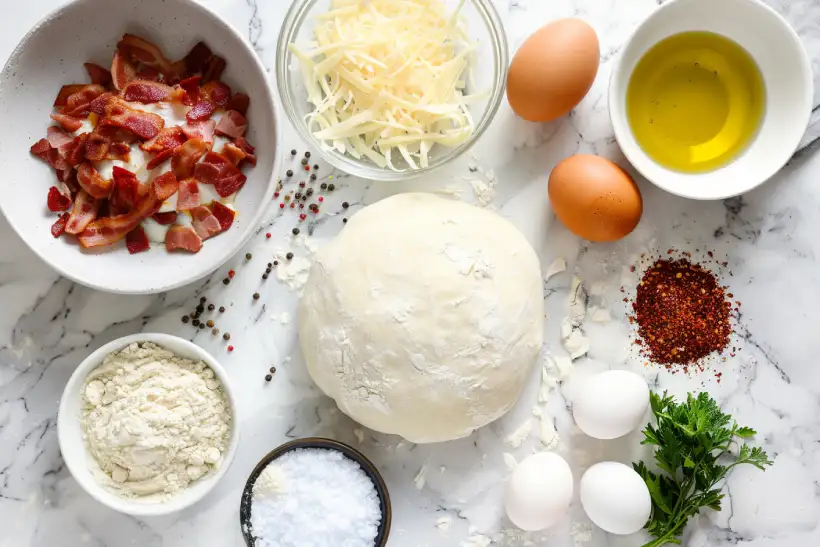
- 1 ball pizza dough (store-bought or homemade, about 250 g)
- 1 tablespoon olive oil
- Cornmeal or semolina, optional
Test Note:
Cold dough shrinks and tears. Let it rest at room temperature for 30–45 minutes.
For the Cheese
- 1 cup low-moisture mozzarella, freshly grated
- ½ cup sharp cheddar, grated
- Optional: a small amount of feta or goat cheese
Cheese here does more than melt. It protects the dough and balances heat.
For the Eggs
- 3–4 large eggs
- Salt and black pepper
Eggs are added later. Always later.
For the Protein (Choose One)
- Breakfast sausage, cooked and crumbled
- Smoked bacon, cooked and chopped
- Chorizo, fully cooked
- Turkey sausage for a lighter option
Test Note:
Drain fat well. Cast iron holds heat aggressively.
Optional Vegetables
- Thinly sliced red onion
- Bell peppers
- Wilted spinach or kale
- Cherry tomatoes (use sparingly)
Vegetables add balance but also moisture. Cook them first.
Equipment You’ll Need
- Cast iron skillet (10–12 inches)
- Stove burner
- Spatula or tongs
- Lid or aluminum foil
- Optional: oven or broiler
You can finish this entirely on the stove, but an oven helps with even egg cooking.
Preparing the Dough for a Skillet
This step matters more than people think.
Pressing dough into a cold pan guarantees sticking and uneven cooking.
Stretching dough aggressively causes tearing.
Wait—slow down.
Lightly oil the skillet.
Use your fingertips to gently press the dough outward from the center.
If it resists, stop.
Let it rest for a minute.
Then continue.
Test Note:
Dough relaxes when you let it. Forcing it never ends well.
Cooking the Crust First (Don’t Skip This)
Place the skillet over medium heat.
Once the oil shimmers, add the dough.

You should hear a quiet sizzle.
Not aggressive. Not silent.
Let it cook 2–4 minutes until the bottom sets and turns lightly golden.
Check by lifting an edge with a spatula.
This step creates the structure that holds everything else.
Adding Cheese and Toppings
Once the base is set:
- Add a thin layer of cheese first
- Scatter protein and vegetables evenly
- Add the remaining cheese
Don’t overload.
I know it’s tempting.
Wait—less is better here.
Too many toppings trap steam and soften the crust.
Test Note:
Even distribution matters more than quantity.
When and How to Add the Eggs
Eggs define skillet breakfast pizza.
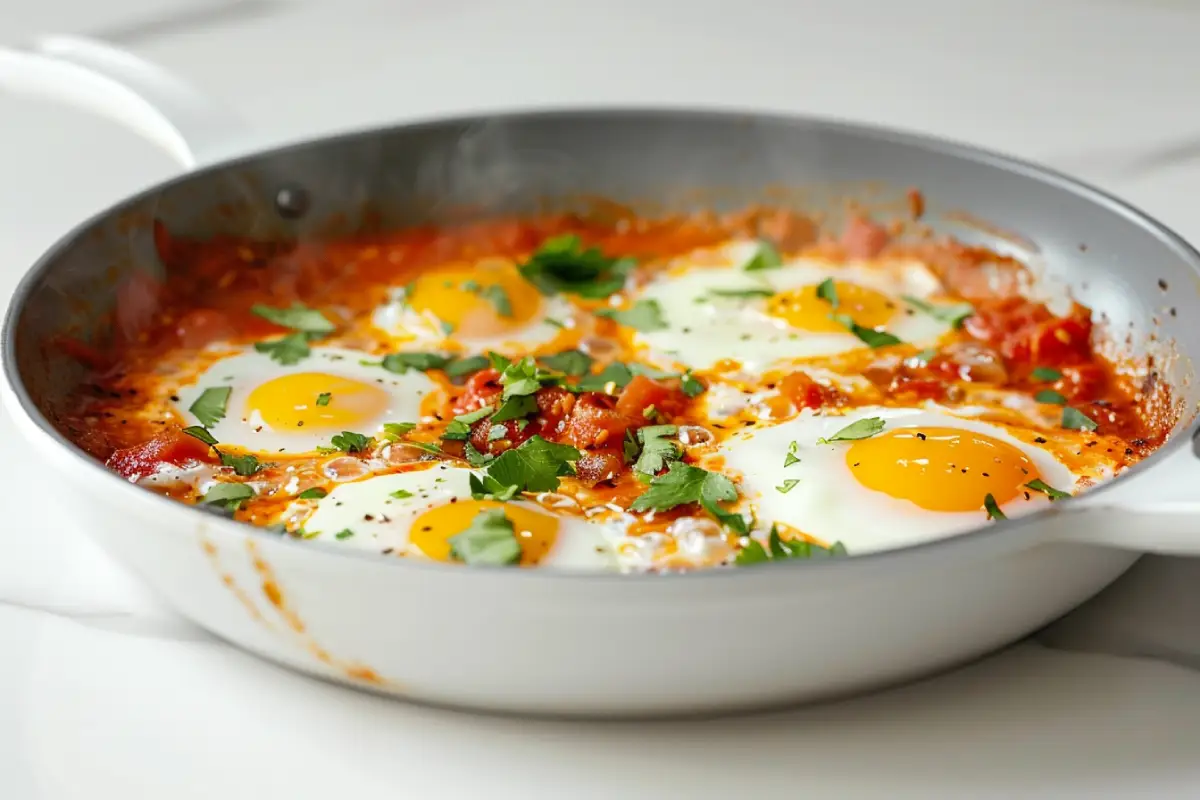
If you’re comfortable cooking eggs directly in a pan, dishes like shakshuka use the same logic of gentle heat and timing—just with a different flavor base.
Add them too early, and they overcook.
Too late, and they slide.
The sweet spot is after the toppings warm but before the top sets.
Make small wells in the cheese.

Crack eggs gently into each space.
Season lightly.
At this point, you have two options.
Finishing the Pizza: Stove vs Oven
Option 1: Stove-Top Finish
Lower the heat to medium-low.
Cover the skillet with a lid or foil.
Cook until egg whites are set and yolks still wobble slightly.
This method is slower but controlled.
Option 2: Oven or Broiler Finish
Transfer the skillet to a 400–425°F (205–220°C) oven.
Bake for 4–6 minutes, watching closely.
This gives even top heat and cleaner egg setting.
Test Note:
Eggs continue cooking after removal. Pull early.
How You Know It’s Done
The crust should lift cleanly from the pan.
The cheese should be fully melted.
Egg whites opaque, yolks soft unless you prefer otherwise.
If something smells burnt, it’s already too late.
Trust your eyes and ears more than the clock.
Letting It Rest (Yes, Even Breakfast Pizza)
Remove the skillet from heat.
Let it rest 2–3 minutes.
This helps the eggs settle and the crust firm up.
Cutting immediately causes sliding and broken yolks.

Serving Skillet Breakfast Pizza
Serve straight from the pan or transfer carefully to a board.
Finish with:
- Fresh herbs
- Cracked black pepper
- A light drizzle of chili oil or hot honey
This dish doesn’t need much. It already did the work.
Common Mistakes (And How to Avoid Them)
Crust Burning Too Fast
Heat is too high. Cast iron holds energy longer than you think.
Soggy Center
Too many toppings or wet vegetables.
Overcooked Eggs
Added too early or finished too long.
Dough Sticking
Not enough oil or insufficient preheating.
Mistakes are part of learning this method. The skillet teaches quickly.
Make-Ahead and Storage
Skillet breakfast pizza is best fresh, but leftovers happen.
- Store covered in the fridge up to 2 days
- Reheat gently on the stove or in a low oven
- Avoid microwaving if possible
Egg texture will change, but flavor holds.
Variations That Work Well in a Skillet
- Bacon and onion
- Sausage and cheddar
- Spinach and feta
- Mushroom and goat cheese
Avoid watery sauces or raw vegetables.
Frequently Asked Questions About Skillet Breakfast Pizza
Can this really be made without using the oven?
Yes, it can.
I didn’t believe it either the first time.
Covering the pan does most of the work, especially for the eggs.
It takes a bit longer, but you see what’s happening, which helps.
What size skillet actually works best?
I usually use a 10-inch pan.
A 12-inch works too, but the dough gets thinner.
Anything smaller gets tricky fast.
Cast iron heats unevenly if the pan is crowded.
Do you really need to cook the crust first?
Short answer: yes.
If you skip that step, the middle stays soft and kind of sad.
A few minutes on the stove fixes most problems later.
It’s boring, but it matters.
Why do the eggs overcook so easily?
Because cast iron doesn’t cool down quickly.
Once it’s hot, it stays hot.
Pull the pizza earlier than feels right.
The eggs finish cooking on their own.
Can you prep this ahead of time?
Sort of.
You can do the dough and toppings earlier, but the eggs should wait.
Reheated eggs never feel the same.
Fresh eggs at the end make a big difference.
Why does the bottom sometimes burn?
Usually the heat was too high at the start.
Cast iron doesn’t forgive that.
Medium heat feels slow, but it’s safer.
If it smells burnt, it probably is.
Is store-bought dough fine or not?
It’s fine.
Just don’t use it cold.
Let it sit out until it stops fighting you.
That alone fixes half the issues people have.
Frequently Asked Questions About Skillet Breakfast Pizza
Can this really be made without using the oven?
Yes, it can.
I didn’t believe it either the first time.
Covering the pan does most of the work, especially for the eggs.
It takes a bit longer, but you see what’s happening, which helps.
What size skillet actually works best?
I usually use a 10-inch pan.
A 12-inch works too, but the dough gets thinner.
Anything smaller gets tricky fast.
Cast iron heats unevenly if the pan is crowded.
Do you really need to cook the crust first?
Short answer: yes.
If you skip that step, the middle stays soft and kind of sad.
A few minutes on the stove fixes most problems later.
It’s boring, but it matters.
Why do the eggs overcook so easily?
Because cast iron doesn’t cool down quickly.
Once it’s hot, it stays hot.
Pull the pizza earlier than feels right.
The eggs finish cooking on their own.
Can you prep this ahead of time?
Sort of.
You can do the dough and toppings earlier, but the eggs should wait.
Reheated eggs never feel the same.
Fresh eggs at the end make a big difference.
Why does the bottom sometimes burn?
Usually the heat was too high at the start.
Cast iron doesn’t forgive that.
Medium heat feels slow, but it’s safer.
If it smells burnt, it probably is.
Is store-bought dough fine or not?
It’s fine.
Just don’t use it cold.
Let it sit out until it stops fighting you.
That alone fixes half the issues people have.
What People Said About Skillet Breakfast Pizza
Lena P. — Portland, Oregon
“Made this yesterday because I didn’t feel like turning the oven on.
Honestly didn’t expect much, but the bottom got way crispier than I thought.
I messed up one egg, but it was still good.
Feels like something I’ll actually make again.”
David M. — Columbus, Ohio
“Tried this skillet breakfast pizza before work. Probably not the smartest timing but it worked.
Cast iron really changes everything with this kind of pizza.
I kept checking the bottom because I was scared of burning it, but it turned out fine.
Way more filling than cereal.”
Sofia R. — San Antonio, Texas
“This felt very ‘cook with what you have’, which I liked.
I didn’t follow it exactly and it still came out good.
The eggs cooked faster than I expected, so next time I’ll pull it earlier.
But yeah, this one’s staying.”
Mark T. — Burlington, Vermont
“I’m not great at breakfast food and this skillet breakfast pizza didn’t punish me for it.
Used store-bought dough, nothing fancy.
The pan did most of the work.
Ate the leftovers cold later and they were still okay, which surprised me.”
Conclusion
Skillet breakfast pizza stays in rotation because it respects mornings.
It doesn’t demand planning.
It doesn’t need perfect timing.
It doesn’t punish small mistakes.
You can make it half-awake.
You can adjust it to what’s in the fridge.
You can trust the pan.
After a few tries, it stops feeling like a recipe and starts feeling like a habit. One you reach for on slow weekends or rushed weekdays when you want real food without ceremony.
That’s what good breakfast cooking does.
It meets you where you are.