

Corne de gazelle are delicate Moroccan almond pastries shaped into small crescents and baked gently in the oven until pale. The dough is rolled thin, wrapped around a soft almond filling, and baked low and slow, with most of the time spent resting rather than working.
This is a calm, hands-on recipe made over a few hours or overnight, not something rushed. The steps are simple and repetitive, using everyday ingredients and a quiet pace.
If you’re ready to slow down and let the pastry set the rhythm, this recipe unfolds naturally from here.
Corne de gazelle isn’t loud food.
It doesn’t crunch, drip, or beg for attention. Corne de gazelle waits. It sits quietly on a plate, curved like a crescent moon, pretending it’s fragile and it is but also pretending it doesn’t carry generations inside it.
Corne de gazelle is the pastry I turn to when I need calm.
When the world feels sharp around the edges.
When I want something that requires patience, not perfection.
The scent is always the first thing. Orange blossom water, faint but unmistakable, rising gently as almond paste warms under your hands. It smells like clean linen, like early morning light. And I always think, Wait… am I remembering this exactly right?
Actually… no… it’s better than I remember. It always is.
This is not a recipe you rush through on a Tuesday night.
This is a recipe you make when you’re willing to listen.
Table Of Contents
Table of Contents

Corne de Gazelle A Moroccan Pastry That Melts Like a Memory
Traditional Moroccan Corne de Gazelle is a delicate almond-filled pastry scented with orange blossom water. Pale, tender, and quietly refined, this classic Fassi version relies on patience, gentle handling, and an overnight rest to achieve its signature texture.
- Total Time: 1 hour 15 minutes
- Yield: 20 pastries 1x
Ingredients
Almond Filling:
1. 2 cups finely ground blanched almonds
2. 3/4 cup powdered sugar
3. 1 tablespoon orange blossom water
4. 1 teaspoon ground cinnamon
5. 1 tablespoon melted butter
6. 1 small egg (or 2 tablespoons milk for a softer filling)
Dough:
7. 2 cups all-purpose flour
8. 1/4 cup neutral oil
9. 1/4 cup melted butter
10. 1/4 cup orange blossom water
11. 1/4 teaspoon salt
12. Warm water, added gradually
Finishing:
13. Neutral oil, very small amount (for brushing before baking)
Instructions
1. Combine the ground almonds and powdered sugar in a large bowl.
2. Add cinnamon and melted butter, mixing gently.
3. Add the egg (or milk) slowly until the filling is soft and pliable.
4. Drizzle in orange blossom water gradually and mix until smooth.
5. Roll the almond paste into thin logs about 3 inches long. Cover and set aside.
6. In a separate bowl, mix flour and salt.
7. Add neutral oil and melted butter, rubbing gently with fingertips.
8. Pour in orange blossom water.
9. Add warm water gradually and knead until a soft, supple dough forms.
10. Knead lightly for no more than 5 minutes.
11. Wrap and let the dough rest for 30 minutes.
12. Divide the dough into small portions and keep covered.
13. Roll each portion very thin, almost translucent.
14. Place one almond log near the edge of the dough.
15. Fold the dough over the filling and seal gently, removing excess air.
16. Trim excess dough and curve into a crescent shape.
17. Place seam-side down on a parchment-lined baking sheet.
18. Lightly brush each pastry with a very thin layer of neutral oil.
19. Cover loosely with a clean cloth and let rest at room temperature for 8 to 12 hours.
20. Preheat the oven to 350°F (175°C).
21. Bake for 12 to 15 minutes until the dough is set but remains pale.
22. Remove from the oven and let cool completely before serving.
Notes
Corne de gazelle should remain pale and never brown.
The overnight resting step is traditional and helps prevent cracking.
Orange blossom water should be subtle, never overpowering.
These pastries taste even better the next day as the flavors settle.
- Prep Time: 60 minutes
- Cook Time: 15 minutes
- Category: Dessert
- Method: Baking
- Cuisine: Moroccan
- Diet: Vegetarian
Nutrition
- Serving Size: 1 pastry
- Calories: 180
- Sugar: 9g
- Sodium: 45mg
- Fat: 10g
- Saturated Fat: 4g
- Unsaturated Fat: 5g
- Trans Fat: 0g
- Carbohydrates: 18g
- Fiber: 2g
- Protein: 4g
- Cholesterol: 18mg
Ingredients for Traditional Corne de Gazelle
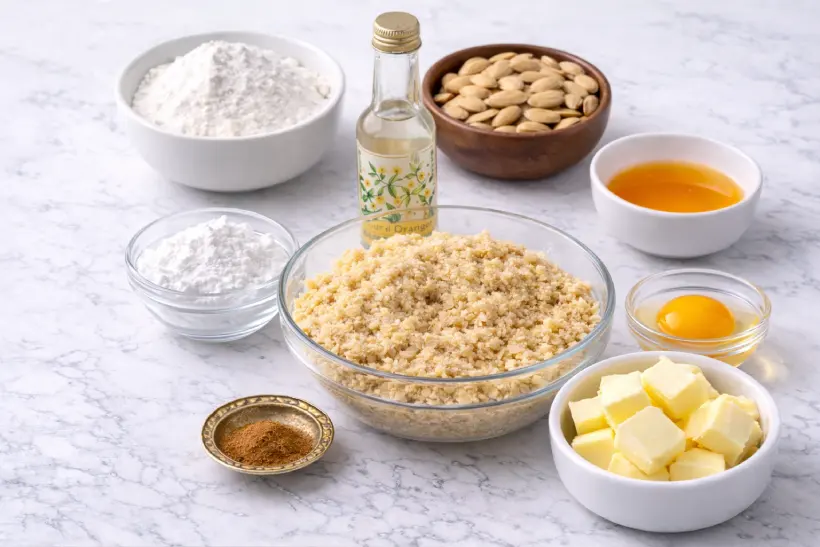
Before anything else, before the rolling and shaping and gentle self-doubt, the ingredients matter. Corne de gazelle asks for simplicity but good simplicity.
For the Almond Filling
- 2 cups finely ground blanched almonds
- ¾ cup powdered sugar
- 1 tablespoon orange blossom water
- 1 teaspoon ground cinnamon
- 1 tablespoon melted butter
- 1 small egg (or 2 tablespoons milk for a softer filling)
Test note: The almond paste should feel soft, pliable, and slightly cool, not sticky. If it clings to your fingers, pause. Add a pinch more almonds. Actually… no… add them slowly.
For the Dough
- 2 cups all-purpose flour
- ¼ cup neutral oil
- ¼ cup melted butter
- ¼ cup orange blossom water
- ¼ teaspoon salt
- Warm water, added gradually
Test note: The dough should feel like earlobe-soft. Old-school bakers always said that, and it’s oddly accurate.
For Finishing
- Neutral oil (very small amount, for brushing)
Why Corne de Gazelle Is About Patience, Not Skill
Every time I teach this recipe, someone asks, “Is it hard?”
And I pause. Because the honest answer is no — and yes.
Technically? It’s simple.
Emotionally? It asks you to slow down.
Corne de gazelle doesn’t forgive rushing. The dough tears if you bully it. The filling escapes if you overstuff. And there’s always that moment rolling, sealing when you think, Wait… did I ruin this?
Actually… no… just breathe.
This pastry teaches restraint. It teaches listening. It teaches you that perfection is overrated, and tenderness is the real goal.
Making the Almond Filling – Where the Soul Lives
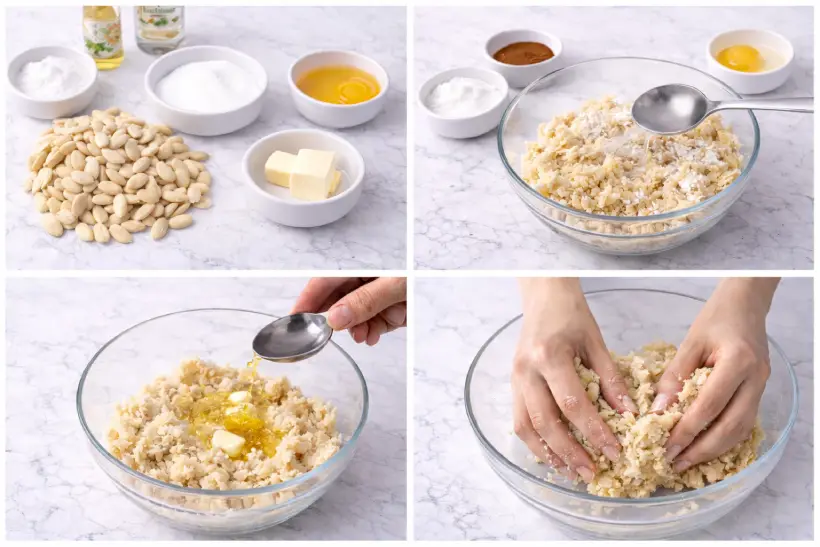
This is where the heart settles in.
Step-by-Step Almond Filling
- Combine the almonds and powdered sugar in a large bowl.
- Add cinnamon and melted butter.
- Stir gently, inhaling that almond-citrus warmth.
- Add the egg (or milk) slowly, mixing until smooth.
- Drizzle in orange blossom water, tasting as you go.
Sensory check:
The filling should smell floral but restrained. If it screams perfume, you’ve gone too far. That happens don’t panic. Add more almonds and move on.
Inner thought: Wait… is this too soft?
Actually… no… once it rests, it firms just enough.
Roll the filling into thin logs, about 3 inches long. Cover and rest.
Preparing the Dough – Gentle Hands Win Here

The dough is humble. Almost shy.
Step-by-Step Dough
- Mix flour and salt in a wide bowl.
- Add oil and melted butter, rubbing gently with fingertips.
- Pour in orange blossom water.
- Add warm water slowly, kneading until soft.
- Knead lightly — 5 minutes max.
Test note: Over-kneading makes the dough elastic. You want supple, not springy.
Wrap and rest for 30 minutes.
This rest is non-negotiable. Go make tea.
Rolling the Dough – Thin Enough to Read Through
This is the moment that makes people nervous.
How Thin Is Thin Enough?
- You should almost see your hand through it
- But it shouldn’t tear
- The texture should feel cool and silky
Roll small portions at a time. Keep the rest covered.
Inner monologue: Wait… this is too thin.
Actually… no… trust yourself. Corne de gazelle wants bravery here.
Shaping Corne de Gazelle – The Crescent That Matters
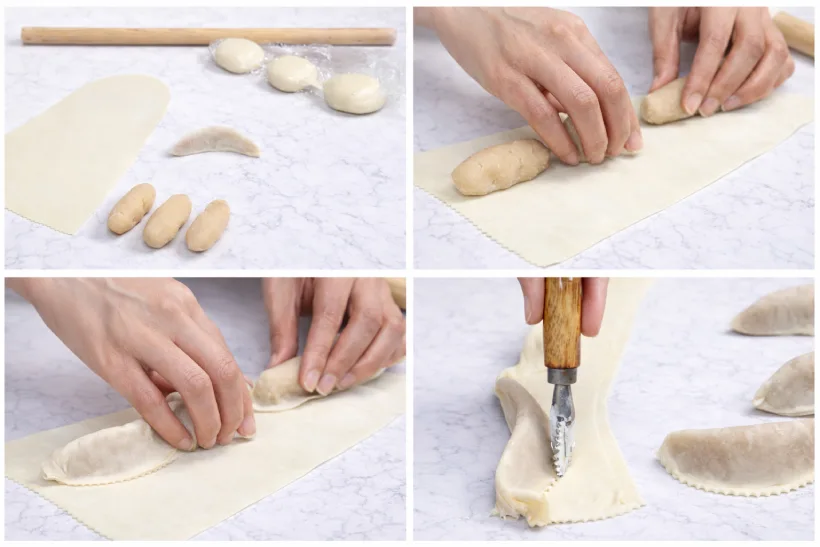
This is where the pastry becomes itself.
Shaping Steps
- Place one almond log near the edge of the dough.
- Fold gently, enclosing the filling.
- Seal carefully, pressing out air.
- Trim excess dough.
- Curve into a crescent, lightly.
Idiom moment: Don’t force it let it come together.
These pastries can feel when you’re tense.
Place seam-side down on a lined baking sheet.
Resting the Shaped Pastries (Traditional Step)

Once shaped, lightly brush each corne de gazelle with a very thin layer of neutral oil.
Cover loosely with a clean cloth and let rest at room temperature for 8 to 12 hours, or overnight.
This resting period helps prevent cracking and keeps the pastry pale and tender.
Baking – Low, Slow, and Pale
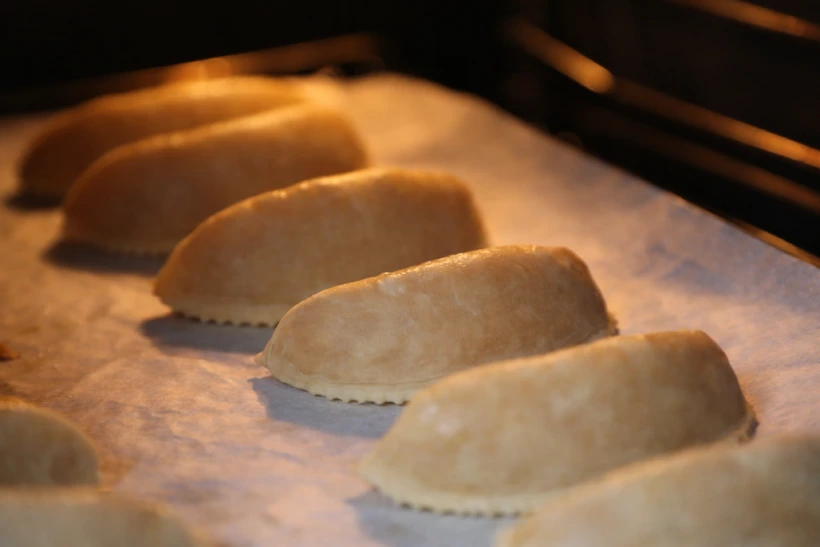
Corne de gazelle should never brown. Ever.
Baking Instructions
- After the resting period, preheat the oven to 350°F (175°C)
- Bake for 12–15 minutes
- Look for set dough, not color
Sensory cue:
The kitchen should smell warm and almond-soft, not toasted.
Test note: If the bottoms color, lower the rack next time.
Why Corne de Gazelle Tastes Better the Next Day
Fresh, they’re lovely.
But rested? They’re transcendent.
The dough softens. The almond filling settles. The flavors marry quietly overnight.
Wait… should I hide these?
Actually… yes… if you want any left.
Common Mistakes (And Why They’re Normal)
- Overfilling – tempting, but disastrous
- Too much orange blossom water – subtle always wins
- Thick dough – elegance lives in thinness
- Browning the pastry – resist the urge
Every mistake teaches you something. That’s the point.
How Corne de Gazelle Is Traditionally Served
There’s one thing that matters here.
Traditionally, corne de gazelle is served only with Moroccan mint tea. The warmth of the tea, the bitterness of green leaves, and the freshness of mint balance the soft sweetness of the pastry. Without the tea, something feels missing.
This is a prestige pastry, not an everyday treat. Corne de gazelle is made for weddings, religious holidays, and important celebrations. Offering it is a sign of respect, care, and welcome.
Served with mint tea, it invites people to slow down. To sit. To stay a little longer. That pairing isn’t optional it’s the tradition.

Storing Corne de Gazelle
- Airtight container
- Up to 7 days
- Do not refrigerate
Humidity is the enemy here.
If This Recipe Fails, Read This
| Problem | Why It Happens | What to Do |
|---|---|---|
| Dough is cracking | Dough is too dry or not rested | Add 1 tsp warm water, wrap, rest 10–15 min. Wait… pause helps more than force. |
| Dough won’t roll thin | Overworked or tense dough | Stop rolling, cover, rest. Calm hands win here. |
| Filling is too soft | Too much liquid or warm hands | Add ground almonds, mix gently, rest. It firms up quietly. |
| Filling leaks | Too much filling or trapped air | Use less filling, seal slowly. Actually… slower. |
| Pastries browned | Oven too hot or baked too long | Lower heat, bake higher rack. Pale = perfect. |
| Cookies feel firm | Still settling | Store airtight overnight. Texture softens by morning. |
FAQ
Is corne de gazelle the same as kaab el ghazal?
Yes — they’re two names for the same delicate Moroccan pastry. Kaab el ghazal means “gazelle’s ankle” in Arabic, which explains the elegant crescent shape. Corne de gazelle is simply the French name. Different words, same tender soul, same almond-scented memory.
Why is my corne de gazelle dough cracking?
Cracking usually means the dough is too dry or hasn’t rested enough. The dough should feel soft, almost forgiving under your fingers. Wait… it might seem fine at first. Actually… no… give it a little warm water and time — it almost always fixes itself.
Can I make corne de gazelle without orange blossom water?
You can, but the flavor won’t be the same. Orange blossom water is what gives corne de gazelle its quiet floral whisper. If you must substitute, a tiny bit of rose water works but go gently. Too much, and the magic disappears.
Should corne de gazelle be baked until golden?
No — and this is where many people hesitate. Corne de gazelle should stay pale, almost shy-looking. Browning means the dough has dried out. Trust the timing, trust the softness. Wait… it feels wrong. Actually… no… pale is perfect here.
How long does homemade corne de gazelle last?
Stored in an airtight container at room temperature, corne de gazelle keeps for about 5–7 days. The texture actually improves after the first day as everything settles. The key is dryness moisture is the enemy of that tender bite.
Can corne de gazelle be frozen?
Yes, and it freezes beautifully before baking. Shape the pastries, freeze them flat, then bake directly from frozen. Add a couple of minutes, nothing more. Freshly baked, they’ll still taste calm, delicate, and wonderfully intentional.
What People Said About Corne de Gazelle
Mina — Brooklyn, New York
“Grace, I made the corne de gazelle last night and I thought I messed them up because they stayed so pale. I almost kept them in longer. I didn’t. This morning they were perfect. Soft, calm, exactly like you described. I just wanted to tell you that the waiting part really matters.”
Thomas — Santa Fe, New Mexico
“I’ve never made anything like this before. The dough scared me a bit, not going to lie. I stopped, covered it, came back later like you said. That helped more than any technical tip. They’re not perfect, but they feel right. Thanks for writing the recipe the way you did.”
Leila — Marseille, France
“I grew up with these, but I never tried making them myself. Your recipe felt familiar without being strict. The smell in the kitchen took me somewhere I wasn’t expecting. I shared them with my mother and she didn’t say much, which actually means a lot.”
A Note on Modern Interpretations
While corne de gazelle is a Moroccan pastry deeply rooted in tradition, its flavors continue to inspire contemporary creations.
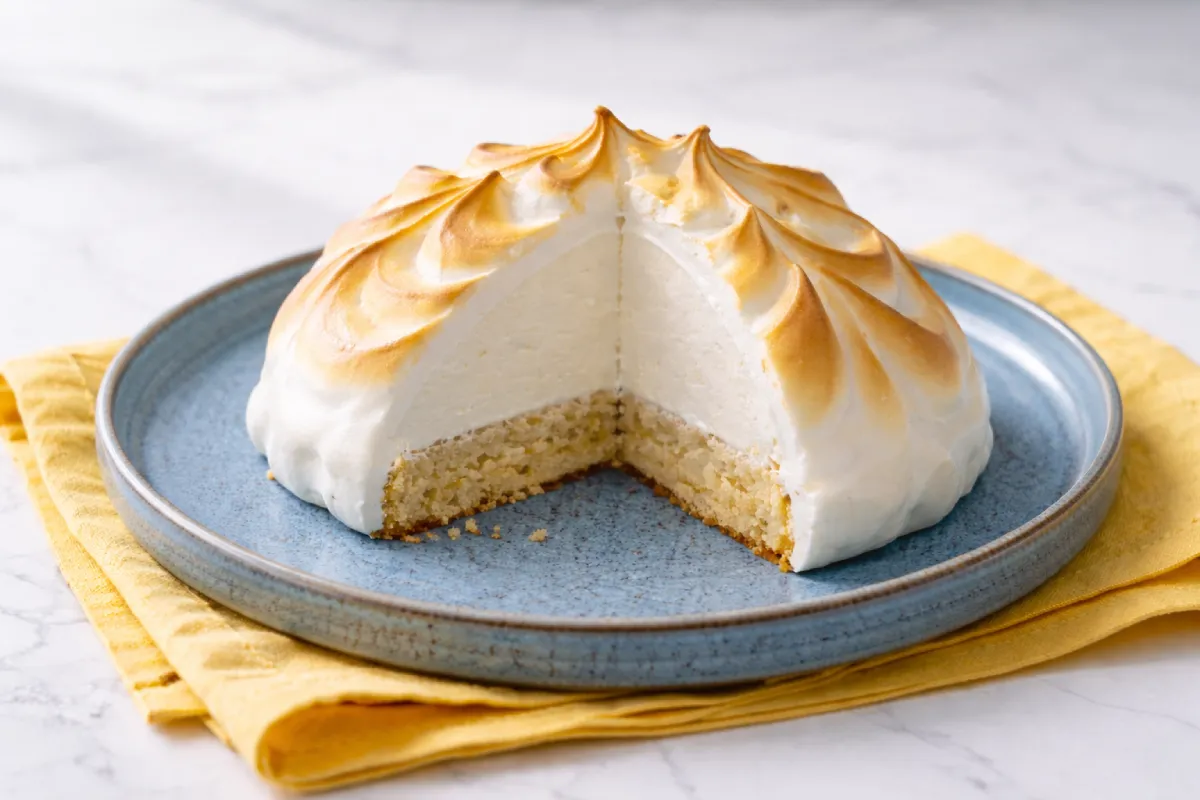
One example is the Baked Alaska inspired by corne de gazelle flavors, an original creation by Grace Recipster, designed as a respectful fusion built around the signature aromas almond, orange blossom, cinnamon, and honey reimagined within an entirely different structure.
This dessert does not belong to any classical pastry repertoire and is not a traditional Moroccan dessert. It stands as a modern interpretation, created with intention and clarity.
If you’re curious to see how these flavors translate into something completely new, you can explore the Baked Alaska inspired by corne de gazelle flavors here.
A Quiet Ending, Just Like the Pastry Itself
Corne de gazelle doesn’t ask for applause.
It doesn’t need a glossy glaze or a dramatic finish. It simply sits there, curved and pale, carrying its work quietly. And somehow, that feels like enough.
By the time the last pastry cools, the kitchen feels different. Softer. Warmer. There’s flour on the counter, the faint perfume of orange blossom still lingering in the air. Wait… did this take longer than expected?
Actually… no… it took exactly the time it needed.
This is the kind of recipe that teaches you something without announcing the lesson. That care shows. That patience changes texture. That restraint can taste rich when done well. Each step asks you to slow your hands, lower your voice, and pay attention not perfectly, just honestly.
Serve corne de gazelle simply. Share it slowly. Let it melt before you rush to the next thing. Because some recipes aren’t about impressing anyone at all they’re about creating a moment that feels calm, intentional, and quietly complete.
And when the plate is empty, what remains isn’t just the memory of something sweet.
It’s the feeling that slowing down, even briefly, can be its own kind of luxury.