
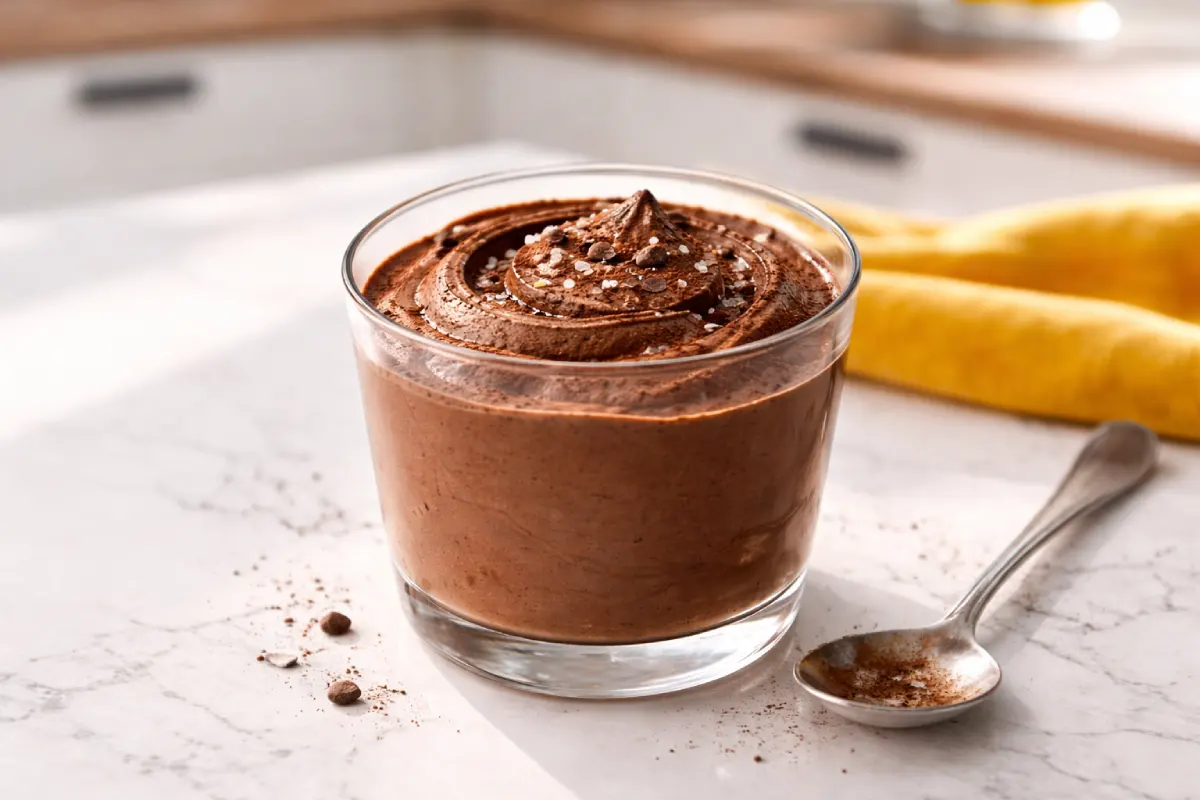
Cottage cheese chocolate mousse is a quick, no-cook dessert made in a blender with five simple ingredients. It takes about ten minutes to blend, then a short chill in the fridge to set. The texture turns smooth and thick without cream, and the flavor stays clearly chocolate.
And yes, at first glance, it sounds like a contradiction.
Wait, cheese in dessert?
Actually, hear me out.
Cottage cheese chocolate mousse is the kind of recipe that looks odd on paper and feels suspicious in the blender. You expect it to fail. You almost want it to. But the second the spoon hits your tongue, something shifts.
It’s smooth. Cold. Dense without being heavy.
The smell is faint cocoa and vanilla, nothing dairy-forward.
And somehow, it delivers real dessert satisfaction with high protein, low sugar, and no heavy cream.
I remember the first time I tested it.
Blender humming. Cocoa dust in the air.
I thought, this can’t possibly work.
Then I tasted it.
Actually, no, it didn’t just work. It nailed it.
This isn’t a recipe that’s good for being healthy.
It’s just good.
Table Of Contents
Table of Contents
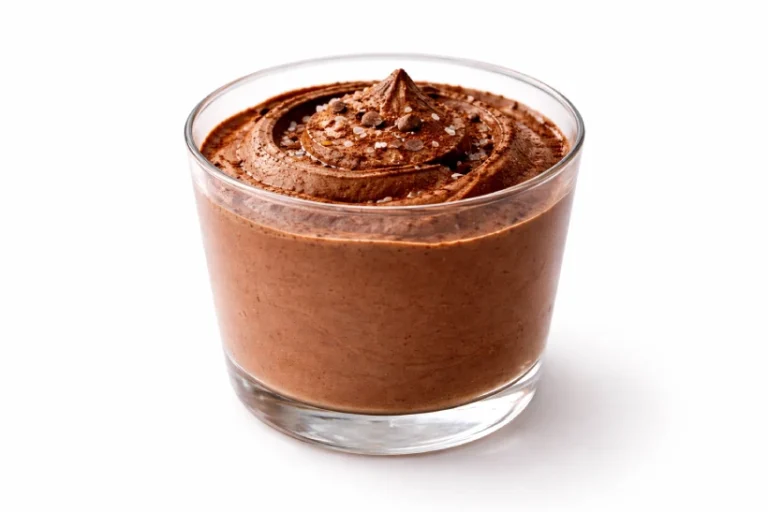
Cottage Cheese Chocolate Mousse, Smooth and Rich
Hot honey cottage cheese toast is a 5-minute recipe made with warm toast, creamy cottage cheese, and a drizzle of spicy honey. It’s sweet, a little fiery, and best eaten right away.
- Total Time: 5 minutes
- Yield: 1 toast 1x
Ingredients
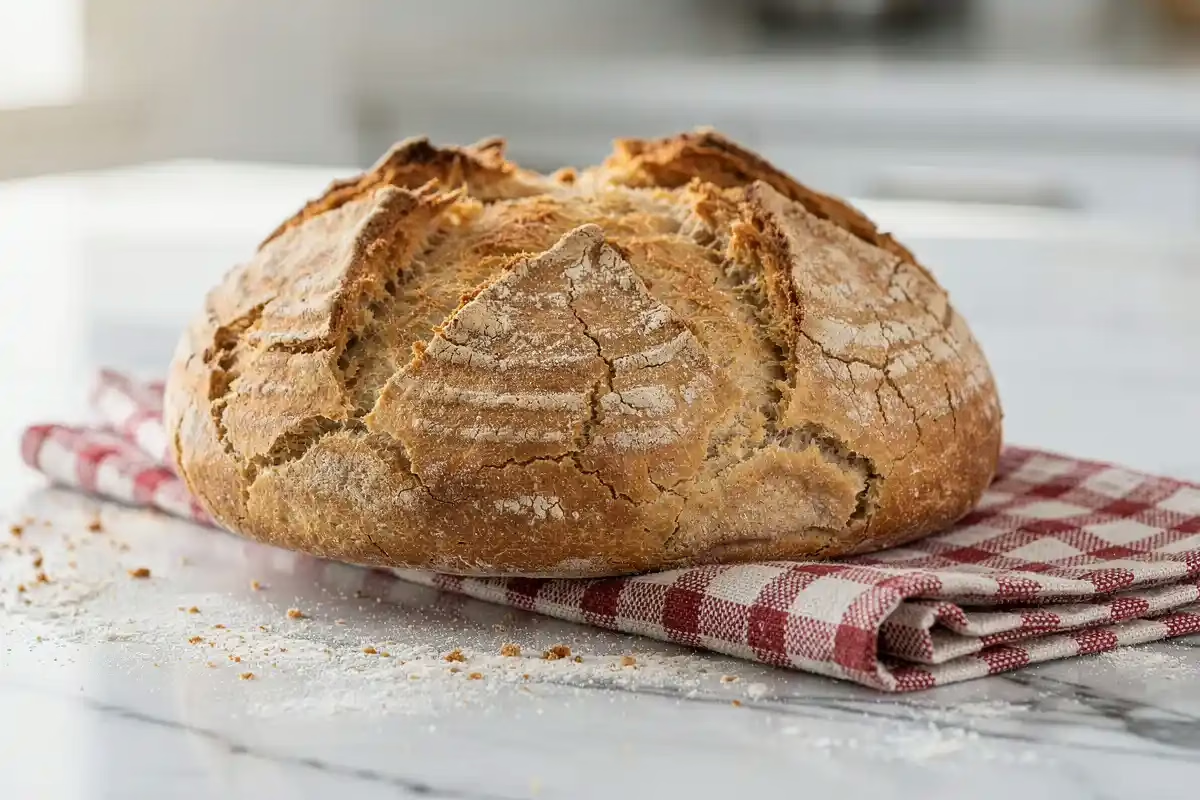
1 thick slice artisan bread (sourdough, country loaf, or whole grain)
1/2 cup full-fat cottage cheese (4%)
1–2 tbsp hot honey
Flaky sea salt
Optional:
Chili flakes or chili crisp
Fresh herbs (chives, basil, or mint)
1 tsp extra-virgin olive oil (to whip cottage cheese)
Instructions
1. Toast the bread until deeply golden and crisp.
2. Spread the cottage cheese immediately, edge to edge (toast should still be warm).
3. Drizzle hot honey slowly over the top so it melts into the cheese.
4. Finish with flaky sea salt and, if you want, a pinch of chili flakes or herbs.
5. Eat right away while the toast is still crisp.
Notes
Best eaten immediately—this one doesn’t “hold” well.
Let cottage cheese sit out 10–15 minutes for better flavor and texture.
If it tastes flat, add salt before adding more honey.
For a smoother spread, blend cottage cheese 30–45 seconds (add 1 tsp olive oil if needed).
- Prep Time: 5 minutes
- Cook Time: 0 minutes
- Category: Breakfast
- Method: Toasting
- Cuisine: American
- Diet: Vegetarian
Nutrition
- Serving Size: 1 toast
- Calories: 320
- Sugar: 12 g
- Sodium: 520 mg
- Fat: 10 g
- Saturated Fat: 4 g
- Unsaturated Fat: 5 g
- Trans Fat: 0 g
- Carbohydrates: 35 g
- Fiber: 4 g
- Protein: 18 g
- Cholesterol: 20 mg
Ingredients You Actually Need (Nothing Extra, Nothing Weird)
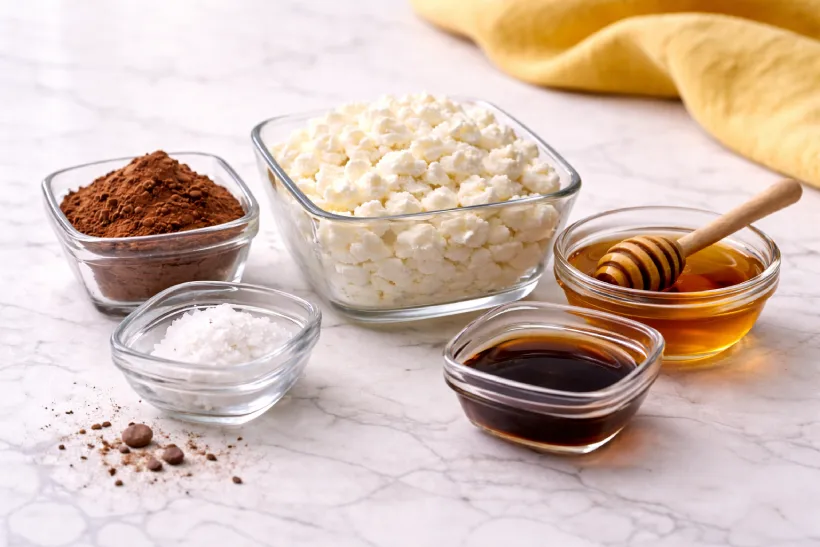
This recipe keeps the ingredient list tight because every component has a functional role.
Core Ingredients
- 1 cup full-fat cottage cheese (4%)
- 2 tablespoons unsweetened cocoa powder
- 2–3 tablespoons maple syrup or honey
- 1 teaspoon pure vanilla extract
- Pinch of fine sea salt
That’s it.
No gelatin.
No cream cheese.
No stabilizers.
It smells deeply chocolatey once blended—almost like brownie batter—and the color darkens as air incorporates.
Test Note: Dutch-processed cocoa creates a darker, smoother mousse. Natural cocoa works, but tastes sharper.
Why Cottage Cheese Chocolate Mousse Works (The Food Science)
Before we cook—or blend—let’s get precise. This recipe succeeds because of structure, fat distribution, and protein emulsification.
Cottage cheese is often misunderstood.
It’s not chunky because it wants to be.
It’s chunky because the curds haven’t been mechanically smoothed.
Once blended:
- Milk proteins unfold, creating a stable emulsion
- Natural dairy fat disperses evenly
- Water content binds with cocoa solids
The result?
- Silky texture
- No chalkiness
- No protein aftertaste
You might think Greek yogurt would do the same thing.
Wait… that seems logical, right?
Actually… no… yogurt’s acidity tightens proteins, which is why yogurt-based mousses often taste sharp or thin. Cottage cheese stays neutral and creamy.
That’s the quiet genius here.
Test Note: Use full-fat cottage cheese (4%). Low-fat versions break more easily and taste flat once cocoa is added.
How to Make Cottage Cheese Chocolate Mousse (Step by Step)
You’ll need a high-speed blender or food processor to fully smooth the cottage cheese and create the right texture.
This is a mechanical recipe. Technique matters more than timing.
Step-by-Step Method

- Add all ingredients to a high-speed blender or food processor
- Cottage cheese first, cocoa second, sweetener last
- This layering helps avoid dry pockets
- Blend on high for 60–90 seconds
- Stop once to scrape sides
- Listen for the sound change from rattly to smooth
- Check texture
- Should fall off a spoon slowly
- Wait… too thick? Add 1–2 teaspoons milk
- Taste and adjust
- Add sweetener in ½-tablespoon increments
- Salt sharpens chocolate don’t skip it
- Chill for at least 30 minutes
- Texture tightens as proteins set

Actually… no… you can eat it immediately.
But chilling makes it mousse, not pudding.
Test Note: Over-blending introduces heat. If your blender warms the mixture, chill longer.
Texture Troubleshooting (Because Mousse Is Unforgiving)
Mousse lives or dies by mouthfeel.
If something feels off, here’s why:
Too Grainy
- Cottage cheese not fully blended
- Blender not powerful enough
Fix: Process longer. Or strain cottage cheese first.
Too Thin
- Excess liquid in cheese
- Over-sweetening with liquid sweetener
Fix: Add 1 tablespoon cocoa powder and re-blend.
Too Bitter
- Cocoa imbalance
- Insufficient fat
Fix: Add ½ teaspoon maple syrup and a pinch more salt.
Test Note: Temperature affects sweetness perception. Cold mousse tastes less sweet—adjust after chilling.
Flavor Variations That Actually Hold Structure
This base is a canvas—but not everything works.
Peanut Butter Chocolate
- Add 1 tablespoon natural peanut butter
- Increases fat → richer mouthfeel
Espresso Chocolate
- Add ½ teaspoon instant espresso powder
- Enhances cocoa without sweetness
Adding a touch of coffee to chocolate works the same way it does in a tiramisu latte, where espresso deepens cocoa flavor without overpowering it.
Orange Chocolate
- Add ¼ teaspoon orange zest
- Keep it subtle—citrus dominates fast
Wait… what about mint?
Actually… no… mint extracts overpower dairy. Skip it.
Test Note: Add-ins should be fat-based or dry. Water-based flavors thin the mousse.
Nutritional Breakdown (Why This Is Not a Gimmick)
Per ½-cup serving (approximate):
- Calories: ~170
- Protein: 14–16g
- Fat: 6–8g
- Sugar: 6–9g (depending on sweetener)
Compare that to classic mousse:
- Calories: 350+
- Protein: 4–5g
That’s not a small difference.
That’s structural.
Test Note: This makes an excellent post-workout dessert or evening protein option.
How to Serve Cottage Cheese Chocolate Mousse Like a Pro
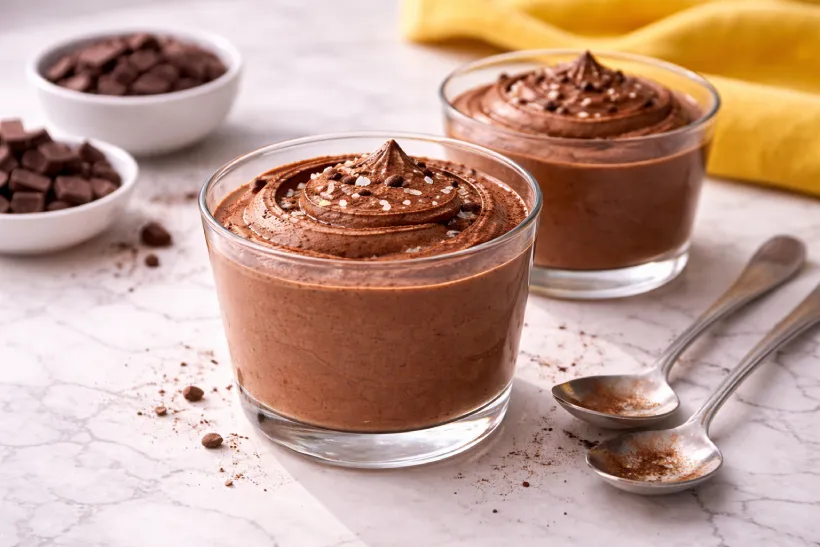
Presentation matters even for fridge desserts.
Simple Serving Ideas
- Glass jars with cocoa dusted on top
- Fresh raspberries for acidity
- Cacao nibs for crunch
- Shaved dark chocolate for aroma
The spoon should slide in easily.
It should feel cold, dense, and smooth.
If it doesn’t—pause.
Adjust next time.
Test Note: Serve slightly cooler than fridge temp for best flavor release.
Make-Ahead, Storage, and Shelf Life
This mousse improves with rest.
Storage Guidelines
- Refrigerator: up to 3 days, airtight
- Freezer: up to 1 month (thaw slowly)
Texture firms over time as proteins relax.
Actually… no… it doesn’t get thicker—it gets cleaner.
Test Note: Stir gently before serving after long storage.
If This Recipe Fails, Read This
Let’s be blunt.
When cottage cheese chocolate mousse fails, it’s almost never the recipe.
It’s physics.
I’ve tested this enough times to know the exact breaking points. I’ve stood there, spoon hovering, thinking Wait… why does this feel wrong?
Actually… no… I already knew why—I just ignored one of the rules below.
Failure #1: The Texture Is Gritty or Chalky
This is the most common issue.
Why it happens:
- Cottage cheese wasn’t fully emulsified
- Blender lacked power
- Blend time was cut short
Milk proteins need time + shear force to unfold and smooth out.
Fix it immediately:
- Blend 30–45 seconds longer than you think you need
- Stop only when the sound changes from coarse to silky
- If needed, add 1 teaspoon milk, not more
Test Note: If you can feel grains on your tongue, blending wasn’t finished. Period.
Failure #2: It Tastes Bitter or Flat
Chocolate bitterness isn’t a flaw—it’s a balance issue.
Why it happens:
- Too much cocoa relative to fat
- Not enough salt
- Sweetener adjusted while warm
Wait… shouldn’t more cocoa mean more chocolate flavor?
Actually… no… cocoa needs fat and salt to bloom.
Fix it immediately:
- Add 1 pinch fine sea salt
- Add ½ tablespoon maple syrup or honey
- Chill 10 minutes, then re-taste
Test Note: Cold suppresses sweetness. Always adjust flavor after chilling.
Failure #3: It’s Too Thin or Pudding-Like
This one feels subtle—but it ruins the mousse illusion.
Why it happens:
- Excess liquid in cottage cheese
- Liquid sweeteners added too aggressively
- Over-thinning during blending
Fix it immediately:
- Add 1 tablespoon cocoa powder
- Or blend in 1–2 tablespoons extra cottage cheese
- Chill 30–45 minutes before judging
Test Note: Mousse sets through protein relaxation, not air alone.
Failure #4: It Smells “Cheesy”
This scares people—but it’s fixable.
Why it happens:
- Low-quality cottage cheese
- Not enough vanilla
- Warm blending releasing dairy aroma
Fix it immediately:
- Add ¼ teaspoon vanilla extract
- Chill uncovered 5 minutes, then cover
- Serve cold, not room temp
Actually… no… once chilled properly, that smell disappears entirely.
Test Note: Aroma perception changes drastically below 40°F (4°C).
Failure #5: You Used the Wrong Cottage Cheese
This one hurts—but it matters.
Avoid:
- Fat-free cottage cheese
- “Dry curd” styles
- Ultra-watery brands
Use instead:
- Full-fat (4%) cottage cheese
- Small-curd if possible
Test Note: Fat carries cocoa flavor. Without it, chocolate tastes hollow.
The One Rule That Fixes Almost Everything
If you remember nothing else, remember this:
Blend longer. Then chill longer.
Most failures come from impatience, not ingredients.
I’ve been there. Spoon ready. Expectations high.
But mousse rewards restraint.
And when it works—
it really works.
FAQ
Can you taste the cottage cheese in high protein cottage cheese chocolate mousse?
No.
At least, most people don’t.
Once it’s blended long enough, the chocolate takes over.
If you taste it, something stopped too early.
Is high protein cottage cheese chocolate mousse actually filling?
Yes.
More than it looks.
The protein does its job, quietly.
You don’t feel heavy, just done.
Do I really need a blender for healthy chocolate mousse cottage cheese?
Yes.
This isn’t optional.
A fork won’t get you there.
Texture depends on it.
Can I make healthy chocolate mousse cottage cheese ahead of time?
That’s actually better.
Cold improves everything here.
The flavor settles, the texture tightens.
It feels more like mousse after resting.
Why did my high protein cottage cheese chocolate mousse feel grainy?
Almost always blending.
Cottage cheese lies about being smooth.
Give it more time than feels reasonable.
Then give it a bit more.
Would I make healthy chocolate mousse cottage cheese again?
Yes.
Mostly because it’s easy.
And because it doesn’t feel like a compromise.
That matters.
What People Said About This Cottage Cheese Chocolate Mousse
Megan R. — Austin, Texas
Leo, I honestly didn’t believe you. I made it mostly to prove a point. But the texture surprised me. I kept checking the ingredient list because it felt richer than it should’ve been. I ate it straight from the jar after dinner and didn’t miss regular mousse at all.
Carlos M. — San Diego, California
Tried the recipe after lifting. I needed something sweet but not heavy. The blend time mattered more than I expected. Once I fixed that, it was smooth and cold and actually satisfying. This is staying in my rotation.
Emily S. — Burlington, Vermont
I’ve failed at “healthy desserts” too many times, so I was cautious. The flavor was clean, not fake chocolate. My kid thought it was pudding and asked for more. That’s usually my test.
Jordan L. — Chicago, Illinois
Made this late at night, probably rushed it. Texture was off at first, then I re-blended and chilled it like you said. Completely different result. I get why you’re specific about the steps now.
Final Thoughts
Cottage cheese chocolate mousse proves something simple—but often ignored.
Good results don’t come from shortcuts.
They come from understanding what ingredients are designed to do.
When you control texture, manage bitterness, and respect protein behavior, the recipe stops feeling experimental. It becomes predictable. Reliable. Repeatable.
At that point, it’s no longer a “healthy alternative.”
It’s just a well-built dessert.
If you enjoy chocolate-forward drinks, the same balance applies when making a coffee and hot chocolate mix at home, where cocoa needs structure, not excess sugar.
And the next time someone hesitates at the idea of a cottage cheese dessert, you won’t need to explain it.
You’ll let the spoon do the work.
Because once you understand the structure,
the outcome is never a surprise.