
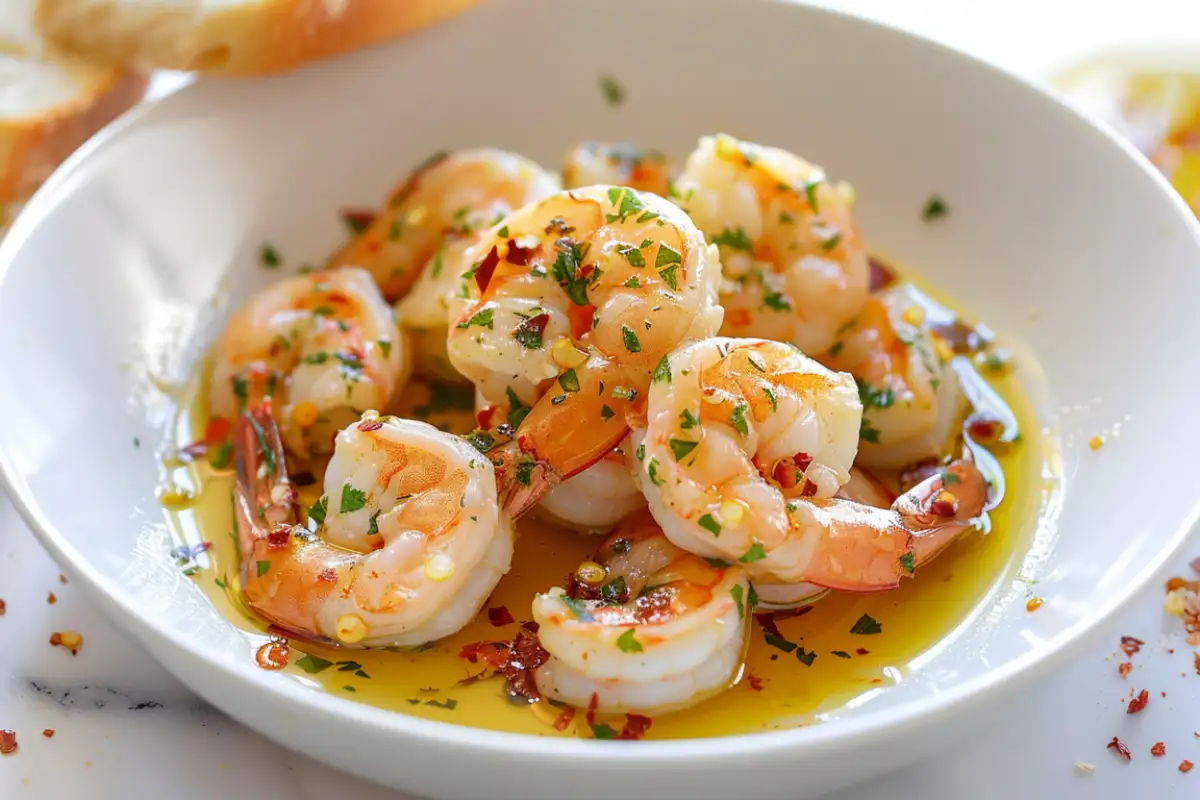
Gambas pil pil is one of those dishes that feels almost too simple the first time you hear about it. Shrimp. Garlic. Olive oil. Chile. That’s the list. And yet, the first moment the oil starts to softly crackle pil… pil… pil something clicks.
I remember standing over the pan thinking, Wait… this can’t be enough.
Actually… no… that doubt is the whole lesson. When technique is right, simplicity isn’t a limitation—it’s leverage.
This is a precise, technique-driven guide to this tapa, written to help you understand not just how to cook it, but why it behaves the way it does, so you can repeat it flawlessly.
Table Of Contents
Table of Contents
What Is Gambas Pil Pil (And Why It Works So Well)
this recipe is a classic Spanish tapa where raw shrimp gently cook in warm olive oil, perfumed with thinly sliced garlic and dried chile.
There’s no sauce added.
The “sauce” forms naturally.
You hear that gentle bubbling sound—pil pil—because:
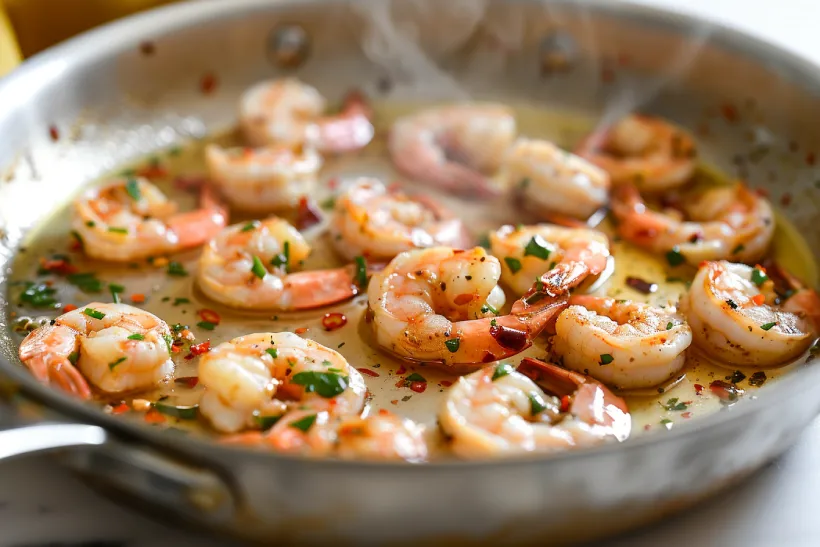
- Shrimp proteins release gelatin as they cook
- Olive oil emulsifies with those proteins
- Low heat prevents separation
Wait… so it’s an emulsion?
Actually… no… it’s not forced like mayonnaise. It’s passive emulsification, created by restraint.
Test Note: If the oil ever aggressively fries, the emulsion breaks before it forms.
The Origin of Gambas Pil Pil (Spain’s Quiet Masterclass)
Though often linked to Andalusia and Basque pintxos bars, Spanish garlic shrimp represents a broader Spanish philosophy: let ingredients speak, don’t interrupt them.
The dish evolved from:
- Abundant Mediterranean shrimp
- Olive oil as a primary cooking medium
- Garlic and chile as preservation flavors
I used to think it was rustic food.
Actually… no… it’s disciplined food disguised as rustic.
Sensory Detail: The aroma is warm, nutty, and faintly sweet—never sharp.
Choosing Shrimp for Gambas Pil Pil (Size Matters)
For this tapa, shrimp choice isn’t flexible.
Use:
- Large shrimp (16–20 count)
- Shell-on or peeled, but NOT pre-cooked
- Fresh or well-thawed frozen
Avoid:
- Small shrimp → overcook instantly
- Pre-cooked shrimp → rubbery, no gelatin release
Wait… shell-on?
Actually… no… shell-on adds flavor but complicates eating. For home cooking, peeled with tails on is the sweet spot.
Test Note: Pat shrimp completely dry before cooking or the oil will sputter.
Olive Oil: The Silent Backbone of Spanish tapas shrimp
This dish lives or dies by oil temperature.
Use:
- Extra virgin olive oil
- Enough to fully submerge shrimp halfway
You’re not frying.
You’re poaching in oil.
The oil should sit around 225–250°F—warm enough to bubble gently, never smoking.
I used to crank the heat to hurry things along.
Actually… no… speed kills this dish.
Sensory Detail: The oil should shimmer softly, like sunlight on water.
Garlic and Chile: Timing Is Everything
Garlic is sliced—not minced.
Why?
- Slices infuse slowly
- Minced garlic burns fast
- Burnt garlic = bitter oil
Chile options:
- Dried guindilla
- Dried árbol
- Crushed red pepper flakes (last resort)
Add garlic before shrimp, but only briefly.
Wait… won’t garlic burn?
Actually… no… not at low heat with enough oil.
Test Note: Remove pan from heat if garlic turns golden too fast.
Step-by-Step Gambas Pil Pil (Precision Method)
Follow this exact order. No improvising.
Ingredients
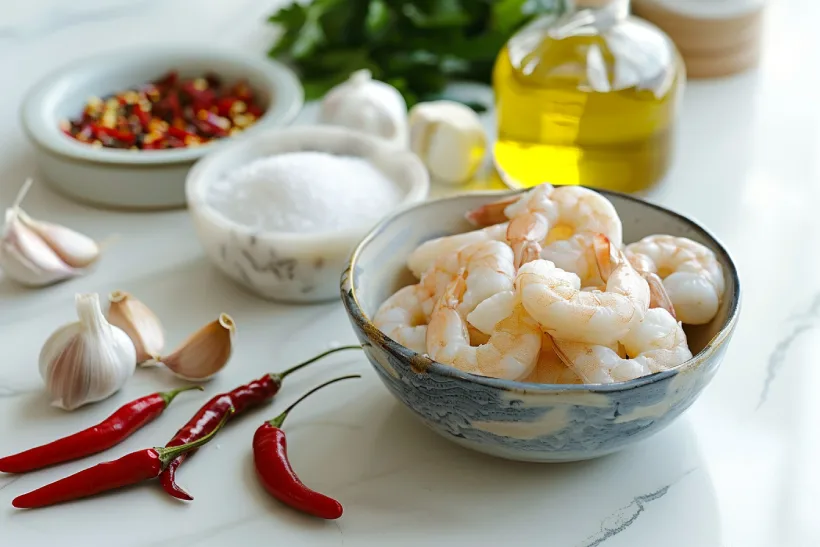
- 1 lb large shrimp, peeled and deveined
- 1 cup extra virgin olive oil
- 6 cloves garlic, thinly sliced
- 1–2 dried chiles
- ½ tsp kosher salt
Cooking Steps
- Heat olive oil over low heat in a shallow pan
- Add garlic slices and chile
- Warm gently for 60–90 seconds until fragrant
- Add shrimp in a single layer
- Sprinkle with salt
- Cook 2–3 minutes, flipping once
- Remove from heat when shrimp just turn opaque
Wait… that’s it?
Actually… no… stopping early is the trick.
Test Note: Shrimp finish cooking from residual heat.
Texture, Sound, and Visual Cues (Trust Your Senses)
Forget timers for a second.
Listen for:
- Soft bubbling
- No aggressive sizzling
Look for:
- Shrimp curling gently
- Oil turning slightly cloudy
Touch:
- Shrimp should feel springy, not tight
I used to overcook waiting for color.
Actually… no… opacity is the real signal.
Common Mistakes That Ruin Gambas Pil Pil
Most failures come from impatience.
Avoid these:
- High heat → broken emulsion
- Crowded pan → steaming
- Burnt garlic → bitter oil
- Cold shrimp → uneven cooking
Wait… cold shrimp?
Actually… no… always let shrimp sit 10 minutes at room temp.
Test Note: Use a wide pan so oil stays shallow.
Serving Gambas Pil Pil the Spanish Way
This dish is meant to be eaten immediately.
Serve with:
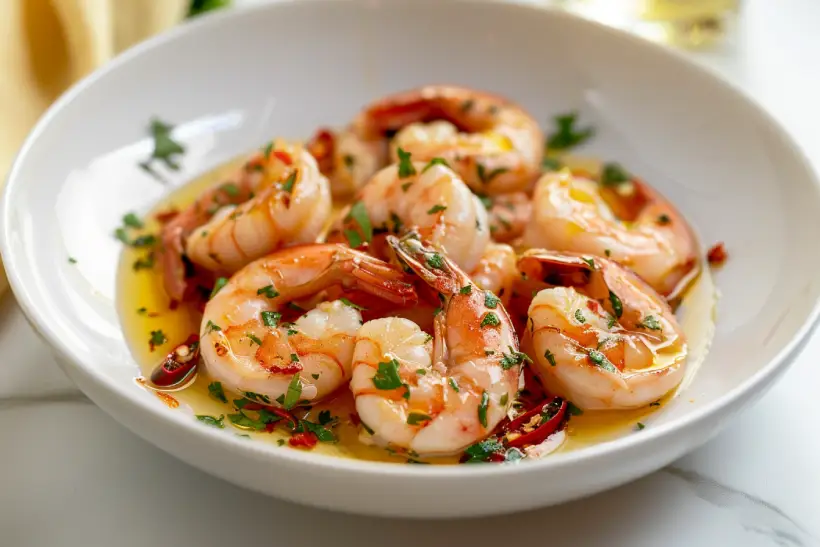
- Crusty bread (mandatory)
- Warm ceramic dish
- Extra oil spooned on top
The bread isn’t optional—it’s the second course.
Sensory Detail: Bread soaking up warm, garlicky oil is half the experience.
Variations (When You Know the Rules)
Once mastered, subtle tweaks work.
Try:
- Smoked paprika (¼ tsp, off heat)
- Lemon zest (tiny pinch)
- Parsley (sparingly)
I thought herbs would elevate it.
Actually… no… too much distracts.
Test Note: Never add butter—it muddies the oil.
Why garlic shrimp Feels Luxurious (Without Being Heavy)
This dish feels rich but doesn’t sit heavy.
Why?
- No dairy
- Clean fat
- Short cooking time
The result is flavor without fatigue.
If you enjoy shrimp dishes that feel light but still deeply satisfying, you might also like this Mediterranean shrimp skillet, a simple one-pan dinner built around olive oil, herbs, and bold Mediterranean flavors.
Make-Ahead and Storage (Short Answer: Don’t)
Spanish garlic shrimpis not a leftovers dish.
- Oil solidifies
- Shrimp toughen
- Emulsion breaks
Wait… reheating gently?
Actually… no… even low heat changes texture.
Cook and serve immediately.
Frequently Asked Questions About Gambas Pil Pil
What exactly is gambas pil pil?
this tapa is a classic Spanish dish that looks simple but isn’t careless.
Shrimp are gently cooked in olive oil with garlic and dried chile.
The soft pil pil bubbling means the oil is slowly emulsifying.
Nothing is added — the sauce forms on its own.
Is gambas pil pil the same as gambas al ajillo?
They’re related, but the technique is different.
Gambas al ajillo uses higher heat and a more aggressive sizzle.
classic Spanish shrimp dish stays gentle, letting the oil and shrimp bond.
The result is smoother and more balanced.
What kind of shrimp should I use?
Always use large, raw shrimp — never pre-cooked.
Small shrimp overcook before the oil can develop flavor.
Fresh or frozen both work if properly thawed and dried.
Size gives you control and better texture.
Why does my garlic turn bitter?
Bitter garlic means the oil was too hot.
Garlic should warm slowly, not fry.
Once it turns dark, the oil is already damaged.
Low heat is non-negotiable here.
Is gambas pil pil very spicy?
Not usually.
The chile is there for aroma, not heat.
You can reduce it or skip it entirely if needed.
The dish should taste warm, not fiery.
Can I make classic Spanish shrimp dish ahead of time?
Honestly, it’s not meant for that.
As it cools, the oil thickens and the shrimp tighten.
Reheating changes the texture completely.
This dish is best enjoyed immediately.
What should I serve with gambas pil pil?
Good bread is essential.
It soaks up the garlicky oil, which is half the experience.
Crusty bread works better than anything soft.
Without it, something feels missing.
What People Said About this recipe
Maria R. — Barcelona, Spain
Leo, I made this last night and honestly didn’t expect that much flavor from so few ingredients. I kept the heat low like you said and the oil turned silky. My kitchen smelled incredible, and the bread disappeared faster than the shrimp.
James T. — Brooklyn, New York
Hey Leo, quick note to say this worked exactly as explained. I’ve messed this dish up before, but slowing everything down changed it completely. The shrimp stayed tender and the garlic never went bitter. Simple, but very sharp technique.
Sofia L. — Lisbon, Portugal
Leo, this felt familiar and new at the same time. The quiet cooking really makes a difference. I served it straight from the pan and everyone stopped talking for a moment. That’s usually how I know a recipe is right.
Daniel M. — Austin, Texas
Just wanted to say thanks, Leo. The explanation about oil temperature finally made it click for me. I didn’t rush it and the result was clean, warm, and balanced. Nothing flashy, just really good food.
Conclusion
Gambas pil pil is a reminder that real flavor comes from attention, not excess.
There’s nothing to hide behind here — no cream, no sauce, no shortcuts.
Every decision matters, from the thickness of the garlic to the patience you keep over the heat.
At first, it can feel almost unsettling.
Wait… is this really enough?
Actually… yes. That restraint is exactly what gives the dish its confidence.
When cooked properly, Spanish tapas shrimp feels rich without being heavy, bold without being loud.
The oil carries warmth, the shrimp stay tender, and the aroma fills the room quietly.
It’s a dish that rewards calm hands and a focused mind.
Master it once, and you don’t just learn a recipe.
You learn how simplicity, when treated with respect, can taste extraordinary.
It’s the kind of dish you return to when you want to cook with intention.
No rush, no distractions, just heat, time, and focus.
Serve it hot, share it quickly, and let the table fall silent.
That silence usually means you got it right.