

Shrimp recipes sit at a rare intersection of speed, precision, and versatility.
They don’t require hours of prep or long braises.
What they demand is attention—brief, focused, intentional.
The first time I truly slowed down while cooking shrimp, I noticed how fast they speak.
The oil shimmered. The shrimp touched the pan.
That immediate sizzle filled the kitchen and I thought, Wait… this is already happening.
Actually… yes. Shrimp don’t wait for indecision.
This guide exists to explain the logic behind great shrimp recipes so each dish feels deliberate, not rushed.
Table Of Content
Table of Contents
Why Shrimp recipes Work So Well for Home Cooks
Shrimp are often labeled “easy,” but that’s incomplete.
They’re efficient, not forgiving.
At first, I assumed speed was the advantage.
Wait… speed is the risk.
Actually… control is the benefit.
Shrimp muscle fibers contract quickly when exposed to heat.
That’s why texture changes are instant—and visible.
What makes shrimp different
- Lean protein with minimal connective tissue
- Ideal cooking range between 120–130°F
- Overcooking happens in seconds, not minutes
Test Note:
Perfectly cooked shrimp form a relaxed “C.”
A tight “O” means they stayed too long.
Understanding this transforms shrimp recipes from stressful to predictable.
Choosing Shrimp That Perform Consistently
No technique can rescue poor-quality shrimp.
Quality determines outcome before heat ever touches the pan.
Fresh shrimp should smell clean and briny, never fishy or sour.
Wait… frozen shrimp instead of fresh?
Actually… frozen shrimp are often better.
They’re frozen shortly after harvest, preserving texture and moisture.
What to buy every time
- Raw, frozen shrimp
- 16–20 count for most shrimp recipes
- Shell-on when flavor extraction matters
Test Note:
Avoid pre-cooked shrimp. Reheating tightens protein and dries them out.
Good shrimp make good shrimp recipes possible.
| Shrimp Size (Count per lb) | Common Name | Best Uses | Cooking Time (Sauté) |
|---|---|---|---|
| 51–60 | Small Shrimp | Pasta, fried rice, fillings | 1–2 min per side |
| 41–50 | Medium Shrimp | Stir-fries, salads | 2 min per side |
| 31–40 | Medium-Large | Tacos, skillets, one-pan meals | 2–3 min per side |
| 21–25 | Large Shrimp | Creamy sauces, grilling, sautéing | 3 min per side |
| 16–20 | Extra-Large Shrimp | Main dishes, shrimp alfredo, searing | 3–4 min per side |
| U10–15 | Jumbo Shrimp | Grilling, skewers, special occasions | 4–5 min per side |
Thawing and Prepping Shrimp the Right Way
Improper thawing ruins texture before cooking begins.
I used to rush this step.
Wait… why are they releasing liquid?
Actually… temperature shock forces moisture out.
Correct thawing method
- Overnight in the refrigerator
- Or cold water bath for 15–20 minutes
- Pat completely dry before cooking
Test Note:
Dry shrimp brown. Wet shrimp steam.
Preparation discipline elevates all shrimp recipes.
Heat Control: The Core Skill Behind Shrimp recipes
Shrimp respond instantly to heat.
There’s no buffer.
I used to overcrowd the pan.
Wait… why is everything pale?
Actually… steam replaced sear.
Proper pan setup
- Heavy-bottomed skillet
- Fully preheated surface
- Shrimp arranged in one single layer
Test Note:
Shrimp release naturally after 60–90 seconds.
If they stick, they’re not ready to flip.
Mastering heat control improves nearly every shrimp recipe.
Flavor Logic: Why Shrimp Need Balance, Not Excess
Shrimp don’t overpower flavor.
They carry it.
Think of shrimp as amplifiers.
Wait… more sauce equals more flavor?
Actually… excess sauce buries shrimp instead of highlighting them.
Flavor structure that works
- Fat for richness (butter, olive oil)
- Aromatics for depth (garlic, shallot)
- Acid for contrast (lemon, vinegar)
Test Note:
Add acid after cooking shrimp. Early acid tightens protein too fast.
This balance is why shrimp recipes adapt across cuisines.
Timing: The Difference Between Tender and Tough
Shrimp don’t need patience.
They need confidence.
I used to cook “just to be safe.”
Wait… why are they chewy?
Actually… carryover heat finishes the cook.
Reliable timing benchmarks
- Sauté: 2–3 minutes per side
- Simmer in sauce: 3–4 minutes total
Test Note:
Pull shrimp slightly underdone. Residual heat completes the process.
Every dependable shrimp recipe respects this rule.
Creamy Shrimp Alfredo – Better Than Any Restaurant, Ready in 20 Minutes

Creamy shrimp dishes magnify mistakes.
You smell butter melting.
You hear the sauce thicken.
Wait… won’t the shrimp overcook?
Actually… shrimp go in last.
In a proper shrimp alfredo, the sauce is finished first.
Shrimp cook just long enough to turn opaque and tender.
Test Note:
Finish with black pepper, not extra salt.
Parmesan already provides salinity.
This approach is what separates restaurant-quality shrimp recipes from heavy, overcooked ones.
If you want to see how this technique works in a rich sauce, Creamy Shrimp Alfredo – Better Than Any Restaurant, Ready in 20 Minutes is a perfect example of how timing keeps shrimp silky instead of rubbery.
Baja Shrimp Tacos: A Bold, Sun-Drenched Flavor Journey

Texture drives this dish.
Hot shrimp.
Warm tortillas.
Cool slaw snapping softly.
Wait… fried or sautéed?
Actually… either works when intentional.
The success of Baja shrimp tacos comes from contrast—heat against freshness, spice against acidity.
Test Note:
Salt shrimp after cooking to preserve surface texture.
Shrimp recipes shine when texture is designed, not accidental.
For a contrast-driven dish, Baja Shrimp Tacos: A Bold, Sun-Drenched Flavor Journey shows how heat, freshness, and acidity work together in a balanced way.
Gambas Pil Pil: The Ultimate Spanish Garlic Shrimp Recipe
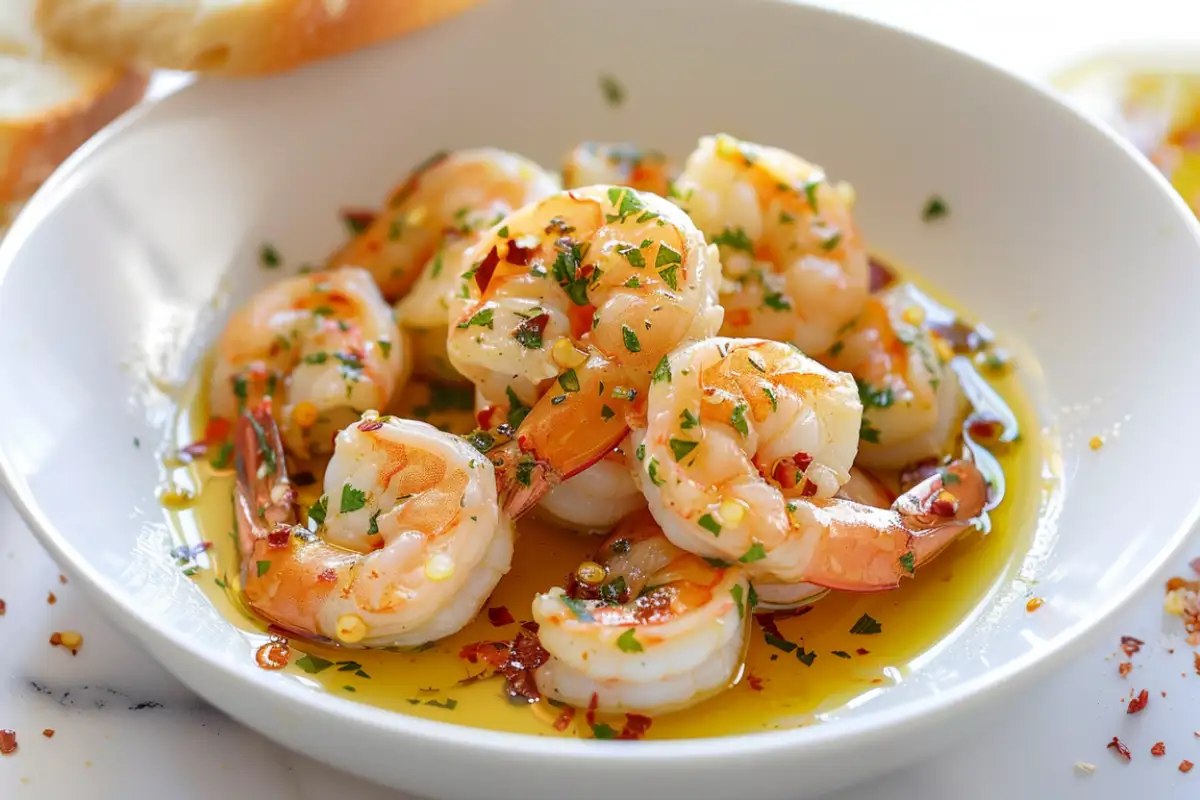
Garlic-forward shrimp requires restraint.
I used to brown garlic aggressively.
Wait… why is it bitter?
Actually… garlic should infuse, not fry.
Spanish-style garlic shrimp rely on gentle heat.
Oil starts cool, garlic releases aroma slowly, shrimp cook briefly.
Test Note:
Remove the pan from heat before adding shrimp to avoid scorching.
This is precision cooking disguised as simplicity.
If you want to understand garlic and oil control, Gambas Pil Pil: The Ultimate Spanish Garlic Shrimp Recipe shows how gentle heat creates flavor without bitterness.
Mediterranean Shrimp Skillet: A Flavor-Packed One-Pan Meal Ready in 30 Minutes

One-pan shrimp meals work when ingredients cook together.
Tomatoes soften.
Olives release salt.
Herbs bloom at the end.
Wait… too many flavors?
Actually… shrimp connect everything.
Shrimp absorb surrounding flavors without losing identity.
Test Note:
Add fresh herbs at the very end to preserve aroma.
This Mediterranean Shrimp Skillet: A Flavor-Packed One-Pan Meal Ready in 30 Minutes shows how shrimp brings layered flavors together in a single pan.
Common Mistakes That Ruin Shrimp recipes
Everyone makes these mistakes at least once.
What to avoid
- Crowding the pan
- Cooking shrimp straight from the fridge
- Long acidic marinades
Wait… overnight marinade?
Actually… 15–30 minutes is enough.
Shrimp punish excess quickly.
Storing, Reheating, and Using Leftovers Correctly
Shrimp don’t love leftovers.
But they tolerate care.
Best practices
- Store cooked shrimp up to 2 days
- Reheat gently in sauce, not dry heat
- Repurpose into wraps, salads, or pasta
Test Note:
Never microwave shrimp without moisture.
Handled properly, shrimp recipes remain enjoyable.
Why Shrimp recipes Work Across Cuisines
Shrimp are neutral but expressive.
They absorb spices, aromatics, and sauces with ease.
That’s why shrimp appear in:
- Italian cream sauces
- Mexican tacos
- Spanish garlic oil
- Mediterranean skillets
Wait… why shrimp everywhere?
Actually… because they adapt faster than most proteins.
Shrimp recipes scale globally without losing identity.
FAQ – Shrimp Recipes
How do I know when shrimp are perfectly cooked?
Perfect shrimp curl into a loose “C” shape and turn opaque.
They should feel springy, not firm or rubbery.
If they form a tight “O,” they’re overcooked.
Pull them early and let residual heat finish the job.
Can I use frozen shrimp for shrimp recipes?
Yes, and often you should.
Frozen shrimp are usually frozen right after harvest.
They retain better texture than “fresh” shrimp sitting on ice.
Always thaw properly and pat dry before cooking.
Why do my shrimp release water in the pan?
This usually means the shrimp were too wet or the pan wasn’t hot enough.
Excess moisture causes steaming instead of searing.
Dry shrimp thoroughly and preheat the pan completely.
A dry surface equals better browning.
Should shrimp be marinated before cooking?
Short marinades work well, long ones do not.
Acidic ingredients tighten shrimp protein quickly.
Limit marinades to 15–30 minutes.
For longer flavor, season during cooking instead.
What size shrimp works best for most recipes?
Medium-large shrimp (16–20 count) are the most versatile.
They’re large enough to stay juicy but cook evenly.
Smaller shrimp overcook faster and dry out.
Larger shrimp work best for grilling or skewers.
Can shrimp be reheated without becoming rubbery?
Yes, if reheated gently.
Warm shrimp in sauce or with added moisture.
Avoid high heat and dry methods like microwaving alone.
Slow reheating preserves texture.
Are shrimp recipes healthy?
Shrimp are high in protein and low in calories.
They cook quickly, preserving nutrients.
Health depends on preparation—light fats and fresh ingredients help.
Balanced shrimp recipes fit well into most diets.
What People Said About These Shrimp Recipes
Marissa K. — San Diego, CA
“Hey Leo, just wanted to say this finally made shrimp make sense for me. I used to overcook them every single time. Reading how you explained heat and timing, it clicked immediately. I made the shrimp alfredo last night and the texture was perfect. Simple, but not dumbed down. Really appreciated that.”
David R. — Austin, TX
“Quick note to say thanks. I cook a lot, but shrimp always stressed me out because everything happens so fast. The way you break down what to watch instead of what to fear changed my approach. Tried the skillet recipe and didn’t second-guess myself once. That was new.”
Nina P. — Brooklyn, NY
“Hi Leo, I followed your shrimp taco logic more than the recipe itself and that was the best part. Knowing when to season and when not to helped a lot. The shrimp stayed juicy and actually tasted like shrimp, not just sauce. Loved how practical the explanations were.”
Carlos M. — Miami, FL
“Just wanted to say this was refreshing to read. No fluff, no hype. I grew up eating shrimp and still learned things, especially about garlic and oil. The gambas-style section felt very accurate. Cooked it last weekend and my family noticed the difference.”
Emily S. — Portland, OR
“Hey Leo, I’m not a confident cook, but this gave me structure without pressure. I liked that you explained what shrimp should look and feel like instead of just saying ‘don’t overcook.’ I made two different shrimp recipes this week and didn’t mess either one up. That’s new for me.”
Conclusion: Why Great Shrimp Recipes Feel Effortless
Shrimp recipes don’t reward rushing.
They reward awareness.
When you cook shrimp well, nothing feels forced.
The heat is right. The timing makes sense.
The texture tells you what to do next.
At first, you might think it’s about speed.
Wait… it’s not.
Actually… it’s about understanding how shrimp react—to heat, to fat, to acid.
Once that logic clicks, everything changes.
You stop guessing.
You stop overcorrecting.
You start cooking shrimp with confidence.
And that’s when shrimp recipes stop being “quick meals”
and start becoming reliable, repeatable wins in your kitchen.