

A salmon rice bowl seems simple—almost too simple—until you make one with intention. I’ve cooked this bowl on rushed nights, quiet mornings, even in the middle of chaotic prep shifts, and every time it reminds me how much technique hides in something so unassuming. Rice texture. Heat control. Seasoning choices. The little things decide everything.
The first almon dinner bowl I taught in a professional class surprised me. I expected students to shrug; instead they leaned in, tasting spoonful after spoonful, trying to understand why the flavors felt so aligned. It’s a bowl that teaches without announcing it. And if you master three fundamentals, you’re already ahead:
- Rice that stays fluffy
- Salmon that stays tender
- Toppings that wake the flavors up
With that, let’s break it down the way I do in my test kitchen—precise, realistic, and human.
Table of Content
Table of Contents

salmon rice bowl: the complete guide to building a balanced, flavorful bowl
A balanced, technique-driven salmon rice bowl with fluffy rice, tender salmon, bright toppings, and a clean soy–sesame flavor. Built to be simple, consistent, and repeatable — the kind of bowl that works every single time when you understand the fundamentals.
- Total Time: 25 minutes
- Yield: 2 bowls 1x
Ingredients
2 salmon fillets (4–5 oz each), fresh or frozen
1 tablespoon soy sauce
1 teaspoon sesame oil
1 teaspoon rice vinegar
1/2 teaspoon fresh grated ginger
Salt and pepper, to taste
Rice Base:
1 cup jasmine rice
1.25 cups water
1/2 teaspoon salt
Toppings:
1/2 cucumber, sliced
1 avocado, diced
2 scallions, thinly sliced
1/2 cup steamed edamame
Quick-pickled carrots or radish
Sesame seeds
Sauce Options:
Soy sauce
Sesame oil
Spicy mayo or chili crisp
Sesame-ginger dressing
Instructions
1. Rinse the rice twice, drain, and place in a pot with 1.25 cups water and salt. Bring to a simmer, cover, cook on low for 12–15 minutes. Rest 10 minutes covered.
2. Pat salmon dry very well. Whisk soy sauce, sesame oil, rice vinegar, and ginger. Brush over salmon.
3. Bake salmon at 400°F (205°C) for 12–14 minutes, or pan-sear over medium-high heat 3–4 minutes per side.
4. Flake salmon gently with a fork once cooked.
5. Prepare toppings: slice cucumber, scallions, dice avocado, steam edamame, and prepare any pickled vegetables.
6. Assemble bowls: warm rice on the bottom, salmon flakes on top, fresh toppings arranged around.
7. Finish with soy sauce, sesame oil, spicy mayo, or sesame-ginger dressing to taste.
Notes
Frozen salmon works perfectly when thawed gently in cold water.
Pat fish very dry — water prevents proper sear.
Rice texture matters: resting after cooking improves fluffiness.
Add something pickled for brightness: carrots, radish, daikon.
For spicy bowls: use chili crisp or spicy mayo.
For meal prep: keep rice, salmon, and toppings stored separately.
Reheat salmon gently on half-power or with a splash of water in a pan.
- Prep Time: 10 minutes
- Cook Time: 15 minutes
- Category: Dinner
- Method: Bowl
- Cuisine: Asian Fusion
Nutrition
- Serving Size: 1 bowl
- Calories: 520
- Sugar: 5g
- Sodium: 780mg
- Fat: 24g
- Saturated Fat: 4g
- Unsaturated Fat: 18g
- Trans Fat: 0g
- Carbohydrates: 50g
- Fiber: 6g
- Protein: 32g
- Cholesterol: 75mg
ingredients for a great salmon rice bowl
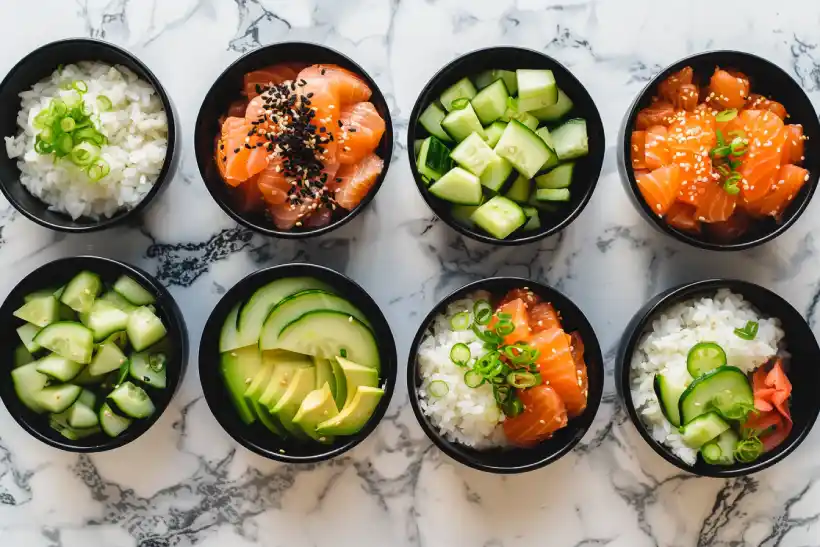
A salmon rice bowl doesn’t require fancy ingredients, just thoughtful ones. Here’s what I reach for most days.
protein
- 4–5 oz salmon fillet (fresh or frozen)
- Optional: skin-on fillet for crisp texture
rice base
- Jasmine rice (my everyday choice)
- Brown rice (for high-fiber bowls)
- Short-grain rice (cozier texture, more delicate to handle)
vegetables & toppings
- Sliced cucumber
- Avocado
- Scallions
- Steamed edamame
- Quick-pickled carrots or radish
- Sesame seeds
sauces & aromatics
- Soy sauce
- Sesame oil
- Rice vinegar
- Fresh ginger
- Garlic
- Teriyaki or sesame-ginger dressing
- Spicy mayo or chili crisp
These simple components build a a simple salmon bowl that feels fresh, warm, crunchy, and balanced—exactly what the bowl is meant to be.
understanding the salmon rice bowl trend
A salmon meal prep bowl works because it lines up everything our palate naturally wants:
- clean protein
- warm grains
- bright vegetables
- umami from soy or sesame
- a hint of acid
- a touch of fat for roundness
I always remind students this bowl isn’t about perfection—it’s about balance. One afternoon, during a class in Seattle, someone said, “Chef, mine tastes flat.” I tasted it and answered immediately: “No acid.” One teaspoon of rice vinegar and suddenly the bowl tasted awake.
That’s the quiet power of a salmon veggie rice bowl
: tiny adjustments make big differences.
choosing the right salmon for a salmon rice bowl
You don’t need premium salmon. You need predictable salmon.
Most days, I use:
- Frozen 4–5 oz fillets—they hold moisture consistently
- Fresh fillets when available
- Skin-on cuts when I want extra richness
One evening, my delivery was late and all I had was a bag of frozen portions. I thawed them gently in cold water, dried them well, and baked them with soy and sesame oil. A guest said, “Whatever you did tonight, keep doing it.” I didn’t correct them.
A salmon rice bowl depends more on technique than on luxury ingredients.
Test Note — Best texture: 400°F, 13 minutes.
the rice base: what type of rice works best
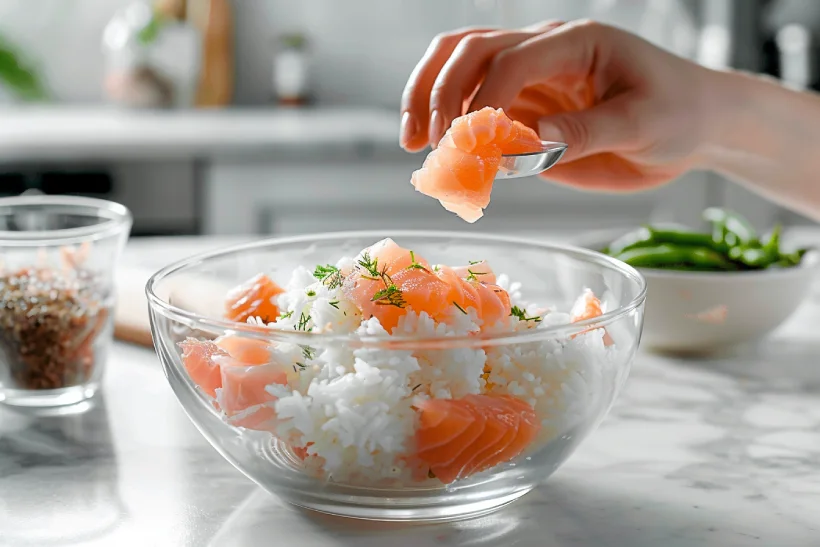
Rice carries half the flavor in a salmon brown rice bowl. If the rice is wrong, the bowl collapses.
what I use most
- Jasmine rice → fluffy, absorbs sauces without clumping
- Brown rice → hearty, slow flavor absorption
- Short-grain → comforting, but easy to over-stick
My routine:
- Rinse twice
- 1 cup rice : 1.25 cups water
- Simmer low
- Rest covered 10 minutes
Resting is as important as cooking. It allows the steam to finish the grains quietly.
Test Note — Stainless-steel pot gave the cleanest texture.
building flavor: seasoning, marinades, and cooking
A salmon rice bowl shines when flavors are deliberate but not overwhelming. My go-to blend:
- 1 tbsp soy sauce
- 1 tsp sesame oil
- 1 tsp rice vinegar
- ½ tsp fresh ginger
When I need something bigger, I switch to teriyaki or sesame-ginger dressing. Oven baking gives consistency. Pan-searing brings caramelization. Air-frying works—but dries quickly past eight minutes.
I once over-seared a batch during a live demo—(wait, not “over-seared”… I nearly burnt it). I folded it into warm rice, added sesame oil, and acted confident. People loved it. Technique matters, but recovery matters too.
A salmon meal prep bowl is forgiving in that way.
Test Note — Best sear on medium-high heat after patting very dry.
If you want more ideas for bright, crunchy toppings, take a look at my Mediterranean Bowl, which uses similar fresh elements in a different way.
assembling a balanced salmon rice bowl
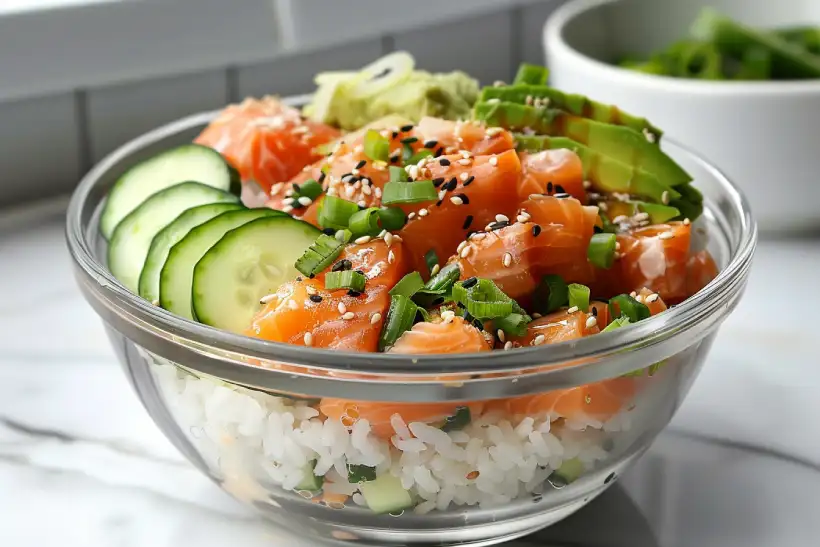
A good salmon rice bowl should feel layered:
- warm rice
- tender flakes of salmon
- bright cucumber
- creamy avocado
- sharp scallions
- something pickled
- something crunchy
I once watched my wife build her own bowl. She said it tasted “quiet.” I added pickled daikon on top. She looked at me and said, “Now it speaks.” That’s the difference toppings make.
Test Note — Add avocado last; heat dulls it fast.
healthy salmon rice bowl variations
You can push a salmon rice bowl in several directions:
- Spicy version → chili crisp, spicy mayo, or ginger-chili sauce
- Teriyaki version → reduce the sauce so it coats the salmon
- Clean eating version → soy, lemon, scallions, roasted veggies
A private client once said, “Make a spicy bowl but keep it healthy.” Contradiction? Maybe. I mixed Greek yogurt with chili paste, garlic, and sesame oil. Light, bright, balanced.
Test Note — Chili crisp loses fragrance around 48 hours after opening.
meal prep and storage
A salmon meal prep bowl works for meal prep if you separate components:
- rice in one container
- salmon in another
- toppings added fresh on the day
Store salmon up to 3 days. Reheat gently—50% microwave power, or in a pan with a splash of water. One student once reheated hers for three full minutes. She took a bite, paused, and said, “It tastes… determined.” That’s one way to put it.
Test Note — Best reheat: 45 seconds, covered, half power.
sauces and finishing touches
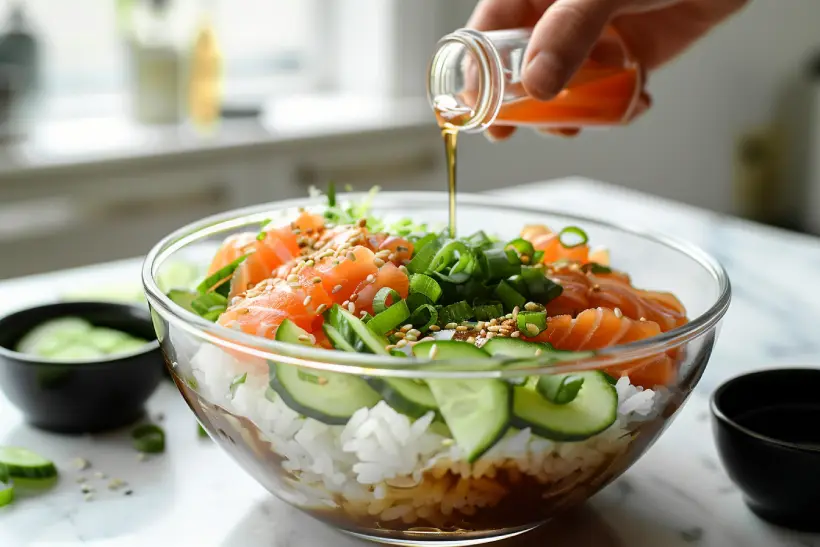
A finishing sauce completes a salmon rice meal:
- spicy mayo
- sesame-ginger dressing
- lemon-scallion drizzle
- yogurt-chili mix
I often use two: one warm (soy + sesame) and one cool (yogurt + chili). Little contrast, big payoff.
Just drizzle. Don’t drown. Rice needs space.
Test Note — Flavor balanced after a 2-minute rest.
common mistakes and how to avoid them
If a salmon rice bowl fails, it’s usually because:
- The salmon overcooked
- The rice was under-seasoned
- Toppings released water
- Sauce was added too soon
I’ve done all of these, and probably will again when distracted. Cooking isn’t about perfection; it’s about correction.
Test Note — Pat salmon with 2–3 paper towels before cooking.
FAQ
are salmon rice bowls healthy?
Pretty much, yes. A salmon rice meal has that built-in balance—protein, rice, and whatever bright vegetables you throw in because they were sitting in the fridge.
What makes the biggest difference is the sauce; go light and it stays clean, go heavy and it becomes more of a comfort bowl.
I’ve eaten one after late shifts, and it never feels like a meal that weighs you down.
can I use frozen salmon for a salmon rice bowl?
Of course—you’d be shocked how often chefs use frozen fillets when things get busy.
If you thaw them gently (cold water works), dry them well, they cook almost exactly like fresh.
Some of my best salmon rice bowl tests started with a fillet I forgot I bought weeks earlier.
what type of rice works best?
I lean toward jasmine rice because it stays loose and doesn’t fight the sauce.
Brown rice is fine too, just… slower, a little firmer, and it changes the mood of the bowl.
Short-grain rice gives a cozy vibe, but if you overshoot the water even a little, it tries to take over the whole a rice bowl with salmon on top.
how do I store and reheat?
Keep everything apart—rice here, salmon there, toppings somewhere cold and untouched.
When you reheat, go gentle; half-power in the microwave or a warm pan with a splash of water is usually enough.
I always rebuild the this salmon bowl at the last minute, otherwise you lose the crunch and freshness completely.
can I meal-prep salmon rice bowls?
Yes, but think “components,” not “complete bowl in a box.”
Cook your salmon and rice ahead, but keep vegetables raw and sauces on the side.
When you put it all together later, the salmon rice meal still tastes alive instead of dull.
what toppings or vegetables work best?
Cucumber, scallions, avocado—those are the usual suspects because they wake the bowl up fast.
Anything pickled adds that quick spark; I use radish when I have it, carrots when I don’t.
If it brings crunch, brightness, or a bit of acidity, it belongs in a salmon meal prep bowl.
What Real People Said About the Salmon Rice Bowl
1. Mia R. — Portland, Oregon
“Honestly I made this after work because I had leftover salmon from the night before. Didn’t expect much but the mix with the warm rice and the pickled carrots surprised me. My kid asked me to make the same bowl again the next day. That never happens with fish.”
2. Anthony L. — Austin, Texas
“I tried your version with jasmine rice and the sesame-ginger thing. Not gonna lie, I burned the salmon a little first try. Scraped it, mixed everything together, and somehow it still tasted great. Makes sense why people meal prep it. It’s hard to mess up.”
3. Valerie S. — Tampa, Florida
“I used frozen fillets because that’s what I had. Thawed them in cold water like you said. The texture came out better than I expected. I added cucumber, avocado, and leftover cabbage. Simple but felt like something I’d order at a good lunch spot.”
conclusion: why a salmon rice bowl fits modern cooking
A salmon rice bowl doesn’t pretend to be complicated. Yet it teaches you how heat behaves, how rice absorbs flavor, and how tiny decisions shift the whole dish. Every time I prepare one, I see the same truth: technique isn’t loud, it’s consistent.
And once you understand the rhythm of a salmon bowl with rice, you can improvise endlessly. Even your mistakes become lessons—not problems.