

Bariatric chicken soup gives you a warm, savory meal with tender chicken, controlled sodium, and about 20 grams of protein in each 1-cup serving. The base recipe is intentionally simple: lean chicken, no-salt-added broth, soft vegetables, and restrained seasoning. You can strain it for a broth-only option, blend it completely for a smooth purée, or keep the chicken finely shredded once your care team has cleared softer or regular textures.
This is a recipe, not a postoperative diet prescription.ASMBS explains that patients generally begin with a liquid diet and gradually advance to solid foods, but the timing should always follow the bariatric team’s instructions.
Bariatric programs use different timelines and portion limits, so follow the plan from your surgeon or registered dietitian even when it differs from the stage suggestions below. Patients commonly begin with liquids and advance gradually toward soft and solid foods while emphasizing fluids and protein.
Table Of Contents
Table of Contents

Bariatric Chicken Soup With 20 Grams of Protein per Cup
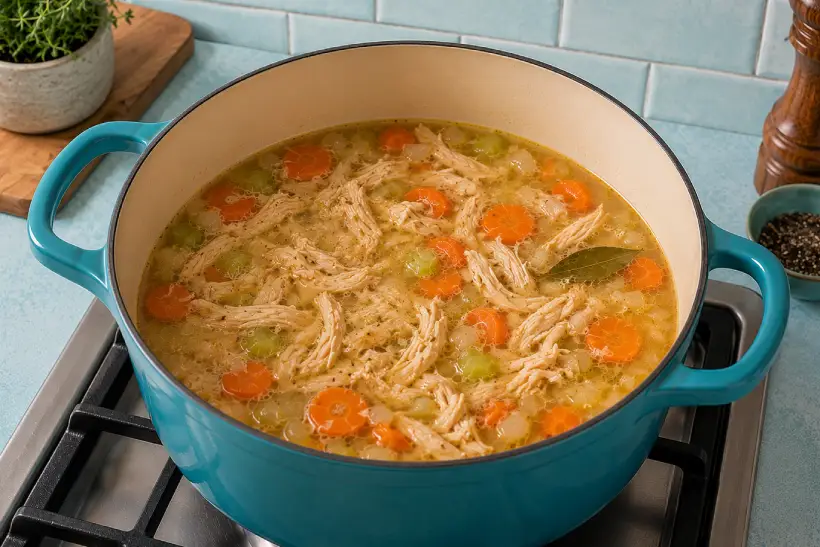
Bariatric chicken soup is a warm, protein-rich meal made with lean chicken breast, no-salt-added broth, and tender vegetables. Each 1-cup serving provides about 20 grams of protein, while the adjustable texture makes the soup suitable for approved puréed, soft-food, or regular-texture stages.
- Total Time: 50 minutes
- Yield: 8 cups 1x
Ingredients
2 teaspoons extra-virgin olive oil
1 small yellow onion, finely diced, about 1 cup (150 g)
2 medium carrots, peeled and thinly sliced, about 1 cup (130 g)
2 celery ribs, thinly sliced, about 3/4 cup (100 g)
2 garlic cloves, minced
6 cups (1.4 L) no-salt-added chicken broth, plus more if needed
1 1/2 pounds (680 g) boneless, skinless chicken breasts
1 teaspoon dried thyme
1 bay leaf
1/2 teaspoon fine sea salt, or less as directed by your care team
1/4 teaspoon ground black pepper, optional
Optional for an individual serving: unflavored whey protein isolate, using the amount approved by your bariatric care team
Instructions
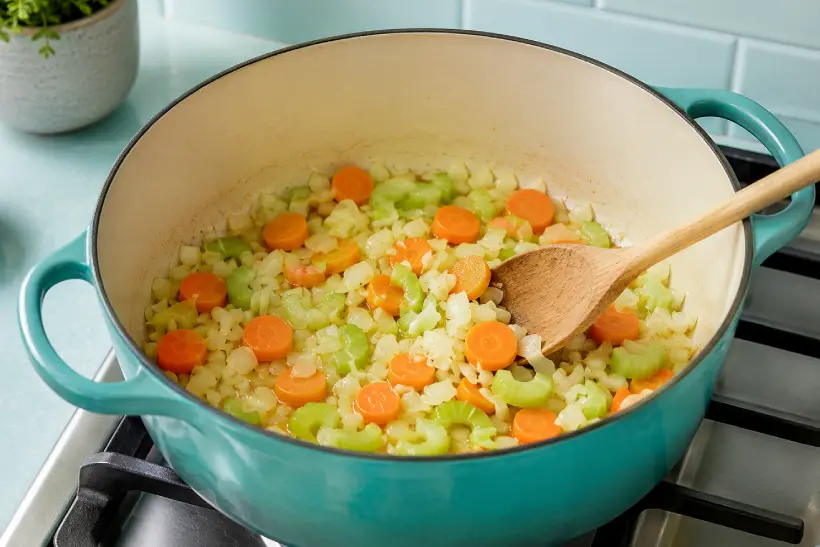
1. Heat the olive oil in a 5- to 6-quart pot over medium-low heat. Add the onion, carrots, and celery. Cook for 6 to 8 minutes, stirring occasionally, until the onion is translucent and the vegetables begin to soften. Do not brown them.
2. Add the minced garlic and cook for about 30 seconds, just until fragrant.
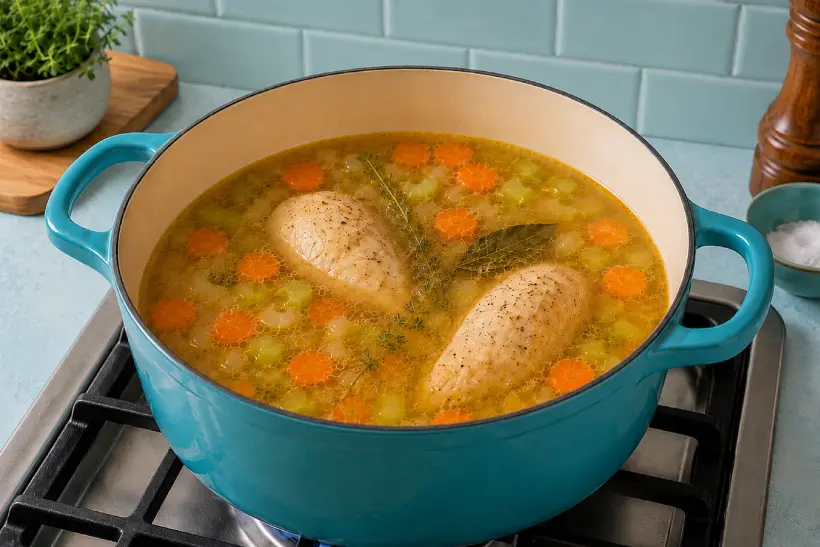
3. Pour in the chicken broth. Add the chicken breasts, dried thyme, bay leaf, salt, and optional black pepper.
4. Bring the broth just to a gentle simmer. Reduce the heat to low, partially cover the pot, and cook for 15 to 20 minutes. Avoid a rapid boil.
5. Check the thickest part of the chicken with an instant-read thermometer. Once it reaches 165°F (74°C), transfer the chicken to a plate and let it rest for 5 minutes.
6. Continue simmering the vegetables for about 5 minutes, or until the carrots crush easily against the side of the pot. Remove and discard the bay leaf.
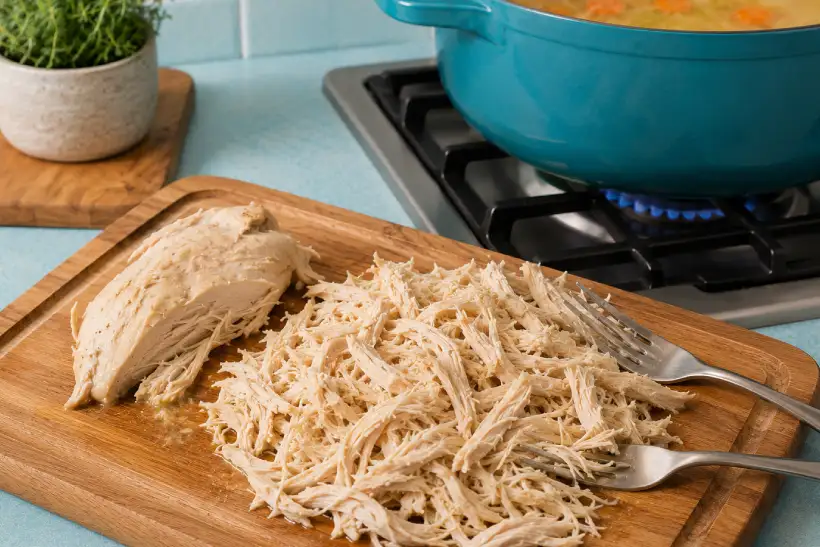
7. For a soft or regular texture, finely chop or shred the chicken and return it to the pot. For a puréed texture, blend the chicken, vegetables, and broth in small batches until completely smooth.
8. Add extra broth or water as needed to bring the final yield to approximately 8 cups. Taste only after the texture is finished and add no additional salt unless it fits your care plan.
Notes
The finished recipe makes approximately 8 cups.
Nutrition is calculated using a 1-cup serving.
A 1-cup serving is a nutrition calculation unit and may be larger than an appropriate postoperative portion. Follow the portion recommended by your bariatric team.
For a clear-liquid stage, use only fully strained broth with no chicken fibers or vegetable particles, and only when approved.
For a puréed version, blend until completely smooth, moist, and free from lumps, vegetable skins, celery strings, or visible chicken fibers.
For a soft-food version, chop or shred the chicken into very small pieces and keep it thoroughly moistened with broth.
If the purée becomes thick or sticky, blend in additional warm broth 1 tablespoon at a time.
Optional protein powder is not included in the nutrition calculation. Add it only to an individual serving according to the product directions and your care team’s recommendations.
Cool leftovers promptly and refrigerate within 2 hours. Store refrigerated for 3 to 4 days or freeze in small portions for up to 3 months.
Reheat leftovers to 165°F (74°C).
This recipe is not a postoperative diet prescription. Bariatric diet stages and portion limits vary, so always follow your surgeon’s or registered dietitian’s instructions.
- Prep Time: 15 minutes
- Cook Time: 35 minutes
- Category: Soup
- Method: Stovetop
- Cuisine: American
Nutrition
- Serving Size: 1 cup
- Calories: 140
- Sugar: 2 g
- Sodium: 260 mg
- Fat: 4 g
- Saturated Fat: 1 g
- Unsaturated Fat: 3 g
- Trans Fat: 0 g
- Carbohydrates: 4 g
- Fiber: 1 g
- Protein: 20 g
- Cholesterol: 60 mg
Why This Bariatric Chicken Soup Works
A useful bariatric soup has to do more than taste like broth. It should deliver meaningful protein in a modest volume, remain moist enough to eat comfortably, and allow precise control over texture.
This bariatric chicken soup uses 1½ pounds of chicken breast in an 8-cup batch. That ratio produces roughly 20 grams of protein per cup without relying on cream, noodles, rice, or a mandatory supplement. The chicken cooks gently in the broth, so it stays softer than roasted or sautéed breast meat. A short vegetable simmer builds flavor without making the soup greasy or heavily seasoned.
Texture is adjustable at the end rather than locked into one format. For a puréed serving, the chicken and vegetables are blended with enough broth to become completely smooth. For a soft-food serving, the chicken is chopped or shredded into very small, moist pieces. Later, the same batch can be served with a more traditional texture.
Sodium is controlled with no-salt-added broth and a measured amount of salt. Check the package carefully because sodium varies widely among broths. Taste only after the soup has reduced, then adjust within the limits of your care plan.
Ingredients for Bariatric Chicken Soup

Ingredients
- 2 teaspoons extra-virgin olive oil
- 1 small yellow onion, finely diced, about 1 cup (150 g)
- 2 medium carrots, peeled and thinly sliced, about 1 cup (130 g)
- 2 celery ribs, thinly sliced, about ¾ cup (100 g)
- 2 garlic cloves, minced
- 6 cups (1.4 L) no-salt-added chicken broth, plus more if needed
- 1½ pounds (680 g) boneless, skinless chicken breasts
- 1 teaspoon dried thyme
- 1 bay leaf
- ½ teaspoon fine sea salt, or less as directed by your care team
- ¼ teaspoon ground black pepper, optional
- Optional for an individual serving: unflavored whey protein isolate, in the amount approved by your bariatric team and listed on the product label
What Each Ingredient Does
Chicken breast supplies most of the protein while keeping fat moderate. Thigh meat is softer and more forgiving, but it also adds more fat. Use it only if your plan allows it and adjust the nutrition estimate.
Onion, carrot, and celery provide a familiar chicken-soup flavor. They are cut small so they soften quickly and blend without coarse flecks. Garlic and black pepper can feel strong for some people early after surgery. Omitting either will not affect the soup’s structure.
No-salt-added broth gives you room to season deliberately. Bone broth can work, but compare the protein and sodium on the label rather than assuming it is automatically higher in protein or lower in salt.
How to Make Bariatric Chicken Soup
STEP1 :
Soften the vegetables without browning them.
Heat the olive oil in a 5- to 6-quart pot over medium-low heat. Add the onion, carrot, and celery. Cook for 6 to 8 minutes, stirring occasionally, until the onion looks translucent and the carrot edges begin to soften. Keep the heat moderate; dark browning can make a delicate purée taste bitter.
STEP2 :
Add the aromatics.
Stir in the garlic and cook for 30 seconds, just until fragrant. If garlic is not part of your current plan, leave it out rather than trying to strain it later.

STEP3 :
Simmer the chicken gently.
Add the broth, chicken breasts, thyme, bay leaf, salt, and optional pepper. Bring the liquid just to a simmer, then reduce the heat to low and partially cover the pot. Cook for 15 to 20 minutes. The surface should show small, lazy bubbles rather than a hard boil.

STEP4 :
Check doneness by temperature.
Insert an instant-read thermometer into the thickest part of the chicken. Poultry must reach at least 165°F (74°C). Check the temperature in the thickest part of the chicken breast with a food thermometer rather than relying on color alone.Transfer the chicken to a plate and let it rest for 5 minutes.
STEP5:
Finish softening the vegetables.
Continue simmering the broth and vegetables for about 5 minutes, or until a carrot slice crushes easily against the side of the pot with a spoon. Remove and discard the bay leaf.
STEP6 :
Choose the correct texture.
For a soft or regular version, chop or shred the chicken as finely as your stage requires, then return it to the pot. For a puréed bariatric chicken soup, blend the chicken, vegetables, and broth in small batches until completely smooth. A countertop blender usually produces a finer result than an immersion blender. Do not seal a blender full of boiling liquid. Let the soup cool slightly, fill the jar no more than halfway, and vent the lid according to the manufacturer’s directions.
STEP7 :
Set the final yield and consistency.
Add enough extra broth or water to bring the batch to about 8 cups. A puréed portion should be cohesive and smooth, with no visible threads of chicken, celery strings, or vegetable skins. If it sits in a mound like mashed potatoes, thin it with broth 1 tablespoon at a time.
STEP8 :
Taste after the texture is finished.
Blending changes how salt and aromatics register. Add no extra salt unless it fits your medical plan and the soup genuinely needs it.
Texture Modifications by Post-Op Stage
Bariatric chicken soup should change texture as your postoperative diet progresses. The full recipe is not automatically appropriate for every stage.
Hospital protocols differ substantially. Some programs introduce smooth purées within the first two weeks, while others wait until several weeks after surgery. Your own bariatric team’s instructions always take priority.
Clear-Liquid or Broth-Only Option
Use only the fully strained broth if your plan specifically allows clear chicken broth. Pass it through a fine-mesh strainer, skim visible fat, and make sure no vegetable particles or chicken fibers remain.
The complete soup with meat and vegetables is not a clear liquid.
Broth alone is also much lower in protein than the finished soup. Treat it as a stage-specific fluid rather than assuming it replaces a protein serving.
Puréed Option
Blend the cooked chicken, vegetables, and broth until the mixture is completely uniform. The correct texture is smooth, moist, and free of bits or lumps. Bariatric guidance from Chelsea and Westminster Hospital recommends a completely smooth purée with no bits or lumps and a consistency similar to yogurt. Many bariatric programs compare an appropriate purée to yogurt, baby food, or smooth applesauce.
Here is where texture matters. Chicken can become pasty if too little liquid is used. Start with more broth than you think you need, blend thoroughly, then let the purée stand for one minute.
If it thickens or forms stringy clumps, blend in additional warm broth.
Soft-Food Option
Finely chop or shred the chicken across the grain. Each piece should be small enough to mash easily with a fork and should remain coated in broth. Dry strands are harder to manage than moist, short pieces.

Keep the vegetables very tender. If the celery remains fibrous, blend the vegetables into the broth and return only finely chopped chicken to the pot.
Do not add noodles, rice, corn, raw garnish, or firm vegetables unless those foods have been cleared for your current stage.
Regular-Texture Option
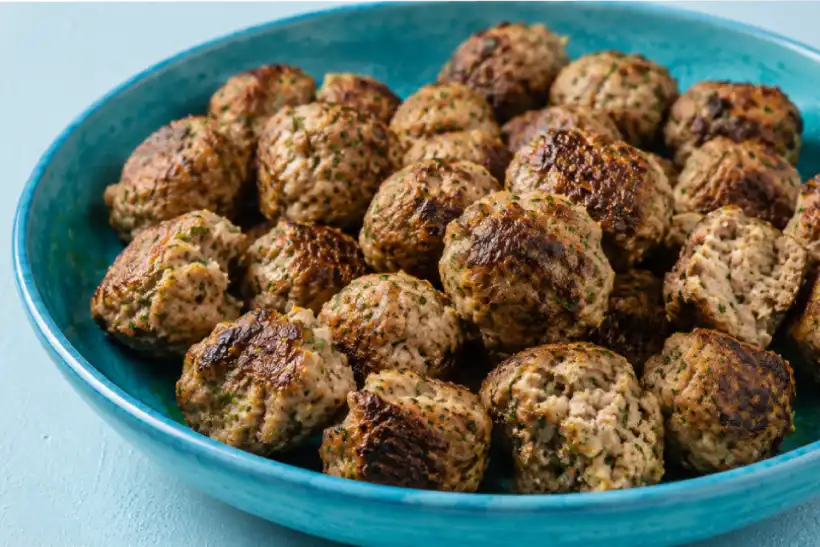
Once regular textures are allowed, leave the chicken in small bite-size pieces and keep the vegetables intact. Once your bariatric team has approved the texture, these bariatric chicken meatballs are another moist, protein-forward option for meal prep.Eat slowly, take small bites, chew thoroughly, and stop at the first sign of fullness or discomfort.
A standard 1-cup serving may still be larger than your comfortable portion. Measure according to your bariatric team’s recommendations rather than forcing yourself to finish a full bowl.
Bariatric Chicken Soup Nutrition and Portion Guide
Estimated nutrition for the base recipe assumes an 8-cup finished yield. Broth brands, chicken trimming, added salt, and evaporation will change the result. Optional protein powder is not included.
| Portion | Calories | Protein | Carbohydrate | Fat | Fiber | Sodium |
|---|---|---|---|---|---|---|
| 1 cup (8 fl oz) | 140 | 20 g | 4 g | 4 g | 1 g | 260 mg |
| ½ cup (4 fl oz) | 70 | 10 g | 2 g | 2 g | 0.5 g | 130 mg |
| ¼ cup (2 fl oz) | 35 | 5 g | 1 g | 1 g | 0.25 g | 65 mg |
A 1-cup serving is a calculation unit, not a universal postoperative portion. Some programs begin puréed meals with only 1 to 2 tablespoons, while others recommend roughly ¼ to ½ cup per meal at a later puréed stage.
Measure the amount your team recommends and use the smaller rows in the table to estimate protein.
Many bariatric programs recommend approximately 60 to 100 grams of protein per day and at least 64 ounces of fluid, but individual targets can differ. One small soup portion may support those goals, but it does not complete them by itself.
How to Add Protein Powder Without Clumps
Protein powder is optional because the base soup is already protein-rich. When your care team recommends it, fortify one measured serving rather than the whole pot. That gives you better control over temperature, flavor, and the exact grams added.
Let the serving cool to the maximum temperature stated on your product label.For UNJURY savory protein soups, the manufacturer specifically recommends keeping the liquid at or below 140°F to reduce clumping; follow the instructions on the label when using another brand. Many whey protein products should not be mixed into liquid hotter than about 140°F because excessive heat can make the protein clump or develop a grainy texture.
Whisk the powder first with 1 to 2 tablespoons of cool broth to make a smooth slurry. Gradually whisk in the warm soup.
Do not boil the fortified serving afterward.
When Can You Eat Chicken Soup After Bariatric Surgery?
There is no single postoperative day when bariatric chicken soup becomes appropriate for everyone. Surgery type, healing, complications, program design, and individual tolerance all affect the progression.
The broad sequence usually moves from liquids to puréed foods, then soft foods, and eventually regular textures. Your surgical team determines the actual schedule.
Use the recipe only in the form approved for your current stage:
- Clear-liquid stage: strained broth only, if allowed
- Full-liquid or smooth-purée stage: fully blended soup with no fibers, shreds, or lumps, if allowed
- Soft-food stage: finely chopped, very moist chicken and tender vegetables
- Regular stage: small pieces with deliberate chewing and portion control
A texture may be too advanced if eating causes pressure, pain, nausea, vomiting, or persistent discomfort. Stop eating and follow the instructions provided by your bariatric clinic.
Seek prompt medical advice for severe or ongoing symptoms, inability to keep fluids down, signs of dehydration, fever, chest pain, or worsening abdominal pain.
Common Mistakes and Troubleshooting
The Chicken Is Dry or Stringy
A rolling boil tightens lean breast meat. Keep the liquid at a gentle simmer and remove the chicken as soon as it reaches 165°F (74°C).
For the soft-food version, cut the shreds shorter than standard chicken-soup shreds and moisten them thoroughly with broth.
The Purée Is Thick and Sticky
Too much chicken and too little liquid can create a dense paste. Add warm broth 1 tablespoon at a time and blend again.
The mixture should move slowly off a spoon but should not hold stiff peaks.
The Soup Looks Separated After Blending
Let the ingredients cool for a few minutes, then blend longer in smaller batches. The small amount of olive oil should disperse into the broth.
If a greasy layer remains, chill the soup and lift off the hardened fat before reheating.
The Flavor Is Flat
Do not solve every flavor problem with salt. Simmer the vegetables until truly tender, make sure the thyme has had time to infuse, and check whether your broth has enough chicken flavor.
For later stages, a small squeeze of lemon can brighten the soup, but add it only if acidic foods are currently tolerated and approved.
Protein Powder Formed Lumps
The serving was probably too hot, or the powder was added too quickly. Cool the soup to the product’s stated limit, make a slurry with cool liquid, and whisk gradually.
A small handheld milk frother can help, but avoid whipping in excessive air if foam is uncomfortable.
The Sodium Is Higher Than Expected
Recheck the broth label, bouillon, seasoning blends, and protein powder. Chicken-flavored supplements and concentrated bases can contribute substantial sodium.
Use no-salt-added broth for the main batch and fortify individual servings only when needed.
The Soup Does Not Keep You Full Later in Recovery
Very soft foods can be less sustaining for some people after the diet progression is complete. Soup may sometimes behave like a “slider food,” passing through the stomach or pouch without providing long-lasting fullness.
When bariatric chicken soup becomes part of your long-term diet, keep it protein-forward, measure the portion, eat it as a meal rather than grazing, and follow your team’s advice about separating food and fluids.
Storage, Freezing, and Reheating
Cool the bariatric chicken soup promptly in shallow containers. Refrigerate it within two hours and use refrigerated leftovers within 3 to 4 days.
Reheat leftovers to 165°F (74°C).
Freeze the soup in the portion sizes you actually use. Two-ounce, 4-ounce, or 8-ounce containers are more practical than one large block. Leave a little headspace for expansion and label each container with the texture and date.
For best texture, use frozen portions within about 3 months.
Thaw overnight in the refrigerator. Reheat the base soup gently on the stove or in the microwave, stirring several times so there are no cold spots. Add a splash of broth if the chicken has absorbed liquid.
For a protein-fortified serving, reheat the unfortified soup to 165°F first, then let it cool to the protein product’s mixing limit before adding the powder. Do not repeatedly heat and cool the same portion.
Frequently Asked Questions
Can Bariatric Chicken Soup Fit Every Post-Op Stage?
Not in the same form. Early stages may allow only strained broth or a completely smooth purée, while finely shredded chicken generally belongs to a later stage.
Follow your surgeon or registered dietitian rather than a generic online timeline.
Is Cream of Chicken Soup Suitable After Gastric Sleeve or Bypass?
It may fit some full-liquid or puréed plans when it is smooth, lower in fat, and within the program’s sugar and sodium limits.
Check the nutrition label and your own plan. Condensed canned soup can be much higher in sodium than a homemade bariatric chicken soup.
Can I Add Noodles or Rice?
Not during a clear-liquid or smooth-purée stage. Some programs introduce well-cooked pasta or rice later, but protein usually remains the priority and timing varies.
Add either only after your bariatric team has cleared that texture.
Is Chicken Breast or Chicken Thigh Better?
Chicken breast gives this bariatric chicken soup more protein with less fat, while thigh meat usually stays softer.
Breast works well when it is gently simmered and kept moist. If your plan allows a little more fat and you tolerate thigh meat better, substitute an equal weight and recalculate the nutrition.
Does Soup Count Toward Hydration?
Soup provides fluid, but programs may count meal fluids differently and may instruct you not to drink with meals.
Track hydration according to your clinic’s rules rather than assuming every ounce of soup counts toward your daily fluid goal.
Can I Freeze Puréed Bariatric Chicken Soup?
Yes. Freeze it in small, stage-appropriate portions.
After thawing and reheating, blend or whisk it again if the texture has become grainy. Thin it with broth until it is completely smooth, and reheat leftovers to 165°F (74°C) before cooling to a comfortable serving temperature.
Conclusion
Bariatric chicken soup works best when protein, texture, sodium, and portion size are treated as one system. Gentle simmering keeps the chicken moist, no-salt-added broth preserves seasoning control, and the final blending or chopping step lets the same batch fit different approved textures.
Measure the serving you can tolerate, stop at the first sign of fullness, and let your bariatric team not a general recipe set the timing.
Explore More Bariatric Chicken Recipes

Enjoyed this recipe? Discover our complete collection of bariatric chicken recipes, carefully created to help you enjoy simple, protein-rich meals every day.
Discover Our Bariatric Chicken Recipes Collection
Sources Used for Factual Claims
- American Society for Metabolic and Bariatric Surgery: postoperative diet progression, common fluid guidance, and common protein targets
- Chelsea and Westminster Hospital NHS Foundation Trust: smooth purée texture, portion guidance, protein-first eating, and signs of fullness
- University of Illinois Hospital: puréed-stage meal examples and texture guidance
- Oregon Health & Science University: low-fat puréed soups and protein-fortification examples
- MU Health Care: discussion of soup and other soft foods as potential slider foods
- FoodSafety.gov and USDA Food Safety and Inspection Service: poultry temperature, leftover reheating, and refrigerated storage guidance
- Protein supplement manufacturer instructions: temperature guidance for reducing clumps in whey protein
- User-supplied SEO research dossier: keyword targeting, SERP gaps, postoperative search intent, and recommended article architecture