

Bariatric chicken enchilada bake turns cooked chicken into a soft, saucy casserole with about 24 grams of protein per serving. There are no tortilla layers to cut through and no heavy block of cream cheese holding the filling together. Blended cottage cheese does that job more gently, adding moisture and protein while letting the enchilada flavor come through.
The finished bake is tender enough to scoop rather than slice into rigid squares. That softer texture is useful for meal prep because individual portions reheat without becoming dense provided you add a little sauce and warm them gently.
This is not an automatic early post-op meal. It contains solid poultry, dairy, green chiles, and an acidic sauce. Bariatric programs use different food-stage timelines, so prepare it only after your surgeon or registered dietitian has cleared these ingredients and this texture for you.
Table Of Contents
Table of Contents
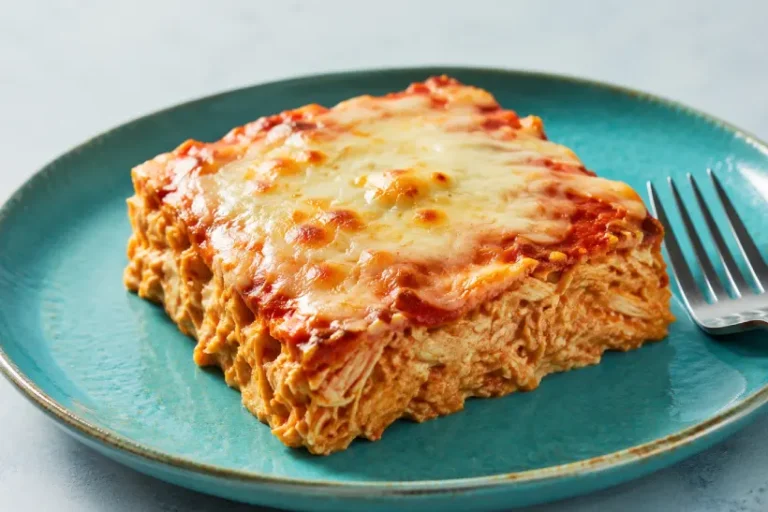
Bariatric Chicken Enchilada Bake That Stays Moist
This bariatric chicken enchilada bake combines finely chopped chicken, blended cottage cheese, mild enchilada sauce, green chiles, and melted cheese in a soft, high-protein casserole. It is tortilla-free, lower in carbohydrates, and provides approximately 24 grams of protein per serving.
- Total Time: 50 minutes
- Yield: 8 servings 1x
Ingredients
Nonstick cooking spray
3 cups cooked boneless, skinless chicken breast, finely shredded and chopped (about 15 ounces / 425 g)
1 1/4 cups mild red enchilada sauce, divided (about 10 fluid ounces / 295 mL)
1 cup 2% cottage cheese (about 8 ounces / 225 g)
1 can mild diced green chiles, well drained (4 ounces / 113 g)
1 teaspoon ground cumin
1/2 teaspoon garlic powder
1/2 teaspoon onion powder
1 cup reduced-fat shredded Monterey Jack or Mexican-blend cheese, divided (about 4 ounces / 113 g)
Instructions
1. Preheat the oven to 375°F / 190°C. Lightly coat an 8-inch square baking dish with nonstick cooking spray.
2. Spread the shredded chicken on a cutting board. Chop across the strands several times so most pieces are about 1/2 inch long or shorter. Transfer the chicken to a large mixing bowl.
3. Blend the cottage cheese in a food processor or blender until mostly smooth and thick. Add it to the bowl with the chicken.
4. Add 1 cup of enchilada sauce, the drained green chiles, cumin, garlic powder, onion powder, and 3/4 cup of shredded cheese.
5. Fold the ingredients together gently without compressing the chicken. The mixture should be moist, cohesive, and easy to move with a spoon.
6. If the mixture appears dry or bare chicken fibers remain visible, add 1 to 2 tablespoons of the reserved enchilada sauce. If liquid collects at the bottom, let the mixture rest for 5 minutes.
7. Spoon the filling into the prepared baking dish and spread it evenly without pressing it down.
8. Spoon the remaining enchilada sauce over the surface and sprinkle with the remaining 1/4 cup of shredded cheese.
9. Bake uncovered for 20 to 25 minutes, until the cheese has melted, the edges are gently bubbling, and the center reaches 165°F / 74°C.
10. Remove the casserole from the oven and let it rest for 10 minutes before dividing it into 8 equal portions.
Notes
This recipe is not intended for the clear-liquid, full-liquid, or early puréed stages after bariatric surgery.
Prepare it only after your bariatric surgeon or registered dietitian has approved moist chicken, cottage cheese, melted cheese, green chiles, and enchilada sauce.
Chop the chicken across the grain to shorten the fibers and create a softer texture.
Do not pack the chicken tightly when measuring it, as too much chicken can make the casserole dry.
For an extra-mild version, omit the diced green chiles and use a mild red enchilada sauce.
The casserole should remain soft and scoopable rather than forming firm, rigid squares.
Store cooled portions in covered containers in the refrigerator for up to 3 to 4 days.
For reheating, add 1 to 2 teaspoons of enchilada sauce, cover the portion, and heat gently until it reaches 165°F / 74°C.
Nutrition values are estimates and may vary depending on the brands of chicken, cottage cheese, shredded cheese, and enchilada sauce used.
- Prep Time: 15 minutes
- Cook Time: 25 minutes
- Category: Dinner
- Method: Baking
- Cuisine: Mexican-Inspired
Nutrition
- Serving Size: 1/8 of the casserole, about 4–5 ounces
- Calories: 170
- Sugar: 3 g
- Sodium: 530 mg
- Fat: 5 g
- Saturated Fat: 2.5 g
- Unsaturated Fat: 2.5 g
- Trans Fat: 0 g
- Carbohydrates: 5 g
- Fiber: 1 g
- Protein: 24 g
- Cholesterol: 55 mg
Why This Bariatric Chicken Enchilada Bake Works
A traditional enchilada casserole gets most of its structure from tortillas. Remove them without adjusting anything else, and you can end up with chicken swimming in sauce under a layer of cheese.
This version is built differently.
The chicken is shredded and then chopped across the grain, which shortens the long fibers that can gather into a dry, stringy bite. Blended cottage cheese fills the spaces between those pieces. Enchilada sauce loosens the mixture just enough to keep it spoon-tender, and the shredded cheese is measured rather than piled on.
The result is cohesive without being firm. Drag a spoon through the finished casserole and the filling should hold briefly before relaxing back into place. It should not pour, but it should not sit in a dry clump either.
Leaving out tortillas also keeps most of the serving focused on chicken and dairy-based protein. The recipe is lower in carbohydrates than a standard layered enchilada casserole, though the exact amount depends on the sauce and cheese you buy.
There is one more practical advantage: the chicken is already cooked. The casserole only needs to become hot in the center and bubbly around the edges. Extra oven time does not improve the flavor; it usually tightens the meat and dries the exposed corners.
Ingredients and the Details That Matter
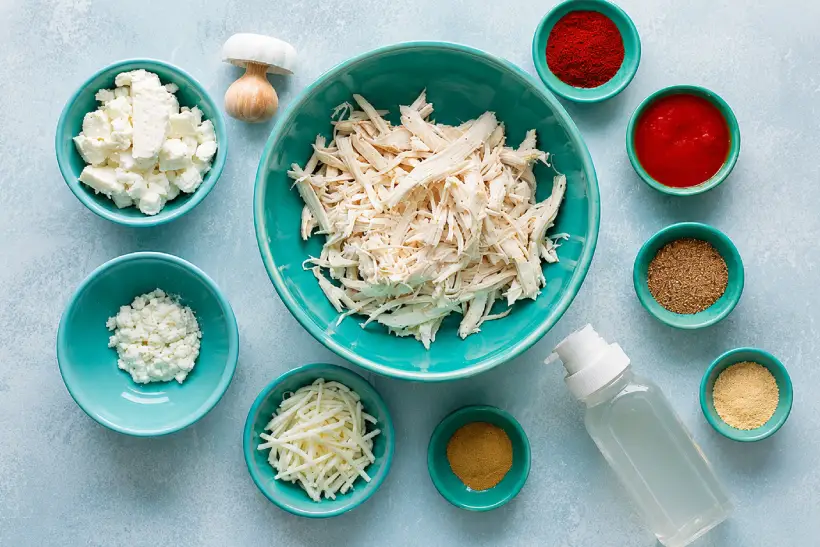
- Nonstick cooking spray
- 3 cups cooked boneless, skinless chicken breast, finely shredded and chopped, about 15 ounces / 425 g
- 1 1/4 cups mild red enchilada sauce, divided, about 10 fluid ounces / 295 mL
- 1 cup 2% cottage cheese, about 8 ounces / 225 g
- 1 can mild diced green chiles, well drained, 4 ounces / 113 g
- 1 teaspoon ground cumin
- 1/2 teaspoon garlic powder
- 1/2 teaspoon onion powder
- 1 cup reduced-fat shredded Monterey Jack or Mexican-blend cheese, divided, about 4 ounces / 113 g
Use Chicken That Is Still Moist
Chicken breast gives the casserole a lean base and keeps the protein count predictable. It can also dry out quickly, especially if it was overcooked the first time.
Poached, pressure-cooked, or gently roasted chicken works particularly well. Shred it while it is still slightly warm, then chop across the strands until most pieces are about 1/2 inch long or shorter. You are not making ground chicken. The goal is simply to remove the long fibers.
Rotisserie chicken is a convenient substitute. Remove the skin and use mostly breast meat. Since prepared chicken and canned enchilada sauce can both be salty, mix the filling before deciding whether it needs any additional seasoning.
Extra cooked or rotisserie chicken can also be used in this bariatric chicken salad for a cold, protein-focused meal that is easy to portion.
Canned chicken creates a softer result and can be useful when that texture has been approved. Drain it thoroughly and separate any compact pieces with a fork.
Blend the Cottage Cheese Until Creamy
Cottage cheese adds moisture without requiring a large quantity of sour cream or cream cheese. Blending also removes the distinct curds, giving the sauce a smoother texture.
Process it only until it resembles a thick cream. It should slide slowly from a spatula, not pour like milk. Overblending will not ruin it, but some cottage cheeses release more liquid than others.
Plain Greek yogurt can replace half the cottage cheese. Use 1/2 cup of each. The filling will taste tangier and may be slightly looser, so begin with a little less enchilada sauce and add the rest only if needed.
Choose the Sauce by Flavor, Not Color Alone
Mild red enchilada sauce gives the casserole a warm, earthy chile flavor. Green sauce is brighter, tangier, and sometimes hotter even when the label says mild.
Either works in the same quantity. Taste the sauce before mixing it into the chicken. When spice or acidity is a concern, use a product you already know you tolerate rather than introducing several unfamiliar ingredients at once.
For the mildest version, choose red sauce and leave out the diced green chiles.
Do Not Use Fat-Free Shredded Cheese
Reduced-fat Monterey Jack melts smoothly and keeps the flavor mild. A Mexican-style blend adds more cheddar character and may form a slightly firmer surface.
Fat-free shreds often melt unevenly and become rubbery after refrigeration. Since the recipe uses only one measured cup for eight servings, reduced-fat cheese gives a better texture without overwhelming the chicken.
How to Make Bariatric Chicken Enchilada Bake
STEP1 :
the oven and dish.
Preheat the oven to 375°F / 190°C. Lightly coat an 8-inch square baking dish with nonstick cooking spray.
STEP2:
Shorten the chicken fibers.
Spread the shredded chicken on a cutting board. Chop across the strands several times, then transfer the chicken to a large bowl. It should look loose and feathery rather than compressed.
STEP3 :
Blend the cottage cheese.
Process the cottage cheese until mostly smooth. Scrape it into the bowl with the chicken.
STEP4 :
Mix the filling gently.
Add 1 cup of enchilada sauce, the drained green chiles, cumin, garlic powder, onion powder, and 3/4 cup shredded cheese. Fold rather than stirring aggressively. Too much mixing compacts the chicken and makes the filling feel heavier.

STEP5 :
Check the moisture before baking.
Run a spoon through the center of the bowl. The mixture should separate easily, then settle back slightly. If it stays in a dry mound and you can see bare chicken fibers, add 1 or 2 tablespoons of the reserved sauce. If liquid gathers at the bottom, let the filling stand for five minutes before assembling.
STEP6 :
Fill the baking dish.
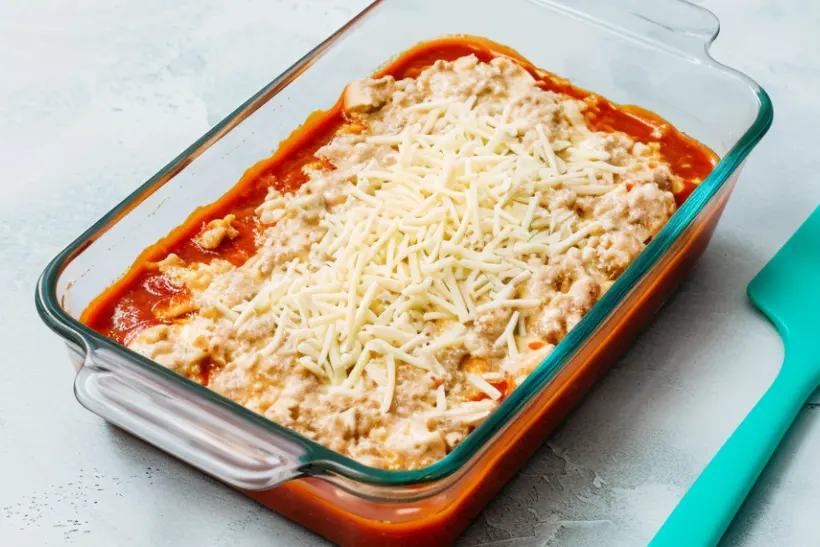
Spoon the mixture into the prepared dish and spread it to the corners. Do not press it down. Spoon the remaining sauce across the surface and scatter the remaining 1/4 cup cheese over the top.
STEP7 :
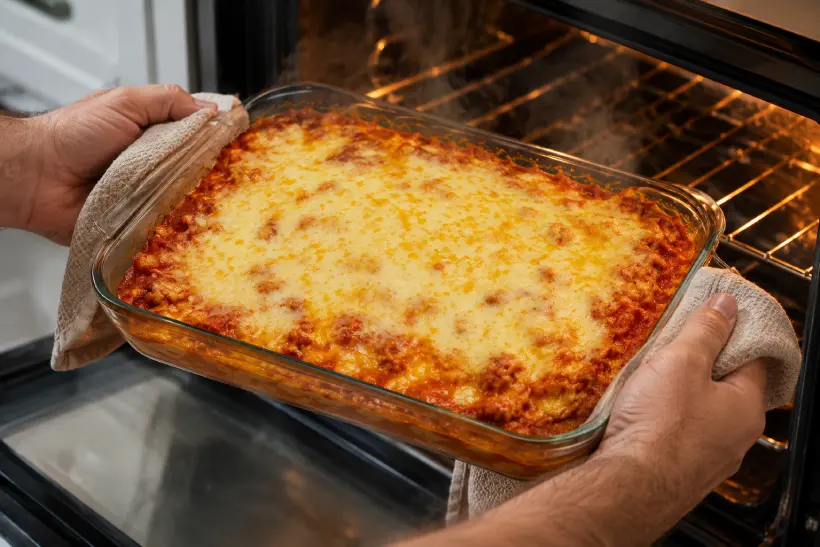
only until heated through.
Bake uncovered for 20 to 25 minutes. Look for gentle bubbling at the edges and fully melted cheese. The center should reach 165°F / 74°C on an instant-read thermometer. That is the safe reheating temperature for casseroles and leftovers.
STEP8 :
Let the casserole settle.
Rest it for 10 minutes before portioning. The sauce will thicken slightly and move back into the chicken. The top may be only lightly golden; waiting for dark browning can leave the edges dry.

How to Keep the Chicken Soft, Not Stringy
A casserole like this usually goes wrong in one of two ways: the chicken dries out, or the filling becomes watery. Both problems start with the ratio in the mixing bowl.
Measure the chicken loosely. Pressing it firmly into the measuring cup adds more meat than the cottage cheese and sauce can comfortably coat. Three packed cups may look like the right amount, but they behave like a much larger quantity in the oven.
Then inspect the filling rather than trusting the measurement alone. Pale, chalky-looking strands need more sauce. A puddle at the bottom means the chiles were too wet, the sauce was unusually thin, or the cottage cheese released extra liquid.
The important part is not to chase a firm lasagna texture. This bariatric chicken enchilada bake is supposed to be soft. After resting, it should scoop cleanly enough for portioning but yield under light pressure from a fork.
| Problem | What probably happened | Adjustment |
|---|---|---|
| Chicken feels dry or stringy | Strands were too long, the ratio was too lean, or the casserole baked too long | Chop the chicken more finely, add 1 to 2 tablespoons sauce, and remove the dish at 165°F / 74°C |
| Liquid gathers around the edges | The chiles were not drained or the sauce was very thin | Drain well, use a thicker sauce, and allow the full 10-minute rest |
| Cheese feels rubbery | Fat-free cheese or excessive heat | Use reduced-fat cheese and avoid deep browning |
| Filling tastes too spicy | The sauce or chiles were stronger than expected | Omit the green chiles and choose a mild red sauce |
| Leftovers feel tough | The portion was reheated uncovered or at full power | Add a teaspoon of sauce, cover, and reheat more gently |
| Casserole will not hold a square | Nothing is necessarily wrong | Serve it as a soft scoop rather than a rigid slice |
Portion Size, Protein, and Nutrition
Divide the casserole into eight equal portions after it has rested. Cutting the surface into squares is quick, but weighing produces more consistent meal-prep containers.
Weigh the filled baking dish, subtract the weight of the empty dish, and divide the food weight by eight. Each portion will usually weigh about 4 to 5 ounces, depending on the sauce and the amount of moisture lost in the oven.
That is the recipe yield, not a prescription for how much a bariatric patient should eat. A full portion may be more than your plan permits. When that is the case, divide each serving in half before storing it instead of expecting yourself to stop halfway through a larger container.
Estimated Nutrition
| Portion | Calories | Protein | Carbohydrates | Fat |
|---|---|---|---|---|
| 1/8 of the casserole | About 170 | About 24 g | About 5 g | About 5 g |
| 1/16 of the casserole | About 85 | About 12 g | About 3 g | About 3 g |
These estimates use cooked skinless chicken breast, 2% cottage cheese, reduced-fat shredded cheese, and a typical mild enchilada sauce. Your exact products may produce different values.
Sodium is not included because it varies considerably among rotisserie chicken, cottage cheese, shredded cheese, and prepared sauces. Home-cooked chicken and careful label comparison provide the most control.
When Can You Eat It After Bariatric Surgery?
There is no universal week when bariatric chicken enchilada bake becomes appropriate after gastric sleeve, gastric bypass, or another bariatric procedure.
Mayo Clinic introduces tender, easily chewed foods only after puréed foods and with medical approval. Its examples include ground lean poultry and cottage cheese. Virginia Mason Franciscan Health also includes lean chicken and cottage cheese in a soft-food phase, while Nationwide Children’s begins soft foods on a different schedule. The variation among these clinical plans is the reason your own program must determine readiness.
As written, the casserole is not suitable for a clear-liquid or full-liquid stage. It is not automatically a purée either. The finished dish still contains visible pieces of chicken and green chile.
For another moist, spoon-friendly chicken option, this bariatric chicken soup may be useful once its ingredients and texture have been approved by your care team.
Wait until your bariatric team has approved moist poultry, cottage cheese, melted cheese, enchilada sauce, and the portion you intend to serve. Clearance for “soft foods” by itself may not cover every ingredient in the recipe.
When approved, start with a small amount. Take small bites and chew until the chicken has lost its fibrous texture. UCSF advises bariatric patients to eat slowly, chew small bites thoroughly, use small portions, and avoid meats that are difficult to chew.
Stop eating when you notice pressure, discomfort, nausea, or unusual fullness. Persistent vomiting, difficulty swallowing, or an inability to keep food or fluids down requires guidance from your bariatric care team.
Variations That Keep the Recipe Simple
The tortilla-free version needs no replacement layer. Cottage cheese and sauce provide enough body to hold the chopped chicken together.
That makes the casserole lower in carbohydrates than most traditional enchilada bakes, but it does not automatically make every brand combination keto. Prepared sauces may contain starch or added sugar, and bariatric nutrition goals are not always the same as ketogenic targets.
Green Enchilada Bake
Replace the red enchilada sauce with the same amount of mild green sauce. Green sauce often tastes sharper, so omit the canned chiles the first time unless you already know you tolerate both.
Extra-Mild Version
Leave out the green chiles and keep the cumin, garlic powder, and onion powder. The spices add warmth without adding the direct heat of extra chile.
Cottage Cheese and Greek Yogurt
Use 1/2 cup blended cottage cheese and 1/2 cup plain Greek yogurt. This variation is tangier and slightly softer. Add the enchilada sauce gradually so the filling does not become loose.
Later-Stage Tortilla Layer
Once tortillas and regular textures have been approved, cut two small low-carb tortillas into narrow strips and place one thin layer in the center of the casserole.
The texture will be chewier, and the nutrition will change. Some low-carb tortillas also contain concentrated fiber or sugar alcohols, which are not tolerated equally.
Zucchini Layer
For a later-stage vegetable variation, cook thin zucchini slices before adding them. Blot the slices thoroughly; raw zucchini releases enough water to thin the sauce.
Zucchini skin and vegetable fiber may not fit every postoperative plan, so this is not an early-stage substitution by default.
For other people at the table, serve toppings and sides separately. Avocado, chopped tomato, shredded lettuce, beans, cauliflower rice, or warm tortillas can be added without changing the measured protein portion.
Make-Ahead, Storage, and Reheating
You can assemble the casserole up to one day before baking. Cover it and refrigerate it promptly. A chilled dish may need several additional minutes in the oven, so check the center with a thermometer rather than extending the time automatically.
After baking, divide the casserole into shallow containers once it has cooled enough to handle. Cooked leftovers can generally remain refrigerated for three to four days and should be reheated to 165°F / 74°C.
Freezing individual portions works better than freezing the entire dish. Small containers thaw more evenly, and you will not have to warm food you do not plan to eat. For the best texture, use frozen portions within about two months and thaw them overnight in the refrigerator.
For microwave reheating, place one portion in a covered microwave-safe dish and add 1 or 2 teaspoons of enchilada sauce. Heat at medium power in short intervals, turning or gently stirring the portion between each one.
Full power is faster, but it can tighten the outside of the chicken before the center becomes hot. Medium power gives the sauce time to warm and redistribute.
To reheat in the oven, cover the portion and warm it at 325°F / 165°C until the center reaches 165°F / 74°C. Avoid reheating the same container repeatedly.
Frequently Asked Questions
Can I make bariatric chicken enchilada bake without tortillas?
Yes. The main recipe is already tortilla-free. Blended cottage cheese, enchilada sauce, and shredded cheese give the finely chopped chicken enough structure to form a soft, scoopable casserole.
Can I use rotisserie chicken?
Rotisserie chicken works well when the skin is removed and the meat is chopped after shredding. Use mostly breast meat for the closest match to the nutrition estimate. Taste the completed filling before adding anything salty because prepared chicken and enchilada sauce may already contain enough sodium.
Is this suitable for a bariatric soft-food stage?
It may be suitable after your own bariatric program has approved moist chicken, cottage cheese, melted cheese, green chiles, and enchilada sauce. Soft-food definitions and timelines differ among clinical programs, so a recipe cannot determine readiness.
Why did my chicken enchilada bake come out dry?
The chicken may have been overcooked before assembly, measured too tightly, left in long strands, or baked past 165°F / 74°C. Chop it more finely, coat every visible piece with sauce, and remove the casserole once the center is safely hot.
Can I freeze chicken enchilada casserole?
Yes. Cool it, divide it into individual servings, seal the containers well, and freeze. Thaw each portion overnight in the refrigerator, add a small spoonful of sauce, and reheat it covered.
Is bariatric chicken enchilada bake high in protein?
One-eighth of the casserole provides an estimated 24 grams of protein. A half portion provides about 12 grams. The exact result will vary with the chicken, cottage cheese, enchilada sauce, and shredded cheese brands.
Conclusion
Bariatric chicken enchilada bake works because the texture is decided before the dish reaches the oven. Short chicken fibers are easier to coat than long strands. Blended cottage cheese keeps the filling creamy without making it heavy, and mild enchilada sauce protects the chicken during baking and reheating.
Look at the mixture before assembling it. If bare chicken fibers are still visible, add a little more sauce. If liquid pools at the bottom, pause and let the filling settle. Small corrections at that point make a bigger difference than extra cheese or extra oven time later.
Once baked, portion it according to the guidance from your bariatric team—not according to the size of the baking dish. That keeps this bariatric chicken enchilada bake useful as a flexible meal-prep recipe rather than treating it as a one-size-fits-all postoperative meal.
Explore More Bariatric Chicken Recipes
Enjoyed this recipe? Discover our complete collection of bariatric chicken recipes, carefully created to help you enjoy simple, protein-rich meals every day.
Discover Our Bariatric Chicken Recipes Collection
Sources Used for Factual Claims
- Mayo Clinic — Gastric Bypass Diet: Used for the progression from puréed foods to tender, easily chewed soft foods and the need for medical approval.
- Virginia Mason Franciscan Health — Bariatric Diet After Surgery: Used as an example of a clinical program that includes lean chicken and cottage cheese during its soft-food phase.
- Nationwide Children’s Hospital — Nutrition After Bariatric Surgery: Used to demonstrate that postoperative food-stage timing differs among programs.
- UCSF Health — Dietary Guidelines After Bariatric Surgery: Used for small portions, slow eating, thorough chewing, and texture guidance.
- USDA Food Safety and Inspection Service: Used for the 165°F / 74°C reheating temperature and three-to-four-day refrigerator guidance for cooked leftovers.
- Current recipe-result review: Bariatric Meal Prep, Bariatric Eating, Whole Lotta Yum, Kalyn’s Kitchen, Healthy Recipes Blogs, Mason Fit, and related results were reviewed for current search intent, no-tortilla positioning, high-protein angles, and practical content gaps.