
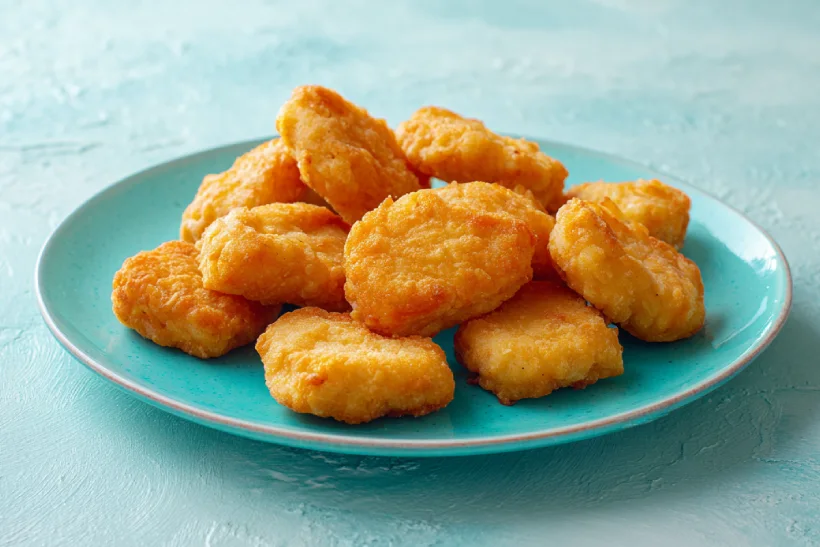
Bariatric chicken nuggets can be high in protein, low in carbohydrates, and easy to portion without becoming dry or rubbery. This bread-free version combines well-drained canned chicken breast with egg, part-skim mozzarella, Parmesan, and a small spoonful of Greek yogurt. The result is a tender, lightly crisp nugget with an estimated 22 grams of protein per three-piece serving.
These nuggets are intended for people who have already been cleared to eat soft or regular-texture poultry. They are not appropriate during the immediate liquid stage, and they should not replace the texture progression prescribed by your surgical team. Bariatric programs move patients from liquids to puréed foods, then soft foods and eventually solids, but the timing and permitted foods vary by patient and procedure.
Table Of Contents
Table of Contents

Bariatric Chicken Nuggets That Stay Tender
These bariatric chicken nuggets are bread-free, high in protein, and made with well-drained canned chicken, egg, cheese, and a small amount of Greek yogurt. They cook quickly in the air fryer or oven and stay tender when the chicken is pressed very dry before mixing.
- Total Time: 37 minutes
- Yield: 12 nuggets 1x
Ingredients
1 (12.5-ounce/354 g) can no-salt-added chicken breast, drained and pressed very dry
1 large egg, lightly beaten
1/3 cup (38 g) finely shredded part-skim mozzarella
3 tablespoons (15 g) finely grated Parmesan cheese
1 tablespoon (15 g) plain nonfat Greek yogurt
1/2 teaspoon garlic powder
1/2 teaspoon onion powder
1/4 teaspoon sweet or smoked paprika
1/8 teaspoon ground black pepper
Nonstick cooking spray
Instructions
1. Place the canned chicken in a fine-mesh strainer and press firmly with the back of a spoon. Transfer it to paper towels and blot again until the chicken separates into dry, fluffy flakes.
2. In a medium bowl, whisk the beaten egg with the Greek yogurt, garlic powder, onion powder, paprika, and black pepper until evenly combined.
3. Add the mozzarella and Parmesan. Stir until the cheese is coated with the egg mixture.
4. Add the drained chicken and work it into the cheese mixture with a fork, breaking apart any large compact pieces.
5. Chill the mixture for 10 minutes so it firms and becomes easier to shape.
6. For the air fryer, preheat to 390°F and lightly coat the basket with nonstick spray. For the oven, preheat to 425°F, line a rimmed baking sheet with parchment paper, and mist lightly with nonstick spray.
7. Divide the mixture into 12 portions using about 1 1/2 tablespoons for each nugget. Gently flatten each portion to about 1/2 inch thick.
8. Air fry for 6 minutes, turn carefully, then cook 4 to 6 minutes more. For the oven, bake for 8 minutes, turn the nuggets, then bake 6 to 8 minutes more.
9. Cook until the surface looks dry and lightly golden, the edges are firm, and the center reaches 165°F/74°C on an instant-read thermometer.
10. Let the nuggets rest for 3 minutes before serving so the cheese and egg can finish setting.
Notes
For bariatric needs, serve these nuggets only after your care team has cleared you for soft or regular-texture poultry, egg, and dairy.
The chicken must be pressed very dry. Extra moisture is the main reason the nuggets spread or fall apart.
Do not overcook just to get a darker crust. These bread-free nuggets may stay lighter than fried nuggets, and overcooking can make them dry.
For dipping, use only a small measured portion of plain Greek yogurt or another sauce approved by your program.
Nutrition is estimated per 3 nuggets. Exact values vary by brand, especially sodium and drained chicken weight.
Store leftovers in a sealed container in the refrigerator for 3 to 4 days. Reheat until the center reaches 165°F.
- Prep Time: 15 minutes
- Cook Time: 12 minutes
- Category: Main Dish
- Method: Air Fryer or Oven
- Cuisine: American
- Diet: Gluten Free
Nutrition
- Serving Size: 3 nuggets
- Calories: 140
- Sugar: 0g
- Sodium: Varies by brand
- Fat: 5g
- Saturated Fat: 2g
- Unsaturated Fat: 3g
- Trans Fat: 0g
- Carbohydrates: 2g
- Fiber: 0g
- Protein: 22g
- Cholesterol: 65mg
Why These Bariatric Chicken Nuggets Work
A useful bariatric recipe needs more than a low carbohydrate count. It should provide a meaningful amount of protein in a small portion, remain moist enough to chew thoroughly, and avoid unnecessary breading or deep-frying.
Most bariatric programs emphasize protein after surgery. The American Society for Metabolic and Bariatric Surgery notes that programs commonly recommend 60 to 100 grams per day, although an individual target should come from the patient’s bariatric team.
Several details make these bariatric chicken nuggets practical:
Canned chicken creates a fine, uniform texture. Because the chicken is already cooked and easily shredded, it distributes evenly through the mixture. There are no large or fibrous pieces hidden inside the nuggets.
Egg and cheese provide structure without breadcrumbs. The egg sets during cooking, while mozzarella melts around the chicken fibers. Finely grated Parmesan absorbs a small amount of surface moisture and helps the exterior firm.
Greek yogurt protects the interior from drying out. Only one tablespoon is needed. More would make the mixture difficult to shape.
Small portions cook quickly. Each nugget uses about 1½ tablespoons of mixture. That size is large enough to remain tender but small enough for straightforward portioning.
No recipe can guarantee tolerance after sleeve gastrectomy, gastric bypass, duodenal switch, or another procedure. Follow your surgeon or registered dietitian’s instructions, introduce foods one at a time, take small bites, and chew each bite thoroughly before swallowing. Mayo Clinic specifically advises chewing food to a puréed consistency once patients progress beyond liquids.
Ingredients for Bariatric Chicken Nuggets
Equipment
Use a medium mixing bowl, fork, 1½-tablespoon cookie scoop, small spatula, instant-read thermometer, and either an air fryer or a rimmed baking sheet.
A scoop is especially helpful here. Equal portions cook at a similar rate, reducing the chance that small nuggets dry out while larger ones remain cool in the center.

Ingredients
- 1 (12.5-ounce/354 g) can no-salt-added chicken breast, drained and pressed very dry
- 1 large egg, lightly beaten
- 1/3 cup (38 g) finely shredded part-skim mozzarella
- 3 tablespoons (15 g) finely grated Parmesan cheese
- 1 tablespoon (15 g) plain nonfat Greek yogurt
- 1/2 teaspoon garlic powder
- 1/2 teaspoon onion powder
- 1/4 teaspoon sweet or smoked paprika
- 1/8 teaspoon ground black pepper
- Nonstick cooking spray
What Each Ingredient Does
Canned chicken breast: Choose chicken packed in water, preferably without added salt. Drain it thoroughly. Liquid left in the chicken is the most common reason the mixture spreads or sticks.
Part-skim mozzarella: Mozzarella melts into flexible strands that hold the shredded chicken together. Finely shredded cheese distributes more evenly than a coarse restaurant-style shred.
Parmesan: Parmesan adds savory flavor and absorbs moisture. Use the fine, sandy-textured variety rather than large shavings.
Greek yogurt: A small amount gives the center a softer finish. Resist the urge to add an extra spoonful before checking the consistency.
Egg: The egg is the primary binder. Lightly beating it first prevents pockets of egg white from forming in the mixture.
Seasonings: Garlic, onion, paprika, and black pepper provide flavor without relying on a sugary sauce. Check every label when cooking for someone who requires certified gluten-free ingredients.
How to Make Bariatric Chicken Nuggets
1. Drain the chicken thoroughly

Place the canned chicken in a fine-mesh strainer and press firmly with the back of a spoon. Transfer it to several layers of paper towel and blot again.
The chicken should separate into dry, fluffy flakes. There should be no visible water collecting beneath it. That sounds minor, but it determines whether the nuggets hold their shape.
2. Combine the wet ingredients and seasonings

In a medium bowl, whisk the beaten egg with the Greek yogurt, garlic powder, onion powder, paprika, and black pepper until the yogurt is evenly dispersed.
Add the mozzarella and Parmesan. Stir until the cheese is coated with the egg mixture.
3. Fold in the chicken

Add the drained chicken and work it into the cheese mixture with a fork. Break apart any large compact pieces as you stir.
The finished mixture should feel soft and slightly tacky but still hold the rounded shape of a scoop. It should not drip, slump into a puddle, or feel powdery.
4. Chill for 10 minutes
Refrigerate the mixture for 10 minutes. Chilling allows the Parmesan to absorb moisture and firms the cheese enough to make shaping easier.
Do not skip directly to adding more binder when the mixture first looks soft. Give it time to rest before adjusting it.
5. Prepare the cooking surface
For the air fryer, preheat to 390°F and lightly coat the basket with nonstick spray.
For the oven, preheat to 425°F. Line a rimmed baking sheet with parchment paper and mist the parchment lightly with nonstick spray.
6. Portion and shape

Divide the mixture into 12 portions using about 1½ tablespoons for each nugget. Place them on the prepared surface, then gently flatten each one to approximately ½ inch thick.
Damp fingertips make the mixture easier to shape. Keep the edges rounded rather than thin and pointed, since narrow edges dry first.
7. Cook until set and lightly golden
Air-fryer method: Arrange the nuggets in one layer with space between them. Cook for 6 minutes, turn carefully, and continue cooking for 4 to 6 minutes.
Oven method: Bake for 8 minutes, turn the nuggets, and continue baking for 6 to 8 minutes.

The surface should look dry and lightly golden, with firm edges and a center that springs back gently when pressed. Check a nugget near the center of the basket or pan with an instant-read thermometer. Poultry must reach at least 165°F/74°C.
These bariatric chicken nuggets may be pale rather than deeply browned when they reach the correct temperature. Do not continue cooking solely to develop a darker crust; that is how the interior becomes dry.
8. Rest briefly
Transfer the nuggets to a plate and let them rest for 3 minutes. The cheese and egg continue to set during this short rest, so the nuggets become easier to handle without losing their moisture.
Oven or Air Fryer: Which Method Is Better?
Both methods work. The better choice depends on the texture you tolerate and the equipment available.
| Method | Temperature | Approximate time | Result |
|---|---|---|---|
| Air fryer | 390°F | 10–12 minutes | Firmer edges and a slightly crisper surface |
| Oven | 425°F | 14–16 minutes | More even browning and a slightly softer exterior |
The air fryer circulates hot air aggressively, so the nuggets can move from tender to dry within a couple of minutes. Check early, especially when cooking a half batch.
The oven is more forgiving when preparing all 12 bariatric chicken nuggets at once. Space them at least 1 inch apart and use a light-colored baking sheet when possible; very dark pans can brown the bottoms before the centers are fully heated.
Whichever method you choose, temperature is a more reliable doneness test than color or cooking time.
Texture Cues and Troubleshooting
The mixture is too wet to shape
Insufficiently drained chicken is usually the cause. Chill the mixture first. When it still slumps after 10 minutes, stir in additional finely grated Parmesan 1 teaspoon at a time, using no more than 1 extra tablespoon.
Adding a large amount at once produces a salty, dense nugget.
The mixture feels dry or falls apart
Stir in Greek yogurt 1 teaspoon at a time. Stop as soon as the mixture holds together when pressed. Too much yogurt will reverse the problem and make the nuggets spread.
A dry mixture may also result from using less chicken than the recipe requires or replacing finely shredded cheese with thick shreds that do not distribute evenly.
The nuggets stick when turned
Use cooking spray on the basket or parchment and allow the first side to set fully before lifting. Slide a thin spatula underneath rather than pulling from the top.
When the nugget bends and leaves part of itself behind, it probably needs another minute before turning.
The centers are rubbery
Overcooking is the likely problem. Small chicken-and-cheese nuggets lose moisture quickly after reaching 165°F. A thermometer helps you remove them at the safe temperature without adding several unnecessary minutes.
The exterior is pale
Pale does not mean undercooked. A bread-free coating will not develop the thick brown crust of a fried nugget. Look for a dry surface, lightly colored edges, and the correct internal temperature.
The nuggets spread during cooking
The mixture was either warm, overly wet, or shaped too thin. Chill it again, correct the moisture gradually, and keep each nugget close to ½ inch thick.
Here is where texture matters: a softer mixture is not automatically a failed mixture. It only needs enough structure to hold a compact scoop.
Protein, Portions, and Post-Op Fit
One serving of three bariatric chicken nuggets provides an estimated 22 grams of protein in a relatively small volume. The nutrition calculation below uses typical values for no-salt-added canned chicken, part-skim mozzarella, Parmesan, egg, and nonfat Greek yogurt. Brands vary, particularly in sodium and drained chicken weight.
| Estimated nutrition | Per 3 nuggets | Per nugget |
|---|---|---|
| Calories | 140 | 47 |
| Protein | 22 g | 7 g |
| Total carbohydrates | 2 g | Less than 1 g |
| Total fat | 5 g | About 2 g |
| Serving basis | 3 of 12 nuggets | 1 of 12 nuggets |
The stated serving is a nutrition-calculation basis, not a universal postoperative portion. Depending on your stage, prescribed meal size, and individual tolerance, your portion may be one, two, or three nuggets.
Johns Hopkins advises prioritizing protein at meals and notes that individual protein needs vary, with bariatric programs often using ranges such as 60–80 or 80–100 grams per day. It also warns that dry meats may be poorly tolerated.
Eat slowly and stop at the first sign of pressure, discomfort, nausea, or unusual fullness. Do not push yourself to finish a serving simply because it fits the calculated macros. Persistent vomiting, pain, or difficulty tolerating food warrants contact with your bariatric care team.
Serving Ideas and Practical Variations
Serve bariatric chicken nuggets as the protein portion of the meal rather than as an unlimited snack. Depending on your approved food stage, pair them with a small amount of soft cooked zucchini, mashed cauliflower, tender green beans, or another vegetable recommended by your dietitian.

For dipping, consider plain Greek yogurt seasoned with mild dried herbs, a small amount of low-sugar ketchup, or a sauce approved by your program. Measure the sauce separately. Sweet barbecue sauces, honey mustard, and creamy dressings can add sugar or fat quickly, while sugar alcohols in some reduced-sugar products may cause digestive discomfort for certain people.
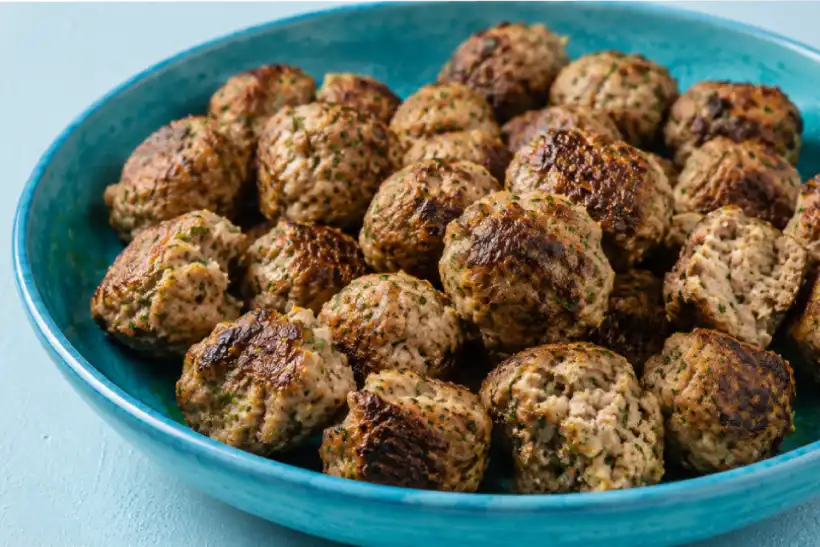
If you enjoyed these bariatric chicken nuggets, our Bariatric Chicken Meatballs are another high-protein chicken recipe that’s perfect for meal prep and easy portion control.
Lower-Sodium Version
Use no-salt-added chicken, drain and rinse it, omit added salt, and compare cheese labels. Canned poultry and Parmesan can vary substantially in sodium, so the package label is more useful than a generic estimate.
Mild Herb Version
Replace the paprika with ½ teaspoon dried parsley, dill, or Italian seasoning. Avoid strongly spicy seasoning during early recovery unless your care team has cleared it and you already know you tolerate it.
Gluten-Free Version
The recipe contains no flour or breadcrumbs. To label it gluten-free, verify that the canned chicken, seasonings, cooking spray, and all other packaged ingredients are certified or labeled gluten-free as required for your needs.
Dairy Considerations
These nuggets contain mozzarella, Parmesan, and Greek yogurt. They are not dairy-free. A direct swap with plant-based cheese is unreliable because different products melt, release moisture, and bind differently.
Using Fresh Ground Chicken
Do not replace the canned chicken measure-for-measure without changing the formula. Raw ground chicken contains more water, requires different handling, and changes the yield and cooking time. Use a recipe developed specifically for ground poultry and still verify a minimum internal temperature of 165°F/74°C.
Storage, Freezing, and Reheating
Cool leftover bariatric chicken nuggets promptly and refrigerate them in a sealed container. Use cooked leftovers within three to four days and reheat them to 165°F.
For freezing, arrange cooled nuggets on a small tray and freeze until firm. Transfer them to a freezer-safe container with parchment between layers. Use within about two months for the best texture.
Reheat refrigerated nuggets in an air fryer at 350°F for 4–6 minutes or in a 350°F oven for 8–10 minutes. Watch the edges closely. Because the chicken is already finely shredded, prolonged reheating can make the surface tough.
A microwave is faster but produces a softer result. Cover the nuggets with a lightly damp paper towel and heat in short intervals until the center reaches 165°F. Let them stand for one minute before eating so the heat can distribute evenly.
Looking for another protein-packed meal? Try our Bariatric Chicken Salad, a simple make-ahead recipe that’s ideal for quick lunches and post-op meal planning.
Frequently Asked Questions
Can I eat bariatric chicken nuggets after weight-loss surgery?
Possibly, but only after your surgeon or dietitian has cleared you for the appropriate food texture. These nuggets are not intended for the liquid phase. Some patients may tolerate them during a soft-food stage because the chicken is finely shredded, while others may need to wait until regular foods are approved. Protocols and tolerance differ.
Are these nuggets suitable after gastric sleeve or gastric bypass?
They may fit a sleeve or bypass eating plan once tender poultry, egg, and dairy have all been individually cleared and tolerated. The type of operation alone does not determine readiness. Follow the specific schedule and portion guidance from your bariatric program.
Can I use canned chicken for chicken nuggets?
Yes. Canned chicken creates a fine texture and shortens preparation because it is already cooked. Drain it exceptionally well before mixing. Water left in the chicken weakens the binder and causes spreading.
How much protein is in one serving?
The estimated nutrition is 22 grams of protein per three nuggets, or roughly 7 grams per nugget. Exact values depend on the drained weight and brands of chicken, egg, cheese, and yogurt.
Can I make these bariatric chicken nuggets in an air fryer?
Yes. Cook them at 390°F for approximately 10–12 minutes, turning after 6 minutes. Remove them once the centers reach 165°F rather than waiting for a dark crust.
Why are my chicken nuggets falling apart?
The mixture may be too wet, insufficiently chilled, or turned before the first side has set. Press the chicken dry, chill the mixture for 10 minutes, and add Parmesan only one teaspoon at a time when an adjustment is still needed.
Conclusion
Bariatric chicken nuggets do not need a thick breadcrumb coating to hold together. Egg, finely shredded cheese, and thoroughly drained chicken create the structure, while a measured amount of Greek yogurt helps the centers stay tender.
Keep the portions small, use a thermometer instead of judging only by color, and stop cooking when the centers reach 165°F. Most importantly, introduce the recipe only when your bariatric team has approved its ingredients and texture for your current stage.
Explore More Bariatric Chicken Recipes
Enjoyed this recipe? Discover our complete collection of bariatric chicken recipes, carefully created to help you enjoy simple, protein-rich meals every day.
Discover Our Bariatric Chicken Recipes Collection
Sources Used for Factual Claims
- American Society for Metabolic and Bariatric Surgery: Postoperative diet progression, hydration, and common protein targets.
- Johns Hopkins Medicine: Individualized protein goals, protein-first meal guidance, soft-food progression, and the importance of moist, tender meats.
- Mayo Clinic: Staged postoperative diet, food-texture progression, small portions, and thorough chewing guidance.
- USDA Food Safety and Inspection Service: Minimum poultry temperature of 165°F/74°C, refrigerator storage, and safe reheating guidance.
- Current recipe-result review: Bread-free, canned-chicken, low-carb, baked, and air-fryer approaches used to assess search intent and snippet differentiation.