

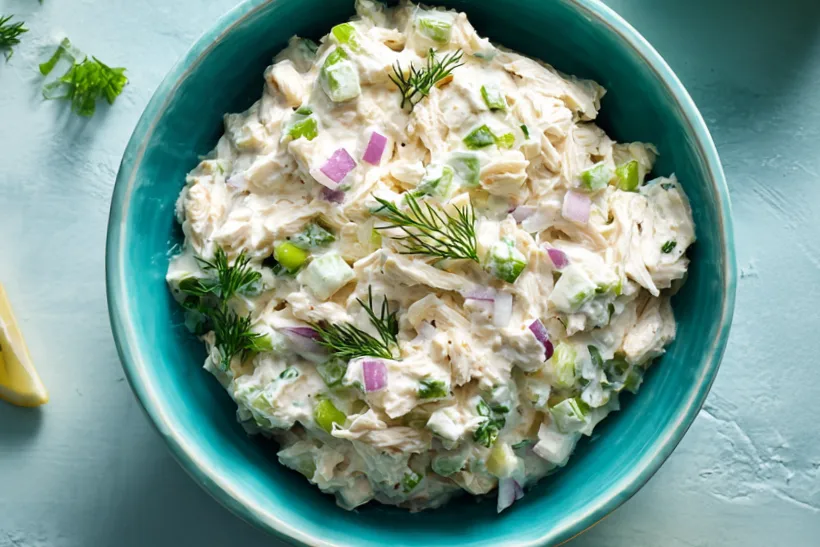
Bariatric chicken salad turns finely shredded chicken and plain Greek yogurt into a creamy, protein-first meal with about 25 grams of protein per 1/2-cup serving. It is prepared without mayonnaise, uses optional raw mix-ins so the texture can be adjusted, and takes about 15 minutes when the chicken is already cooked.
This is a recipe, not a universal postoperative diet prescription. Food stages, portion limits, and tolerance vary after gastric sleeve, gastric bypass, and other procedures. Use the version that matches the foods your bariatric team has already approved, and stop eating at your first sign of fullness.
Table Of Contents
Table of Contents
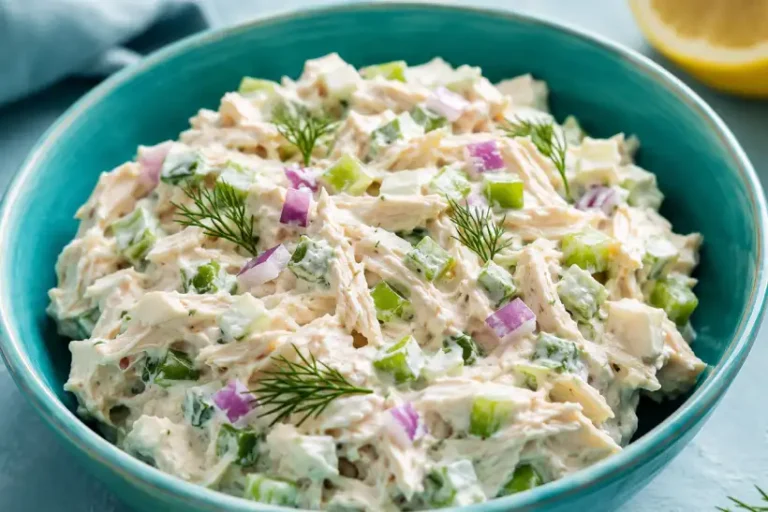
Bariatric Chicken Salad With 25g Protein per Serving
This creamy bariatric chicken salad combines finely shredded chicken and plain Greek yogurt for a protein-first meal with about 25 grams of protein per 1/2-cup serving. It is made without mayonnaise, takes about 15 minutes with precooked chicken, and can be adjusted for a softer texture when approved by your bariatric care team.
- Total Time: 15 minutes
- Yield: 8 servings 1x
Ingredients
4 cups (20 oz/567 g) cooked boneless, skinless chicken breast, chilled and very finely shredded
1 cup (8 oz/227 g) plain nonfat Greek yogurt
1 tablespoon Dijon mustard
1 tablespoon fresh lemon juice
1 tablespoon finely chopped fresh dill, or 1 teaspoon dried dill
1/2 teaspoon garlic powder
1/4 teaspoon onion powder
1/4 teaspoon kosher salt, plus more only if needed
1/8 teaspoon black pepper
1/4 cup finely diced celery, optional
2 tablespoons very finely minced red onion, optional
1 to 2 tablespoons low-sodium chicken broth, only if needed for moisture
Instructions
1. Prepare the chicken: Pat the chilled cooked chicken dry. Shred it with two forks, then chop across the shreds until the pieces are about 1/4 inch or smaller. For a softer result, pulse briefly in a food processor without processing it into a paste.
2. Mix the dressing: In a large bowl, whisk together the Greek yogurt, Dijon mustard, lemon juice, dill, garlic powder, onion powder, salt, and black pepper until smooth. The dressing should be thick enough to hold soft ridges from the whisk.
3. Fold in the chicken: Add the finely shredded chicken and fold gently until every piece is lightly coated. Let the mixture rest for about 30 seconds before deciding whether it needs more moisture.
4. Add the optional vegetables: Fold in the finely diced celery and minced red onion only when those raw textures have been approved and are comfortable for you.
5. Adjust the consistency: Press a spoonful gently against the side of the bowl. It should hold together, look creamy between the chicken shreds, and release cleanly from the spoon. If it crumbles, add low-sodium chicken broth 1 teaspoon at a time.
6. Chill and portion: Cover and refrigerate for about 20 minutes if desired. Stir once, then divide the chicken salad into eight portions of about 1/2 cup each.
Notes
Postoperative suitability: This recipe is not a universal postoperative diet prescription. Food stages, portion limits, and individual tolerance vary after gastric sleeve, gastric bypass, and other bariatric procedures. Use it only after your surgeon or registered dietitian has approved chicken and the required texture.
Soft-food adaptation: Omit the celery and red onion. Pulse the chicken in short bursts until no large strands remain, then add low-sodium broth 1 teaspoon at a time until the mixture can be mashed easily with the back of a fork. Soft and puréed textures are not interchangeable.
Chicken safety: When cooking chicken for this recipe, verify that the thickest part reaches a minimum internal temperature of 165°F/74°C.
Storage: Refrigerate promptly in shallow airtight containers and use within 3 to 4 days of the day the chicken was originally cooked.
Freezing: Freezing is not recommended for the best texture because Greek yogurt may separate and the vegetables may soften after thawing.
Nutrition: Estimated nutrition is based on eight equal 1/2-cup servings and standard ingredient data. Actual values vary by chicken, yogurt, mustard, broth, and salt brands.
- Prep Time: 15 minutes
- Cook Time: 0 minutes
- Category: Lunch
- Method: No-Cook
- Cuisine: American
Nutrition
- Serving Size: 1/2 cup
- Calories: 140
- Sodium: 180 mg
- Fat: 3 g
- Carbohydrates: 2 g
- Protein: 25 g
Why This Bariatric Chicken Salad Works
The formula is deliberately simple: plenty of lean chicken, enough Greek yogurt to bind it, Dijon and lemon for balance, and finely minced add-ins rather than large, fibrous pieces. The result should be moist and scoopable, not loose like a dip.
Greek yogurt keeps the dressing creamy while contributing protein. It also avoids the heavy, oil-forward texture of an all-mayonnaise dressing. Because the base contains no fruit, nuts, or added sweetener, it is easier to adapt for different carbohydrate targets and postoperative tolerances.
Most importantly, the portion is measurable. The batch makes eight small servings, each about 1/2 cup. The American Society for Metabolic and Bariatric Surgery notes that many programs recommend 60 to 100 grams of protein daily, while UCSF uses a minimum target of 65 to 75 grams in its guidance; your own prescription may differ.
| Recipe detail | Amount |
|---|---|
| Prep time | 15 minutes |
| Optional chill time | 20 minutes |
| Cook time | 0 minutes with cooked chicken |
| Yield | 8 servings |
| Serving size | About 1/2 cup |
| Estimated protein | About 25 g per serving |
Ingredients and What Each One Does

Ingredients
- 4 cups (20 oz/567 g) cooked boneless, skinless chicken breast, chilled and very finely shredded
- 1 cup (8 oz/227 g) plain nonfat Greek yogurt
- 1 tablespoon Dijon mustard
- 1 tablespoon fresh lemon juice
- 1 tablespoon finely chopped fresh dill, or 1 teaspoon dried dill
- 1/2 teaspoon garlic powder
- 1/4 teaspoon onion powder
- 1/4 teaspoon kosher salt, plus more only if needed
- 1/8 teaspoon black pepper
- 1/4 cup finely diced celery, optional
- 2 tablespoons very finely minced red onion, optional
- 1 to 2 tablespoons low-sodium chicken broth, only if needed for moisture
Chicken breast provides the structure and most of the protein. Shredding it finely shortens the muscle fibers, so each bite requires less chewing than large cubes. Stop before it becomes a paste unless your care team has specifically approved a puréed consistency.
Plain Greek yogurt is the binder. A thick strained yogurt works better than regular yogurt because it clings to the chicken instead of pooling at the bottom of the bowl. Dijon, lemon, garlic, onion powder, and dill make the dressing taste complete without depending on sugar.
Celery and red onion are optional on purpose. They add crunch, but raw, fibrous vegetables may not fit an early postoperative stage or an individual tolerance plan. UCSF advises avoiding raw vegetables during parts of its progression and adding food variety only as tolerated.
The Best Chicken to Use
Cold poached, baked, or pressure-cooked chicken breast gives the most predictable texture. Rotisserie chicken also works; remove the skin, choose moist breast meat, and check the label if sodium matters to your plan. Well-drained canned chicken creates a softer, finer mixture, though its salt level and texture vary by brand.
When cooking chicken specifically for this bariatric chicken salad, verify that the thickest part reaches at least 165°F/74°C with a food thermometer. Color alone is not a reliable doneness test.
How to Make Bariatric Chicken Salad
STEP 1 :
Prepare the chicken. Pat the chilled cooked chicken dry. Shred it with two forks, then chop across the shreds until the pieces are roughly 1/4 inch or smaller. For a softer result, pulse briefly in a food processor. Do not run the processor continuously, or the chicken can become pasty and compact.
STEP 2:
Mix the dressing. In a large bowl, whisk the Greek yogurt, Dijon, lemon juice, dill, garlic powder, onion powder, salt, and pepper until smooth. The dressing should hold soft ridges from the whisk rather than pour like salad dressing.
STEP 3:
Fold in the chicken. Add the shredded chicken and fold slowly until every piece is lightly coated. At first, the mixture may look slightly dry. Wait 30 seconds before adding liquid because the yogurt loosens as it is worked through the chicken.

STEP 4:
Add optional vegetables. Fold in the celery and red onion only when those textures are approved and comfortable for you. Both should be minced small enough that no piece dominates a bite.

STEP 5 :
Adjust the consistency. Squeeze a spoonful gently against the side of the bowl. It should stay together, look creamy between the shreds, and release cleanly from the spoon. If it crumbles, add low-sodium broth 1 teaspoon at a time. If it slumps or looks watery, chill it before making any further adjustment.

STEP 6:
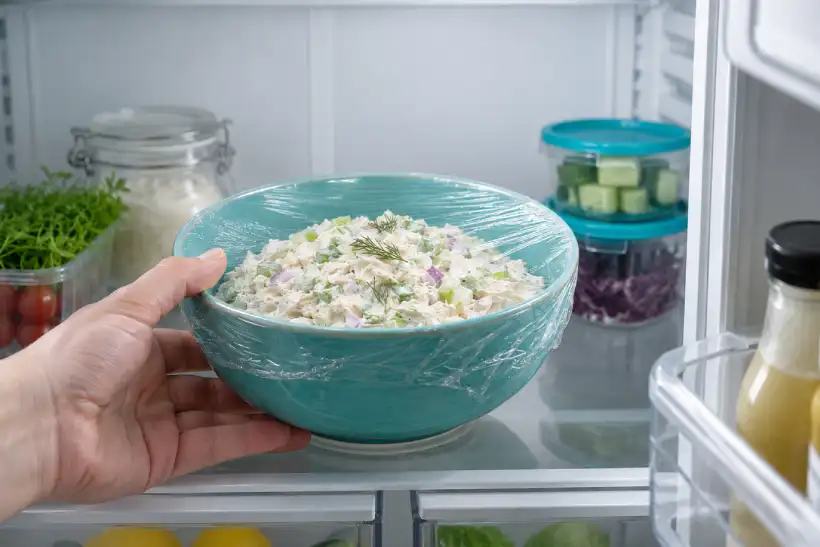
Chill and portion. Cover and refrigerate for about 20 minutes if time allows. Stir once, then divide into eight 1/2-cup containers. Chilling firms the yogurt and gives the seasonings time to distribute.
Taste only after the chicken and dressing are fully mixed. Rotisserie and canned chicken may already contain enough salt, so extra seasoning is often unnecessary.
Is Bariatric Chicken Salad Appropriate After Surgery?
It may be appropriate only after your bariatric team has cleared the ingredients and texture. There is no universal week when chicken salad becomes suitable. ASMBS describes a gradual progression from liquids to soft foods and eventually solids, while Cleveland Clinic also emphasizes that postoperative food plans are staged and protein-focused.
Creamy Chicken Salad Is Not the Same as a Green Salad
In American recipe language, “chicken salad” usually means chopped or shredded chicken held together with a creamy dressing. It does not necessarily contain lettuce. That distinction matters after surgery because finely processed, moist chicken may fit a prescribed soft-food plan before raw leafy greens, celery, or onion do.
Still, softer does not automatically mean tolerated. UCSF notes that some people continue to have difficulty with foods including chicken and high-fiber produce. Introduce only one new texture at a time when your program recommends that approach, chew thoroughly, eat slowly, and stop when you feel full.
Soft-Food Adaptation
For a softer version, omit the celery and red onion. Use moist chicken, pulse it in short bursts until no large strands remain, and mix in the full amount of yogurt. Add broth by the teaspoon until the mixture can be mashed easily with the back of a fork.
A puréed stage may require a smoother consistency than this recipe provides. Do not assume that “soft” and “puréed” are interchangeable. Follow the exact texture test, portion size, and timing supplied by your surgeon or registered dietitian.
Portion Sizes and Estimated Nutrition
A bariatric portion is determined by your stage, procedure, clinical plan, and current tolerance—not by the capacity of a meal-prep container. Cleveland Clinic advises prioritizing portion control, cutting chicken into small pieces, chewing thoroughly, slowing down, and stopping at fullness.
The table below scales the same recipe for practical reference. It is not a recommendation to move to a larger portion.
| Portion | Approximate weight | Calories | Protein |
|---|---|---|---|
| 1/4 cup | About 2 oz/57 g | 70 | 12.5 g |
| 1/3 cup | About 2.7 oz/76 g | 90 | 17 g |
| 1/2 cup | About 4 oz/113 g | 140 | 25 g |
Estimated nutrition per 1/2-cup serving: 140 calories, 25 g protein, 3 g fat, 2 g carbohydrate, and 180 mg sodium.
Nutrition is an estimate based on eight equal servings and standard ingredient data. The actual values change with the chicken, yogurt, mustard, broth, and salt used. USDA FoodData Central is a comprehensive food-composition database, but branded products still vary.
Texture Troubleshooting
Here is where texture matters. Chicken breast is lean, so the salad can move from pleasantly moist to dry with a small change in shredding or dressing.
The mixture is dry and falls apart. The chicken may be overcooked, cut too coarsely, or packed too tightly into the measuring cup. Add broth 1 teaspoon at a time and fold gently. A softer mixture is not automatically a failed mixture, but it should not run off the spoon.
The bottom of the bowl is watery. Warm chicken, undrained canned chicken, or watery yogurt can release liquid. Drain the bowl, fold again, and refrigerate for 20 minutes. Next time, chill and pat the chicken dry before mixing.
The chicken feels stringy. Chop across the shreds or give the mixture two or three short food-processor pulses. Long, intact fibers demand more chewing even when the dressing is creamy.
The yogurt tastes too sharp. Replace 2 tablespoons of yogurt with 2 tablespoons of light mayonnaise, provided it fits your plan, or reduce the lemon juice by half. This changes the fat and calorie estimate.
The salad has become paste-like. Overprocessing compresses the chicken fibers. Fold in additional finely shredded chicken rather than more yogurt; extra liquid will make the paste looser without restoring texture.
Bariatric Chicken Salad Variations
Keep the base recipe unchanged until you know it sits comfortably. Then alter one element at a time, especially when you are still learning your tolerance.
No-Raw-Vegetable Soft Version
Omit celery and red onion, use finely pulsed chicken, and add broth as needed. This is the simplest adaptation, but it is suitable only when your team has approved chicken and the required consistency.
Tzatziki-Inspired Version
Add 2 tablespoons peeled, seeded, finely minced cucumber and use fresh dill. Press the cucumber in a clean towel first; otherwise, it can thin the dressing. Add feta or olives only if those foods and their sodium level fit your plan.
Southwest Version
Replace lemon with lime, use cilantro instead of dill, and add a pinch each of cumin and mild chili powder. Finely minced roasted red pepper is gentler than a large amount of raw pepper for many people, but tolerance remains individual.
Cottage Cheese Version
Blend 1/2 cup low-fat cottage cheese until smooth and combine it with 1/2 cup Greek yogurt. The dressing becomes milder and slightly thicker. Recalculate nutrition with the exact cottage cheese label if you publish or track macros.
Grape-and-Walnut Version
For a later, regular-texture stage, add quartered seedless grapes and finely chopped walnuts. Fruit skins, raw produce, and nuts may be restricted or poorly tolerated earlier, so this variation needs explicit approval from your care team.
What to Serve With It

The most direct serving method is to eat the bariatric chicken salad on its own as a cold protein portion. For another protein-focused option, try these Bariatric Chicken Meatballs, made with lean ground chicken and a soft, moist texture.That keeps the protein visible and makes the amount easy to measure.
Once additional textures are approved, try a small spoonful in a lettuce cup, on peeled cucumber rounds, or beside well-cooked vegetables. At a regular-food stage, it can also go over greens or into a high-fiber wrap. Those serving ideas are options, not a signal that raw vegetables or bread belong in every postoperative plan.
Serve protein first when that matches your program. A plated side should not crowd out the amount of chicken you need or encourage eating beyond comfortable fullness. Cleveland Clinic’s current bariatric guidance likewise stresses lean protein first and small, controlled meals.
Storage, Meal Prep, and Food Safety
Portion the salad into shallow airtight containers and refrigerate promptly. USDA guidance says cooked chicken leftovers should generally be used within three to four days, and perishable food should not remain at room temperature for more than two hours.
As a practical safety rule, count that three-to-four-day window from the day the chicken was first cooked, not from the day it was mixed with yogurt. This is an inference from USDA leftover guidance; mixing older chicken into fresh dressing does not make the chicken newly cooked.
Keep the salad cold and serve it directly from the refrigerator. It does not need reheating. Freezing is possible from a safety standpoint when handled correctly, but Greek yogurt often separates after thawing and the celery loses its crispness, so refrigeration gives a better result.
Frequently Asked Questions
When Can I Eat Chicken Salad After Gastric Sleeve or Gastric Bypass?
There is no universal date. Use it only after your bariatric team has approved chicken and the recipe’s texture. Early plans may require liquids, purées, or softer foods before regular chopped chicken, and protocols differ among centers.
Is Bariatric Chicken Salad the Same as a Leafy Chicken Salad?
No. This recipe is a creamy mixture of finely shredded chicken and Greek yogurt. A leafy chicken salad contains raw greens and often other raw vegetables, which may be introduced later or tolerated differently.
Can I Make This Chicken Salad Without Mayonnaise?
Yes. The base recipe uses plain Greek yogurt and no mayonnaise. For a less tangy flavor, you may replace a small portion of the yogurt with light mayonnaise, but the nutrition will change.
Can I Use Canned or Rotisserie Chicken?
Yes. Drain canned chicken thoroughly. For rotisserie chicken, remove the skin and bones, use moist meat, shred it finely, and consider the sodium already present before adding salt.
How Much Protein Is in One Serving?
One 1/2-cup serving contains an estimated 25 grams of protein. A 1/4-cup portion contains about 12.5 grams. Brand choices and the exact weight of chicken will affect the final number.
Can I Freeze Greek Yogurt Chicken Salad?
You can freeze it, but the thawed dressing may separate and the vegetables may soften. For the best texture, make a smaller batch and refrigerate it for no more than three to four days.
Conclusion
Bariatric chicken salad works best when the chicken is finely shredded, the dressing is thick rather than runny, and the portion matches your individual plan. The Greek yogurt base provides a creamy, no-mayo texture, while optional vegetables and variations let you increase complexity only as tolerated.
Keep the medical boundary clear: your bariatric team decides when chicken, raw vegetables, and specific textures belong in your diet. Once those foods are approved, this recipe offers a practical cold lunch with about 25 grams of protein per measured 1/2-cup serving.
Explore More Bariatric Chicken Recipes

Enjoyed this recipe? Discover our complete collection of bariatric chicken recipes, carefully created to help you enjoy simple, protein-rich meals every day.
Discover Our Bariatric Chicken Recipes Collection
Sources Used for Factual Claims
Publisher-Supplied SEO Research Brief: Search-intent mapping, competitor analysis, and editorial content-gap planning.
American Society for Metabolic and Bariatric Surgery: General postoperative diet progression and typical protein-intake guidance.
UCSF Health: Protein goals, portion guidance, raw-produce cautions, and individual food tolerance after bariatric surgery.
Cleveland Clinic: Portion control, small meals, slow eating, thorough chewing, and protein-first guidance.
USDA Food Safety and Inspection Service: Safe poultry temperature, cooked-chicken storage, room-temperature limits, and leftover handling.
USDA FoodData Central: Standard food-composition data used for estimated nutrition.
Bariatric Food Coach, ObesityHelp, Rex Bariatrics, and Nourished Simply: Recipe formats, bariatric chicken salad variations, and postoperative texture considerations.
Coconuts & Kettlebells and Healthful Blondie: High-protein, Greek-yogurt, and no-mayonnaise chicken salad approaches.